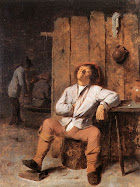
Burundi's Jean-Christophe Matata - Nyegera Cane (Come Closer)
Thursday, June 10, 2010
Update:
~ According to the Ottawa Citizen, 24 billion people will be tuned into the World Cup.
~ Estimated World Population as of 2010: 6.8 billion.
~ Accountants are always stressing the importance of decimal placement.
~ I wish it were about 70 degrees warmer outside right now.
~ Hup, Holland, Hup.
~ Ottawa always seems to be talking about a light rail transit system. It seems like none of the people talking about the transit system actually ride public transportation.
~ I think Ottawa is secretly jealous of Toronto.
~ Ottawans seem to spend a lot of time complaining about how Ottawa isn’t bike-friendly. They should try riding a bike through downtown Toronto. If they did, I think they’d stop being jealous.
~ Ottawa has 170 km of bike paths.
~ I still don’t consider myself an Ottawan.
~ The bread I buy is always slightly too dark on top, almost burnt.
~ The previous statement was incredibly boring to those uninterested in my bread consumption.
~ Everyone is unquestionably interested in my bread consumption, though. You're welcome.
~ I favour peanut butter and jam, with a preference toward raspberry over strawberry jam.
~ Enthralling, I know. I should do an entry just on my bread consumption.
~ I was able to make a dentist appointment for Monday, I’m pretty sure I have a cavity. If not, I just have a tooth that doesn’t enjoy being touched by anything sweet, hot, carbonated, or any combination thereof.
~ I believe it has been almost ten years since I have been to the dentist.
~ I’ve eaten a lot of bread since then.
~ My youngest sister, who’s in grade 8, received first place in high jump at Master’s field day.
~ I remember trying for the school record in grade 8, but I didn’t match it. Then I jumped really badly on Master’s field day.
~ My second youngest sister is en route to become a Neurosurgeon.
~ Sometimes I spread misinformation.
~ My third youngest sister is the world’s most helpful person. Ask anyone who knows her.
~ Sometimes I spread truth.
~ My second oldest sister is enroute to becoming Florence Nightingale.
~ Sometimes I make bold assertions that hinge on a comparison between heroines of the Crimean War and a sibling's future career.
~ My oldest sister cooks the world’s best chicken, bakes the greatest raisin bread, and has the most amazing children.
~ Sometimes you just want to go to Saskatchewan.
~ In comparison, I was voted the most likely to own my own tropical island in my last year of high school.
~ I am well on my way to not owning my own tropical island.
~ World Cup tomorrow!
~ According to the Ottawa Citizen, 24 billion people will be tuned into the World Cup.
~ Estimated World Population as of 2010: 6.8 billion.
~ Accountants are always stressing the importance of decimal placement.
~ I wish it were about 70 degrees warmer outside right now.
~ Hup, Holland, Hup.
~ Ottawa always seems to be talking about a light rail transit system. It seems like none of the people talking about the transit system actually ride public transportation.
~ I think Ottawa is secretly jealous of Toronto.
~ Ottawans seem to spend a lot of time complaining about how Ottawa isn’t bike-friendly. They should try riding a bike through downtown Toronto. If they did, I think they’d stop being jealous.
~ Ottawa has 170 km of bike paths.
~ I still don’t consider myself an Ottawan.
~ The bread I buy is always slightly too dark on top, almost burnt.
~ The previous statement was incredibly boring to those uninterested in my bread consumption.
~ Everyone is unquestionably interested in my bread consumption, though. You're welcome.
~ I favour peanut butter and jam, with a preference toward raspberry over strawberry jam.
~ Enthralling, I know. I should do an entry just on my bread consumption.
~ I was able to make a dentist appointment for Monday, I’m pretty sure I have a cavity. If not, I just have a tooth that doesn’t enjoy being touched by anything sweet, hot, carbonated, or any combination thereof.
~ I believe it has been almost ten years since I have been to the dentist.
~ I’ve eaten a lot of bread since then.
~ My youngest sister, who’s in grade 8, received first place in high jump at Master’s field day.
~ I remember trying for the school record in grade 8, but I didn’t match it. Then I jumped really badly on Master’s field day.
~ My second youngest sister is en route to become a Neurosurgeon.
~ Sometimes I spread misinformation.
~ My third youngest sister is the world’s most helpful person. Ask anyone who knows her.
~ Sometimes I spread truth.
~ My second oldest sister is enroute to becoming Florence Nightingale.
~ Sometimes I make bold assertions that hinge on a comparison between heroines of the Crimean War and a sibling's future career.
~ My oldest sister cooks the world’s best chicken, bakes the greatest raisin bread, and has the most amazing children.
~ Sometimes you just want to go to Saskatchewan.
~ In comparison, I was voted the most likely to own my own tropical island in my last year of high school.
~ I am well on my way to not owning my own tropical island.
~ World Cup tomorrow!

Tuesday, June 08, 2010
Graffiti
There’s a park by the bus stop that I frequent where people are free to practice their graffiti art. I always enjoy seeing the constantly changing face of the wall there, and I’m often impressed with the talent that these artists have with a spray can.
That being said, there is one thing I can’t stand. Heist. Heist has his name up on that wall. He also has tagged at least seven other places that are not that wall – and that’s just on my route to work. Four of these tags have been removed, but the other ones are still there. They’re quickly done with very little art to them, they’re ugly, and I’m sure they’re not cheap to remove. I am tired of seeing this word on my way to work. I read it inadvertently and immediately regret it. When I read the name Heist, I hear it being read in the voice of an angry high-pitched German. I have nothing against the Germans or the German language, but this particular word hits me like the squealing of bus brakes or the sound of teeth being dragged across a blackboard. Teeth. On a blackboard.
I hope that someday soon Heist, whoever he (or maybe even she) is, owns a car. I hope that this car is a very nice car. I hope that Heist really likes this car. Finally, I sincerely hope that someone paints a big, beautifully indelible picture of a cow patty on the hood of this car.
There’s a park by the bus stop that I frequent where people are free to practice their graffiti art. I always enjoy seeing the constantly changing face of the wall there, and I’m often impressed with the talent that these artists have with a spray can.
That being said, there is one thing I can’t stand. Heist. Heist has his name up on that wall. He also has tagged at least seven other places that are not that wall – and that’s just on my route to work. Four of these tags have been removed, but the other ones are still there. They’re quickly done with very little art to them, they’re ugly, and I’m sure they’re not cheap to remove. I am tired of seeing this word on my way to work. I read it inadvertently and immediately regret it. When I read the name Heist, I hear it being read in the voice of an angry high-pitched German. I have nothing against the Germans or the German language, but this particular word hits me like the squealing of bus brakes or the sound of teeth being dragged across a blackboard. Teeth. On a blackboard.
I hope that someday soon Heist, whoever he (or maybe even she) is, owns a car. I hope that this car is a very nice car. I hope that Heist really likes this car. Finally, I sincerely hope that someone paints a big, beautifully indelible picture of a cow patty on the hood of this car.
Monday, June 07, 2010
Sunday, June 06, 2010
The Boer War Memorial
I sometimes walk through Ottawa's Confederation Park on my way from the Rideau Centre to Elgin Street or vice versa. Whenever I do, I pass the Boer War Memorial, with its mustachioed hero doffing his cap. He's smiling, his rifle butt resting on the ground, and I'm left pondering whether I like this chap.
With no control over its foreign policy,Canada was drawn into the war as soon as Great Britain declared war. Canada's Prime Minister, Wilfrid Laurier, was not enthused by the war and was left in a difficult position because of the sharp divide between English and French Canada. English Canada was fervently behind the British in South Africa. Over 7,000 Canadians served in South Africa, with 89 being killed in action and 130 dying of diseases.
Now, despite my last name being den Boer my ancestors were not at all involved in the 1899 Boer War (also known as the Second Boer War). I would wager that, like most Dutch (and much of the world, for that matter), their sympathies lay with the Afrikaners rather than the British. In fact, popular opinion was so strong that the Dutch government sent a cruiser to South Africa to pick up the Afrikaner president, Paul Kruger. Two small Dutch-speaking Republics were fighting against a world power; a world power that seemed motivated entirely out of a lust for diamonds and gold.
Canadians don't seem to know a lot about the Boer War. When people have trouble pronouncing my last name, as they often do, I tell them that it's pronounced "like the Boer in the Boer War." Reactions range from blank nods to a vague look of recognition. I doubt very many Canadians know that the Boer War was the birthplace of the first concentration camps, made for Afrikaner families and their black allies, or that some of the Canadian troops had a reputation as a rough, undisciplined lot prone to excesses.
For these reasons, I find it difficult to pass the Boer War Memorial without a little cynicism. This was not a just war. Admittedly, the Boers were far from angelic in their treatment of the local African populations or their annexation of African land, and it was the Boers who pre-emptively attacked the British in the Second Boer War. However, this does not justify their treatment at the hands of the British or the British annexation of the Boer Republics.
War is a tragedy, especially when it is waged unjustly. Still, the men who died in the Second Boer War deserve to be remembered - whether they were African, Boer, British, or Canadian.
So when I pass the Boer War Memorial I think of all the needless lives that were lost, the greed, anger, and hubris that humanity will never lose, and the emptiness of so many of the wars around the world.
I sometimes walk through Ottawa's Confederation Park on my way from the Rideau Centre to Elgin Street or vice versa. Whenever I do, I pass the Boer War Memorial, with its mustachioed hero doffing his cap. He's smiling, his rifle butt resting on the ground, and I'm left pondering whether I like this chap.
With no control over its foreign policy,Canada was drawn into the war as soon as Great Britain declared war. Canada's Prime Minister, Wilfrid Laurier, was not enthused by the war and was left in a difficult position because of the sharp divide between English and French Canada. English Canada was fervently behind the British in South Africa. Over 7,000 Canadians served in South Africa, with 89 being killed in action and 130 dying of diseases.
Now, despite my last name being den Boer my ancestors were not at all involved in the 1899 Boer War (also known as the Second Boer War). I would wager that, like most Dutch (and much of the world, for that matter), their sympathies lay with the Afrikaners rather than the British. In fact, popular opinion was so strong that the Dutch government sent a cruiser to South Africa to pick up the Afrikaner president, Paul Kruger. Two small Dutch-speaking Republics were fighting against a world power; a world power that seemed motivated entirely out of a lust for diamonds and gold.
Canadians don't seem to know a lot about the Boer War. When people have trouble pronouncing my last name, as they often do, I tell them that it's pronounced "like the Boer in the Boer War." Reactions range from blank nods to a vague look of recognition. I doubt very many Canadians know that the Boer War was the birthplace of the first concentration camps, made for Afrikaner families and their black allies, or that some of the Canadian troops had a reputation as a rough, undisciplined lot prone to excesses.
For these reasons, I find it difficult to pass the Boer War Memorial without a little cynicism. This was not a just war. Admittedly, the Boers were far from angelic in their treatment of the local African populations or their annexation of African land, and it was the Boers who pre-emptively attacked the British in the Second Boer War. However, this does not justify their treatment at the hands of the British or the British annexation of the Boer Republics.
War is a tragedy, especially when it is waged unjustly. Still, the men who died in the Second Boer War deserve to be remembered - whether they were African, Boer, British, or Canadian.
So when I pass the Boer War Memorial I think of all the needless lives that were lost, the greed, anger, and hubris that humanity will never lose, and the emptiness of so many of the wars around the world.
Friday, June 04, 2010
Title: Warning to all Vilators
Location: 500 m from my abode.
Number of Signs with the Same Spelling: At Least Two
Lesson for Hydro One: Proofread your Signs
John's Imagination Says: A vilator is a futuristic car that interferes with Hydro-1's electricity grid. This is a sign from the future.
Google Says: Did you mean: violator?
Location: 500 m from my abode.
Number of Signs with the Same Spelling: At Least Two
Lesson for Hydro One: Proofread your Signs
John's Imagination Says: A vilator is a futuristic car that interferes with Hydro-1's electricity grid. This is a sign from the future.
Google Says: Did you mean: violator?

Thursday, June 03, 2010
The Factory
The factory was old, far older than any of the buildings surrounding him. He felt his age in his sagging wooden floors and the yellowing walls of his interior. The once bright red bricks that he had worn so proudly had faded into a rose, and a few had begun to crack and crumble. Few of his paneled windows remained, most had been broken by drunken vandals. The machinery that had hummed almost constantly deep in his belly had been silent for decades, as if his vitality had been sucked right out of him. The machines, once confident and powerful, had been stripped and their remains left to corrode. At night, when the city lay almost silent he could hear his joints creak and groan from his own mass and from the weight of the plunging temperatures. His faces were crisscrossed with tattoos left by romantics, desperate fame-seekers, and angry urban poets. He had come to enjoy the surreptitious visits of these night-time artists. The bright colours that they left behind covered his faded brick and their shadowy visits gave him the attention that he missed so greatly.
The building behind him, a soaring glass structure would peer imperiously down at him and wonder aloud when his view would improve. The glass building had a slight curve to its roof which made it think of itself as an architectural masterpiece.
The factory muttered hollowly to the himself about how derivative the glass building was, how there were thousands of it throughout the world, how few people noticed the shining reflective glass. He, however, had stood the test of time. Had he not heard the recent urban explorer enthuse to his friend on how much character he had?
Years passed. The machines showed up. The factory was excited at first, assuming that they had come to revitalize him, to shore him up, to re-open him to the rough workmen.
That was until they pulled down his first wall, the faded brick crumbling as it hit the ground. They were tearing him down, his tired bones shuddered with fatigued relief. His walls creaked and groaned, their age giving away easily to the destruction. He heard the soaring glass building humming happily to itself, "I shall have a wondrous view."
“Your time will come,” he groaned as his ancient roof caved in, “Your time will come.”
The factory was old, far older than any of the buildings surrounding him. He felt his age in his sagging wooden floors and the yellowing walls of his interior. The once bright red bricks that he had worn so proudly had faded into a rose, and a few had begun to crack and crumble. Few of his paneled windows remained, most had been broken by drunken vandals. The machinery that had hummed almost constantly deep in his belly had been silent for decades, as if his vitality had been sucked right out of him. The machines, once confident and powerful, had been stripped and their remains left to corrode. At night, when the city lay almost silent he could hear his joints creak and groan from his own mass and from the weight of the plunging temperatures. His faces were crisscrossed with tattoos left by romantics, desperate fame-seekers, and angry urban poets. He had come to enjoy the surreptitious visits of these night-time artists. The bright colours that they left behind covered his faded brick and their shadowy visits gave him the attention that he missed so greatly.
The building behind him, a soaring glass structure would peer imperiously down at him and wonder aloud when his view would improve. The glass building had a slight curve to its roof which made it think of itself as an architectural masterpiece.
The factory muttered hollowly to the himself about how derivative the glass building was, how there were thousands of it throughout the world, how few people noticed the shining reflective glass. He, however, had stood the test of time. Had he not heard the recent urban explorer enthuse to his friend on how much character he had?
Years passed. The machines showed up. The factory was excited at first, assuming that they had come to revitalize him, to shore him up, to re-open him to the rough workmen.
That was until they pulled down his first wall, the faded brick crumbling as it hit the ground. They were tearing him down, his tired bones shuddered with fatigued relief. His walls creaked and groaned, their age giving away easily to the destruction. He heard the soaring glass building humming happily to itself, "I shall have a wondrous view."
“Your time will come,” he groaned as his ancient roof caved in, “Your time will come.”

Tuesday, June 01, 2010
In Which I Answer Some Very Serious Questions - Part 3
Why does a round pizza come in a square box?
Have you ever tried making a round box? More importantly, have you ever noticed how easily round boxes can be crushed?
Do bald people get Dandruff?
Why was the word dandruff capitalized here? Anyway, the answer to your question is that bald people are impervious to any and all disorders of the scalp.
Why is it that no matter what color bubble bath you use the bubbles are always white?
White supremacy.
Why do superheros (sic) wear their underwear on the outside of their clothes?
Superheroes don’t exist.
If you get cheated by the Better Business Bureau, who do you complain to?
Superman.
When sign makers go on strike, is anything written on their signs?
No, they generally use megaphones and effigies.
Why does someone believe you when you say there are four billion stars, but check when you say the paint is wet?
I know, right? I mean it’s so hard to check if paint is wet but so easy to count to 4 billion.
Can you cry underwater?
Yes, I can also breathe underwater.
Why Does Pluto Live in a dog house, eat dog food, etc. but Goofy, who is also a dog, lives (sic) in a condo and drives a car?
Cartoon speciation.
If you blew a bubble in space would it pop?
No, it would continue to expand until it consumed the entire universe.
How come all of the planets are spherical?
They’re not, they’re oblate ellipsoids.
When a pregnant lady has twins, is (sic) there 1 or 2 umbilical cords?
One, they take turns.
Why doesn't Winnie the Pooh ever get stung by the bees he messes with?
Winnie the Pooh is an anthropomorphic bear who can talk, don’t you have a better question?
Why do they put holes in crackers?
So they sink in your soup.
Can you still say "Put it where the sun don't shine " on a nude beach?
No, it’s forbidden.
What do people in China call their good plates?
Good plates, but they say it in Chinese.
How come toy hippos are always blue, or purple, when real hippos are brown?
Real hippos are brownish-grey, come correct or don’t come at all.
Why don't woodpeckers get headaches when they slam their head on a tree all day?
Their ancestors slammed their heads against the inside of a titanium box, so they’re pretty tough (see part 2).
If someone owns a piece of land, do they own it all the way to the center of the earth?
I was going to say yes, but the dude who wrote War and Peace disagrees, and who am I to argue with him?
“The earth is the general and equal possession of all humanity and therefore cannot be the property of individuals.”
If an escalator (sic) breaks down, does it become stairs?
No, it becomes a staggered group of stationary steps that are just the right distance apart for the average biped to travel swiftly between two separate levels.
Why do they call him Donkey Kong if he is not a donkey?
The Japanese creator wanted to relay the idea of a stubborn gorilla. No really, that’s the answer.
Why do they say a football team is the 'world champion' when they don't play anybody outside the US?
Because the United States is the world, silly.
Do stuttering people stutter when they're thinking to themselves?
No.
If you put a chameleon in a room full of mirrors, what color would it turn?
The colour of the floor.
What are the handles for corn on the cob called?
They’re called the left and the right ends of the corn on the cob.
Why do British people never sound British when they sing?
Listen carefully.
Why do we press the start button to turn off the computer?
I usually click on the Start menu button, then the shut down button, and then press okay. You may want to upgrade from DOS.
Do your eyes change color when you die?
I don’t know, I haven’t died yet.
Why does a round pizza come in a square box?
Have you ever tried making a round box? More importantly, have you ever noticed how easily round boxes can be crushed?
Do bald people get Dandruff?
Why was the word dandruff capitalized here? Anyway, the answer to your question is that bald people are impervious to any and all disorders of the scalp.
Why is it that no matter what color bubble bath you use the bubbles are always white?
White supremacy.
Why do superheros (sic) wear their underwear on the outside of their clothes?
Superheroes don’t exist.
If you get cheated by the Better Business Bureau, who do you complain to?
Superman.
When sign makers go on strike, is anything written on their signs?
No, they generally use megaphones and effigies.
Why does someone believe you when you say there are four billion stars, but check when you say the paint is wet?
I know, right? I mean it’s so hard to check if paint is wet but so easy to count to 4 billion.
Can you cry underwater?
Yes, I can also breathe underwater.
Why Does Pluto Live in a dog house, eat dog food, etc. but Goofy, who is also a dog, lives (sic) in a condo and drives a car?
Cartoon speciation.
If you blew a bubble in space would it pop?
No, it would continue to expand until it consumed the entire universe.
How come all of the planets are spherical?
They’re not, they’re oblate ellipsoids.
When a pregnant lady has twins, is (sic) there 1 or 2 umbilical cords?
One, they take turns.
Why doesn't Winnie the Pooh ever get stung by the bees he messes with?
Winnie the Pooh is an anthropomorphic bear who can talk, don’t you have a better question?
Why do they put holes in crackers?
So they sink in your soup.
Can you still say "Put it where the sun don't shine " on a nude beach?
No, it’s forbidden.
What do people in China call their good plates?
Good plates, but they say it in Chinese.
How come toy hippos are always blue, or purple, when real hippos are brown?
Real hippos are brownish-grey, come correct or don’t come at all.
Why don't woodpeckers get headaches when they slam their head on a tree all day?
Their ancestors slammed their heads against the inside of a titanium box, so they’re pretty tough (see part 2).
If someone owns a piece of land, do they own it all the way to the center of the earth?
I was going to say yes, but the dude who wrote War and Peace disagrees, and who am I to argue with him?
“The earth is the general and equal possession of all humanity and therefore cannot be the property of individuals.”
If an escalator (sic) breaks down, does it become stairs?
No, it becomes a staggered group of stationary steps that are just the right distance apart for the average biped to travel swiftly between two separate levels.
Why do they call him Donkey Kong if he is not a donkey?
The Japanese creator wanted to relay the idea of a stubborn gorilla. No really, that’s the answer.
Why do they say a football team is the 'world champion' when they don't play anybody outside the US?
Because the United States is the world, silly.
Do stuttering people stutter when they're thinking to themselves?
No.
If you put a chameleon in a room full of mirrors, what color would it turn?
The colour of the floor.
What are the handles for corn on the cob called?
They’re called the left and the right ends of the corn on the cob.
Why do British people never sound British when they sing?
Listen carefully.
Why do we press the start button to turn off the computer?
I usually click on the Start menu button, then the shut down button, and then press okay. You may want to upgrade from DOS.
Do your eyes change color when you die?
I don’t know, I haven’t died yet.
Monday, May 31, 2010
The Parable of the Old Man and the Young
So Abram rose, and clave the wood, and went,
And took the fire with him, and a knife.
And as they sojourned both of them together,
Isaac the first-born spake and said, My Father,
Behold the preparations, fire and iron,
But where the lamb for this burnt-offering?
Then Abram bound the youth with belts and strops,
And builded parapets and trenches there,
And stretched forth the knife to slay his son.
When lo! an angel called him out of heaven,
Saying, Lay not thy hand upon the lad,
Neither do anything to him. Behold,
A ram, caught in a thicket by its horns;
Offer the Ram of Pride instead of him.
But the old man would not so, but slew his son,
And half the seed of Europe, one by one.
~ Wilfred Owen
So Abram rose, and clave the wood, and went,
And took the fire with him, and a knife.
And as they sojourned both of them together,
Isaac the first-born spake and said, My Father,
Behold the preparations, fire and iron,
But where the lamb for this burnt-offering?
Then Abram bound the youth with belts and strops,
And builded parapets and trenches there,
And stretched forth the knife to slay his son.
When lo! an angel called him out of heaven,
Saying, Lay not thy hand upon the lad,
Neither do anything to him. Behold,
A ram, caught in a thicket by its horns;
Offer the Ram of Pride instead of him.
But the old man would not so, but slew his son,
And half the seed of Europe, one by one.
~ Wilfred Owen
Sunday, May 30, 2010
My Thoughts on Anarchism
Recently, the Royal Bank in Ottawa's Glebe was firebombed by a group of radical anarchists. I'm not certain that radical is a necessary qualifier here because an anarchist is, by definition, a radical. After all, they believe in the elimination of the state.
If, as one of my mentors effectively argues, all political ideologies are akin to religions, then Anarchism finds its salvation in the elimination in what it views as the chief purveyor of evil: authority. But how would a society bereft of authority function? A recent letter to the editor by a local anarchist in the Ottawa Citizen claimed that it would be a highly organized society of equals.
When I read this, overactive imagination that I have, I had a vision of a Parliament of 33 million MPs all gibbering at once. This is probably not what the letter-writer intended, but how can a highly organized society be defined except as a form of government? How can a leaderless society make functional decisions?
I've heard some anarchists argue that there would be highly localized clusters of voluntary associations based on mutual needs. Of course, this ideal would depend on the needs of one of these clusters not clashing with the needs of another cluster. In effect, you'd have a sort of tense tribalism and it would not be long before two tribes clashed. It would be doubtful that any such group would retain their collective kumba-ya Anarchism without a leader emerging in the face of violence. In effect, you would have people united in fear under one leader in a mini-government. An area governed this way would quickly come to resemble feudal Europe at its worst, or modern-day Somalia.
Back to square one for the anarchists.
The biggest problem with Anarchism, in my mind, is that it, like Communism, idealizes humans. It seems to believe that once society is restructured then evil will be eliminated and humans will stop acting like, well, humans. The source of evil, for these thinkers, is not within humanity but within the structures around humanity.
Anarchists, if they were ever to gain wide popularity and revolt, would face the same dilemma as the various communists have: what do we do with those who won't accept our platform? As in Communism, the anarchists calling for tolerance would be quickly drowned out by the more ruthless among them. It would not be long before all of the obstacles and setbacks would be heaped at the feet of those enemies that opposed the anarchist ideal. The anarchists, when things did not work out, would be forced to form a transitional government until all of their ideals fell into place.
Now, the anarchist writing to the Ottawa Citizen's editor made it clear he was non-violent. The most radical thing he has ever done was probably collectivizing a coffee shop or bakery. However, in any revolution it seems that it is the most radical and the most ruthless who gain control. Those anarchists with Utopian dreams of a peaceful stateless society of hemp-wearing hippies would be shuffled to the side. Meanwhile, charismatic authoritarians would seize the opportunity to snatch the very power that anarchists loathe so much. "Just in the interim," they would assure their concerned friends.
The evil, my anarchist friends, is not just outside of us, it's within. Trying to destroy the corporations and governments will do nothing but create further evil. The corporations and governments are not wholly evil or wholly good: they're both - just like us. We should strive for justice, for the triumph of the good, but this involves restoration and surgery, not destruction and murder.
Recently, the Royal Bank in Ottawa's Glebe was firebombed by a group of radical anarchists. I'm not certain that radical is a necessary qualifier here because an anarchist is, by definition, a radical. After all, they believe in the elimination of the state.
If, as one of my mentors effectively argues, all political ideologies are akin to religions, then Anarchism finds its salvation in the elimination in what it views as the chief purveyor of evil: authority. But how would a society bereft of authority function? A recent letter to the editor by a local anarchist in the Ottawa Citizen claimed that it would be a highly organized society of equals.
When I read this, overactive imagination that I have, I had a vision of a Parliament of 33 million MPs all gibbering at once. This is probably not what the letter-writer intended, but how can a highly organized society be defined except as a form of government? How can a leaderless society make functional decisions?
I've heard some anarchists argue that there would be highly localized clusters of voluntary associations based on mutual needs. Of course, this ideal would depend on the needs of one of these clusters not clashing with the needs of another cluster. In effect, you'd have a sort of tense tribalism and it would not be long before two tribes clashed. It would be doubtful that any such group would retain their collective kumba-ya Anarchism without a leader emerging in the face of violence. In effect, you would have people united in fear under one leader in a mini-government. An area governed this way would quickly come to resemble feudal Europe at its worst, or modern-day Somalia.
Back to square one for the anarchists.
The biggest problem with Anarchism, in my mind, is that it, like Communism, idealizes humans. It seems to believe that once society is restructured then evil will be eliminated and humans will stop acting like, well, humans. The source of evil, for these thinkers, is not within humanity but within the structures around humanity.
Anarchists, if they were ever to gain wide popularity and revolt, would face the same dilemma as the various communists have: what do we do with those who won't accept our platform? As in Communism, the anarchists calling for tolerance would be quickly drowned out by the more ruthless among them. It would not be long before all of the obstacles and setbacks would be heaped at the feet of those enemies that opposed the anarchist ideal. The anarchists, when things did not work out, would be forced to form a transitional government until all of their ideals fell into place.
Now, the anarchist writing to the Ottawa Citizen's editor made it clear he was non-violent. The most radical thing he has ever done was probably collectivizing a coffee shop or bakery. However, in any revolution it seems that it is the most radical and the most ruthless who gain control. Those anarchists with Utopian dreams of a peaceful stateless society of hemp-wearing hippies would be shuffled to the side. Meanwhile, charismatic authoritarians would seize the opportunity to snatch the very power that anarchists loathe so much. "Just in the interim," they would assure their concerned friends.
The evil, my anarchist friends, is not just outside of us, it's within. Trying to destroy the corporations and governments will do nothing but create further evil. The corporations and governments are not wholly evil or wholly good: they're both - just like us. We should strive for justice, for the triumph of the good, but this involves restoration and surgery, not destruction and murder.

Thursday, May 27, 2010
25 Random Facts About Me
1) I was tagged on Facebook by my sister and asked to give twenty five random facts about myself. Yes, this counts as a fact.
2) I don’t believe that anything is truly random, especially lists created by people. Maybe if I had some kind of randomizing super-computer I could create a truly random list.
3) Of course, then it would spit out such interesting tidbits as: “On October 22nd, 1997 at 12:45pm, John ate a sandwich.”
4) The example in number 2 is not verified. It’s probably true though.
5) A friend of mine told me that I was pretentious. I told them that they were as misguided as John Wayne searching for a good Cabernet Sauvignon in Detroit, and then I laughed snootily to myself whilst flaunting my fur coat.
6) If there were a detective show based on me, it would be called “John the Detective.”
7) In my younger days, I thought Sesame Street’s count and my father’s job as an accountant were related.
8) I put this childish misconception behind me after I learned that Count was a title and that accountancy was an occupation last year. We learn, we grow right?
9) Belgian Congo, 1932: I fought a full-grown silverback gorilla in hand to hand combat and won. The movie King Kong was later made in 1933, loosely based on my exploits.
10) I despise the absurd.
11) I don’t speak English, and I’m completely illiterate.
12) John Grisham considers me his hero.
13) I never contradict myself, but I always say and write things that are contrary to other things I’ve said and written.
14) If a cello were a computer keyboard, I would be a gifted cellist.
15) You wouldn’t guess it from this list, but there was a time when I created elaborate lies for my youngest sister’s benefit.
16) My new boss’s extension is 666. He’s too nice for me to call him the beast.
17) Monaco is the second-smallest country in the world at only 0.7 square miles.
18) What? That’s not a fact about me? Okay, here’s a fact about me: I make the rules about this list.
19) I once witnessed a confrontation against a supporter of the seal hunt and a young woman protesting the seal hunt. It went something like this:
Supporter: I know more about the seal hunt than you. I’ve read a lot about it.
Protester: Oh . . . . . . . did you know (insert random fact here)?
Supporter: You don’t want to get into this with me.
Protester: The seal hunt needs to stop.
Supporter: Seals aren’t endangered.
Protester: The seal hunt is cruel.
Supporter: (Something about cows). Bye.
Protester: (Something about seals) Bye.
20) I have a seashell on my desk. No one would have sea shells on their desks if the ugly gelatinous creatures that resided in them were still inside them.
21) I sometimes see a guy waiting for the bus with a huge bouffant. It’s huge. And it’s a bouffant.
22) I spent about two months thinking that the Arabic for “praise God” meant “God bless you.” When I dropped this knowledge on an Arabic sneezer much hilarity ensued.
24) I sometimes miscount things.
25) You know that game two lies and a truth? This list is more like seven lies, eleven truths, four suppositions, and two random facts. An accountant should probably double check this, though.
1) I was tagged on Facebook by my sister and asked to give twenty five random facts about myself. Yes, this counts as a fact.
2) I don’t believe that anything is truly random, especially lists created by people. Maybe if I had some kind of randomizing super-computer I could create a truly random list.
3) Of course, then it would spit out such interesting tidbits as: “On October 22nd, 1997 at 12:45pm, John ate a sandwich.”
4) The example in number 2 is not verified. It’s probably true though.
5) A friend of mine told me that I was pretentious. I told them that they were as misguided as John Wayne searching for a good Cabernet Sauvignon in Detroit, and then I laughed snootily to myself whilst flaunting my fur coat.
6) If there were a detective show based on me, it would be called “John the Detective.”
7) In my younger days, I thought Sesame Street’s count and my father’s job as an accountant were related.
8) I put this childish misconception behind me after I learned that Count was a title and that accountancy was an occupation last year. We learn, we grow right?
9) Belgian Congo, 1932: I fought a full-grown silverback gorilla in hand to hand combat and won. The movie King Kong was later made in 1933, loosely based on my exploits.
10) I despise the absurd.
11) I don’t speak English, and I’m completely illiterate.
12) John Grisham considers me his hero.
13) I never contradict myself, but I always say and write things that are contrary to other things I’ve said and written.
14) If a cello were a computer keyboard, I would be a gifted cellist.
15) You wouldn’t guess it from this list, but there was a time when I created elaborate lies for my youngest sister’s benefit.
16) My new boss’s extension is 666. He’s too nice for me to call him the beast.
17) Monaco is the second-smallest country in the world at only 0.7 square miles.
18) What? That’s not a fact about me? Okay, here’s a fact about me: I make the rules about this list.
19) I once witnessed a confrontation against a supporter of the seal hunt and a young woman protesting the seal hunt. It went something like this:
Supporter: I know more about the seal hunt than you. I’ve read a lot about it.
Protester: Oh . . . . . . . did you know (insert random fact here)?
Supporter: You don’t want to get into this with me.
Protester: The seal hunt needs to stop.
Supporter: Seals aren’t endangered.
Protester: The seal hunt is cruel.
Supporter: (Something about cows). Bye.
Protester: (Something about seals) Bye.
20) I have a seashell on my desk. No one would have sea shells on their desks if the ugly gelatinous creatures that resided in them were still inside them.
21) I sometimes see a guy waiting for the bus with a huge bouffant. It’s huge. And it’s a bouffant.
22) I spent about two months thinking that the Arabic for “praise God” meant “God bless you.” When I dropped this knowledge on an Arabic sneezer much hilarity ensued.
24) I sometimes miscount things.
25) You know that game two lies and a truth? This list is more like seven lies, eleven truths, four suppositions, and two random facts. An accountant should probably double check this, though.

Tuesday, May 25, 2010

Sunday, May 23, 2010
The Historical Macbeth
Shakespeare’s remarkable insight into the human condition and his sharp intellect should have made him a brilliant historian, but his portrayal of Macbeth’s life is inaccurate. To be fair, Shakespeare did not have a great deal of accurate sources to work with and, as a dramatist, Shakespeare’s first task was to entertain his audience rather than to present them with a historically accurate representation of events. Shakespeare would probably remain apathetic to any accusations of historical revisionism, but an examination of the historical Macbeth is interesting nonetheless. Also, a look at the historical sources and events which shaped Shakespeare’s writing would, undoubtedly, be revealing. Perhaps two figures can be redeemed in one essay.
Both James I and his wife, Anne of Denmark, were enthusiastic lovers of theatre. James was less enthusiastic than his wife and had difficulty staying awake through long plays. Thus, Shakespeare directed the actors to compress their speeches. This takes skill on the part of the actors and mental acuity on the part of the audience. In this way, the play was performed to perfectly suit the educated audience and the short attention span of James I. Macbeth was written and performed on the occasion of the king’s brother-in-law King Christian of Denmark’s visit in the summer of 1606.
1603 had seen the Union of the Crowns as the thrones of Scotland and England were united under James I (James VI of Scotland.) The play might be seen as a nod at this Union of the two thrones. Shakespeare picked the perfect historical event to demonstrate English and Scottish cooperation. The history of Anglo-Scots relations wasn’t exactly abounding with tales of co-operation. The Scots, in fact, were notorious for hiring themselves out as mercenaries for the French against the English. The English assistance to Malcom III, James I’s ancestor, was probably the best example of English and Scottish interests coalescing. Macbeth was perfectly tailored for consumption by James I.
Macbeathadh, as Macbeth is known in Gaelic, means “Son of Life,” an ironic name for the blood-stained murderer of Shakespeare’s play. Macbeth was the son of Findlaech mac Ruairdri, Earl of Moray, a royal-blooded member of clan Argyll. Macbeth’s father was slain by his own nephews in AD 1020, and the simmering Macbeth planned his revenge against the killers. Twelve years later Macbeth avenged his father’s death by catching one of the killers in a building and burning him to death along with fifty of his men. Macbeth assumed the title of Earl and married the executed killer’s widow, Gruoch. This marriage strengthened Macbeth’s claim to the Scottish throne, but Macbeth remained content as Earl of Moray.
So far, Macbeth seems to be the same ambitious, ruthless, and calculating character that Shakespeare portrayed; yet the events of Macbeth’s life differ significantly from the events of the play. Far from the wise and goodly king of Shakespeare’s play, Duncan was a young incompetent installed by the decree of his despotic father, Malcolm II. The ancient custom of Scotland was succession by election rather than by decree, and thus the installation of a rash and ambitious youngster inspired anger throughout Scotland. The young Duncan led a disastrous invasion of northern England in AD 1039. With one failure under his belt, Duncan turned his sights northwards and struck out against the Earl of Moray, Macbeth.
Macbeth defeated Duncan and was immediately accepted as King of Scots by Duncan’s estranged subjects. Duncan’s eldest son, Malcolm, fled to England while the younger son, Donalbain, fled to the Western Isles. Shakespeare was right that Macbeth killed Duncan, but the circumstances of the killing are far different than the play depicts. Rather than murdering a well-loved old monarch out of ambition, Macbeth killed a despised ruler in self defence.
At the beginning of Shakespeare’s play, the great general, Macbeth, has just quashed a Viking invasion in Fife. The visit of Christian, King of Denmark, did affect the content of Shakespeare’s play. Henry Paul believes that scene iii of Act I was written before Shakespeare knew that Christian would be attending the play. He argues that the metre of the speech becomes irregular in the places where Shakespeare had to quickly insert new names. The account which Shakespeare relied upon for his play records that the invasion which Macbeth thwarted was a second wave of Danish invaders. For the sturdy Scots to drive away Danish invaders in the presence of a Danish king would be inappropriate. Shakespeare diplomatically chose to change the nationality of these Danes to Norwegian. Macbeth may have turned away Viking invasions as Earl of Moray, but as King of the Scots he was unable to drive the Norse king Thorfinn Sigurdson, his half-cousin, from Scotland. Thorffin was an ugly giant of a man, a brilliant tactician who remained undefeated in battle by the King of the Scots.
Macbeth was a capable ruler who gave generously to the Church. Perhaps Macbeth was anticipating a muddying of his name as he gave many gifts to the Church, guaranteeing a certain amount of good press. His commitment to the Church seems to have been genuine, however, as a pilgrimage to Rome in AD 1050 suggests. Macbeth should have secured his kingdom and prepared for war instead of journeying to Rome to kiss the pope’s hand. Duncan’s eldest son, Malcolm, was in England whispering into the ear of certain powerful individuals. Influenced by Malcolm, Edward the Confessor, king of England, sanctioned the invasion of Scotland in 1054 under the Earl of Northrumbria, Siward. Once again, Shakespeare’s play contains elements of truth. Siward appears in both versions as the Northrumbian Earl who is willing to help Malcolm’s claim to the throne. Duncan’s son, Malcolm, is able to drum up forces from England and, although Macbeth follows spiritual inclinations in both versions of the story, these inclinations are not compatible. The spiritual inclinations of the devout Macbeth are far more positive than the spiritual inclinations the occult-consulting fictional king. The two Macbeths really wouldn’t have gotten along.
At first, Macbeth waged a fierce guerilla war until he was forced to pitched battle on the 27th of July. The battle, which may or may not have occurred below Dunsinane Hill, was a fierce and bloody clash which was noted in the Anglo Saxon Chronicle. The nameless monk records that Earl Siward: “fought against the Scots. He put to flight their king, Macbeth, and slew the noblest in the land, carrying off much plunder.” There were heavy casualties on both sides and, unlike the play, Macbeth left the field with his head firmly connected to his shoulders. Macbeth retreated northwards to his home territory of Moray while Malcolm bided his time as he waited to seize power for himself.
In AD 1057, Malcolm felt strong enough to hunt down his father’s killer. Macbeth’s support was melting away and Malcolm surged northwards. The fugitive Macbeth was stalked to a small village and killed in a hopeless final stand. After his death, Macbeth’s severed head was presented to Malcolm on either a pole or platter. Really it doesn’t matter, the severed head appears in both accounts. Whether the historical figure of Macduff killed the historical Macbeth is unknown. Local legend supports the Shakespeare’s claim that Macduff slew Macbeth in hand to hand combat. Malcolm did not immediately possess the kingdom, however, as the remaining supporters of Macbeth declared his stepson, Lulach, to be King of the Scots. Lulach gained the rather unfortunate moniker of “Lulach the Simpleton.” Whether this mental deficiency contributed to his capture is unknown, but Lulach was killed in March 1058 in an ambush set by Malcolm. With the last of the throne’s claimants dead, Malcolm became Malcolm III, the King of Scots.
How is it possible that the tragic story of murderous ambition was hatched from the story of a capable king who reigned for seventeen years? Shakespeare was responsible enough to research Macbeth before his life on the stage. The sources that Shakespeare had at hand, it seems, tell a much different story than history. The muddying — or perhaps more accurately, the bloodying — of Macbeth’s name began early. The pro-Macbeth stories tended to generate from Moray while the anti-Macbeth stories were propagated by Malcolm’s victorious Canmore dynasty. The anti-Macbeth stories had much more power.
In 1380, John of Fordun continued the Macbeth slamming in his Chronica Gentis Scotorum. In this version of events Macbeth is portrayed as a murderous usurper of the Scottish throne. Macduff is a distinguished Earl of Fife who flees to England after his loyalty is suspected by Macbeth. Once there, he convinces Malcolm, with the help of Siward, to seize the throne from Macbeth. By 1420, a prior by the name of Andrew Wyntoun had added witches and the advancement of Birnam Wood to the story in his Origynale Cronikil of Scotland.
The text which Shakespeare depended heavily upon was the 1587 edition of Raphael Holinshed’s Chronicles of England, Scotland and Ireland which relied heavily on Wyntoun’s version of events. Shakespeare was given everything he needed for a dramatic play in Holinshed’s version of Macbeth’s lifes. In Holinshed, Shakespeare read of a brave and ambitious nobleman who yields to the misleading prophecy of three witches, commits regicide, seizes the throne for himself, becomes a tyrannical leader, and is ultimately slain by his own people. Holinshed writes of how a English king, Edward the Confessor, helped a fled Scottish King, Malcolm, regain his kingdom from a tyrant. It would not be difficult, with a little detail added, for Shakespeare to show the baseness of regicide and the terrible punishment allotted for those who committed it.
James I had two attempts on his life. The first was the Gowrie Conspiracy of 1600 where, James insists, the younger brother of the Earl of Gowrie attempted to stab him as they were discussing the retrieval of buried treasure. The second was the Gunpowder Plot of 1605 in which several disaffected Roman Catholics began to gather gunpowder kegs in the cellar under the House of Lords. The conspirators hoped to light the gunpowder, destroy parliament and the king, and kidnap his daughter to raise her as a Roman Catholic.
Shakespeare was well aware of both of these plots and, thus, his emphasis on the terror of regicide resounds that much louder. The parallel between the Gowrie Conspiracy and Macbeth’s plot to kill Duncan in striking. In both cases the king’s life was threatened by his host in the host’s own home. The Gunpowder Plot, however, was closer to the writing of Macbeth in both time and place. The horror that this attempted regicide caused throughout England was deep and passionate. The judge, Sir Edward Philips echoed the sentiment of the time in his arraignment. Philips claimed the treason was “of such horror and monstrous nature, that before now the tongue of man never delivered, the ear of man never heard, the heart of man never conceited, nor the malice of hellish or earthly devil ever practiced.” In Shakespearean England, Regicide was the worst possible crime against nature. To kill the Lord’s Anointed was seen as a direct sin against God’s order and a crime with dire and far-reaching consequences. As Malcolm proclaims, the effects of such a crime will be felt even after the wrong is righted: “When I shall tread upon the tyrant’ head, Or wear it on my sword, yet my poor country Shall have more vice than it had before, More suffer, and more sundry ways than ever, By him that shall succeed” (4.3,46-50). In light of the plot and the fearful atmosphere it generated, Macbeth must have seemed the perfect play for Shakespeare to write.
Echoes of the plot are heard throughout Macbeth. The Thane of Cawdor is condemned a number of times for his treasonous behaviour, most notably and ironically by Duncan’s pronouncement that “No more that Thane of Cawdor shall deceive Our bosom interest. Go pronounce his present death, And with his former title greet Macbeth” (1.2, 65-68). In the wake of the trial, an atmosphere of fear permeated the English populace. A rumour that the king had been stabbed with a poisoned knife caused widespread panic in March of 1606. Shakespeare may have been reflecting on this panic when he had Ross utter these lines: “But cruel are the time when we are traitors and do not know ourselves, when we hold rumour from what we fear, yet know not what we fear” (4.2,18-20).
Shakespeare, of course, added his own dramatic touch to Holinshed’s version of events. Holinshed agreed with history in arguing that Macbeth had a legitimate claim on the throne of Scotland. By following this parallel and transforming Duncan into a wise benevolent king, Shakespeare emphasized Macbeth’s guilt and ambition. Despite proclaiming Macbeth to be a usurper, Holinshed faithfully recorded the reign of Macbeth as lasting seventeen years. Shakespeare could hardly hammer home the enormity of the crime of regicide if the monarch reigned seventeen years before justice finally caught up with him. Therefore, in the interest of keeping the elapsed time the play covered to minimum and out of concern for swift justice, Shakespeare kept Macbeth’s reign as king long enough to be tyrannical but short enough to be just.
Holinshed insisted that Macbeth’s wife was an ambitious and evil woman, but then she disappears from the pages of his book. Shakespeare’s version of events concurred with Holinshed’s description of an ambitious and wicked woman, but the conscious-pricked woman haunted by the additional murders of her husband is purely his invention. The hallucinations of Lady Macbeth may have been an attempt by Shakespeare to appeal to the interests of a prominent member of his audience, James I. In 1597, the young king had written a remarkable book on witchcraft and Satanism entitled Daemonologie. Shakespeare was aware of this book and likely included the hallucinations and the witches in his play to help capture the interest of James I.
The importance of the witches should not be underestimated. James I and his Scottish retinue were deeply concerned with witches and the subject of witchcraft. The entire play loses its power if the audience doesn’t understand the sheer terror that the Scotch witches would have inspired in their audience. The horror would have been palpable in the audience when Macbeth pursued the witches for further information and proclaimed “Would they have stayed!” (Macbeth, 1,3,82). The aghast curiosity that the audience felt towards the witches would be comparable to the morbid obsession of rubberneckers slowing down by a smouldering car wreck. In understanding the horrified interest the witches commanded from the audience, the play gains in both dramatic and moral potency.
Shakespeare was careful about the names of his characters. Some characters were James I’s ancestors while other characters who appeared were taken from a list of newly created earls made by Malcolm after Macbeth’s death. The first of these was Macduff who, as the Earl of Fife, a prominent role in both Holinshed’s book and Shakespeare’s play. The others were Levenox (Lennox), Ross, Menteth (Menteith), and Cathnes (Caithness.) Once Macbeth’s Thanes had abandoned him, he needed someone to talk to besides himself. Thus, Shakespeare took the name Seyton from Holinshed’s list of gentleman who received their surname from Malcolm III and installed this Seyton as Macbeth’s officer.
Five of the principal characters which appear in Shakespeare’s play are the ancestors of James VI. Duncan, Malcolm, Banquo, Fleance, and old Siward were all considered to be his progenitors. Shakespeare tread very carefully here, portraying all of these characters as free from any vice or unseemly behaviour. After all, the least bit of grime could not be cast on James VI’s illustrious ancestry. Shakespeare relied on the genealogical table laid down by Holinshed, and some question of the historicity of Banquo and Fleance has arisen since then.
The important knowledge here is not whether or not these two characters existed, but the fact that James VI, a genealogist in his own right, believed that they did. Holinshed recorded the murder of Banquo and Fleance by the cruel Macbeth in detail, and one can easily see the inspiration it gave Shakespeare:
. . . the prick of conscience . . . caused him ever to fear . . .The words of the three sisters, would not out of his mind, which as they promised him the kingdom, so likewise did they promise it at the same time unto the posterity of Banquo. He willed therefore the same Banquo with his son named Fleance, to come to a supper that he had prepared for them, which was indeed, as he had devised, present death at the hands of certain murderers, whom he had hired to execute that deed.
One can almost see certain words and phrases jumping off of the page and into Shakespeare’s fertile imagination. The struggle between Macbeth’s fearful conscience and his ambitious drive figures prominently in this quotation and inspired the dramatization of the tragic decline of an essentially good man into a rampaging tyrant.
Shakespeare’s tragic play was remarkably faithful to Holinshed’s account of Macbeth’s life. Shakespeare is known to play fast and loose with history in order to increase dramatic effect or to omit offense. Yet, from the sources that Shakespeare had available, he was careful to reflect history with a certain amount of faithfulness. James and his Scottish retinue were, no doubt, familiar with Holinshed’s account of Macbeth and would have been delighted to see the bloody tale told accurately on the stage. The Union of Crowns, the Gunpowder Plot and James I’s interests in witchcraft, history, and genealogy made Macbeth’s life as recorded in Holinshed an apt play. History itself, as Holinshed wrote it, seemed to play into Shakespeare’s hands and he was able to create a brilliant and unforgettable tragedy through imagination and his sharp insight into human nature. The historic Macbeth may have had little in common with the fictional Macbeth, but the play lives on as a cautionary tale of the fall of a good man.
Shakespeare’s remarkable insight into the human condition and his sharp intellect should have made him a brilliant historian, but his portrayal of Macbeth’s life is inaccurate. To be fair, Shakespeare did not have a great deal of accurate sources to work with and, as a dramatist, Shakespeare’s first task was to entertain his audience rather than to present them with a historically accurate representation of events. Shakespeare would probably remain apathetic to any accusations of historical revisionism, but an examination of the historical Macbeth is interesting nonetheless. Also, a look at the historical sources and events which shaped Shakespeare’s writing would, undoubtedly, be revealing. Perhaps two figures can be redeemed in one essay.
Both James I and his wife, Anne of Denmark, were enthusiastic lovers of theatre. James was less enthusiastic than his wife and had difficulty staying awake through long plays. Thus, Shakespeare directed the actors to compress their speeches. This takes skill on the part of the actors and mental acuity on the part of the audience. In this way, the play was performed to perfectly suit the educated audience and the short attention span of James I. Macbeth was written and performed on the occasion of the king’s brother-in-law King Christian of Denmark’s visit in the summer of 1606.
1603 had seen the Union of the Crowns as the thrones of Scotland and England were united under James I (James VI of Scotland.) The play might be seen as a nod at this Union of the two thrones. Shakespeare picked the perfect historical event to demonstrate English and Scottish cooperation. The history of Anglo-Scots relations wasn’t exactly abounding with tales of co-operation. The Scots, in fact, were notorious for hiring themselves out as mercenaries for the French against the English. The English assistance to Malcom III, James I’s ancestor, was probably the best example of English and Scottish interests coalescing. Macbeth was perfectly tailored for consumption by James I.
Macbeathadh, as Macbeth is known in Gaelic, means “Son of Life,” an ironic name for the blood-stained murderer of Shakespeare’s play. Macbeth was the son of Findlaech mac Ruairdri, Earl of Moray, a royal-blooded member of clan Argyll. Macbeth’s father was slain by his own nephews in AD 1020, and the simmering Macbeth planned his revenge against the killers. Twelve years later Macbeth avenged his father’s death by catching one of the killers in a building and burning him to death along with fifty of his men. Macbeth assumed the title of Earl and married the executed killer’s widow, Gruoch. This marriage strengthened Macbeth’s claim to the Scottish throne, but Macbeth remained content as Earl of Moray.
So far, Macbeth seems to be the same ambitious, ruthless, and calculating character that Shakespeare portrayed; yet the events of Macbeth’s life differ significantly from the events of the play. Far from the wise and goodly king of Shakespeare’s play, Duncan was a young incompetent installed by the decree of his despotic father, Malcolm II. The ancient custom of Scotland was succession by election rather than by decree, and thus the installation of a rash and ambitious youngster inspired anger throughout Scotland. The young Duncan led a disastrous invasion of northern England in AD 1039. With one failure under his belt, Duncan turned his sights northwards and struck out against the Earl of Moray, Macbeth.
Macbeth defeated Duncan and was immediately accepted as King of Scots by Duncan’s estranged subjects. Duncan’s eldest son, Malcolm, fled to England while the younger son, Donalbain, fled to the Western Isles. Shakespeare was right that Macbeth killed Duncan, but the circumstances of the killing are far different than the play depicts. Rather than murdering a well-loved old monarch out of ambition, Macbeth killed a despised ruler in self defence.
At the beginning of Shakespeare’s play, the great general, Macbeth, has just quashed a Viking invasion in Fife. The visit of Christian, King of Denmark, did affect the content of Shakespeare’s play. Henry Paul believes that scene iii of Act I was written before Shakespeare knew that Christian would be attending the play. He argues that the metre of the speech becomes irregular in the places where Shakespeare had to quickly insert new names. The account which Shakespeare relied upon for his play records that the invasion which Macbeth thwarted was a second wave of Danish invaders. For the sturdy Scots to drive away Danish invaders in the presence of a Danish king would be inappropriate. Shakespeare diplomatically chose to change the nationality of these Danes to Norwegian. Macbeth may have turned away Viking invasions as Earl of Moray, but as King of the Scots he was unable to drive the Norse king Thorfinn Sigurdson, his half-cousin, from Scotland. Thorffin was an ugly giant of a man, a brilliant tactician who remained undefeated in battle by the King of the Scots.
Macbeth was a capable ruler who gave generously to the Church. Perhaps Macbeth was anticipating a muddying of his name as he gave many gifts to the Church, guaranteeing a certain amount of good press. His commitment to the Church seems to have been genuine, however, as a pilgrimage to Rome in AD 1050 suggests. Macbeth should have secured his kingdom and prepared for war instead of journeying to Rome to kiss the pope’s hand. Duncan’s eldest son, Malcolm, was in England whispering into the ear of certain powerful individuals. Influenced by Malcolm, Edward the Confessor, king of England, sanctioned the invasion of Scotland in 1054 under the Earl of Northrumbria, Siward. Once again, Shakespeare’s play contains elements of truth. Siward appears in both versions as the Northrumbian Earl who is willing to help Malcolm’s claim to the throne. Duncan’s son, Malcolm, is able to drum up forces from England and, although Macbeth follows spiritual inclinations in both versions of the story, these inclinations are not compatible. The spiritual inclinations of the devout Macbeth are far more positive than the spiritual inclinations the occult-consulting fictional king. The two Macbeths really wouldn’t have gotten along.
At first, Macbeth waged a fierce guerilla war until he was forced to pitched battle on the 27th of July. The battle, which may or may not have occurred below Dunsinane Hill, was a fierce and bloody clash which was noted in the Anglo Saxon Chronicle. The nameless monk records that Earl Siward: “fought against the Scots. He put to flight their king, Macbeth, and slew the noblest in the land, carrying off much plunder.” There were heavy casualties on both sides and, unlike the play, Macbeth left the field with his head firmly connected to his shoulders. Macbeth retreated northwards to his home territory of Moray while Malcolm bided his time as he waited to seize power for himself.
In AD 1057, Malcolm felt strong enough to hunt down his father’s killer. Macbeth’s support was melting away and Malcolm surged northwards. The fugitive Macbeth was stalked to a small village and killed in a hopeless final stand. After his death, Macbeth’s severed head was presented to Malcolm on either a pole or platter. Really it doesn’t matter, the severed head appears in both accounts. Whether the historical figure of Macduff killed the historical Macbeth is unknown. Local legend supports the Shakespeare’s claim that Macduff slew Macbeth in hand to hand combat. Malcolm did not immediately possess the kingdom, however, as the remaining supporters of Macbeth declared his stepson, Lulach, to be King of the Scots. Lulach gained the rather unfortunate moniker of “Lulach the Simpleton.” Whether this mental deficiency contributed to his capture is unknown, but Lulach was killed in March 1058 in an ambush set by Malcolm. With the last of the throne’s claimants dead, Malcolm became Malcolm III, the King of Scots.
How is it possible that the tragic story of murderous ambition was hatched from the story of a capable king who reigned for seventeen years? Shakespeare was responsible enough to research Macbeth before his life on the stage. The sources that Shakespeare had at hand, it seems, tell a much different story than history. The muddying — or perhaps more accurately, the bloodying — of Macbeth’s name began early. The pro-Macbeth stories tended to generate from Moray while the anti-Macbeth stories were propagated by Malcolm’s victorious Canmore dynasty. The anti-Macbeth stories had much more power.
In 1380, John of Fordun continued the Macbeth slamming in his Chronica Gentis Scotorum. In this version of events Macbeth is portrayed as a murderous usurper of the Scottish throne. Macduff is a distinguished Earl of Fife who flees to England after his loyalty is suspected by Macbeth. Once there, he convinces Malcolm, with the help of Siward, to seize the throne from Macbeth. By 1420, a prior by the name of Andrew Wyntoun had added witches and the advancement of Birnam Wood to the story in his Origynale Cronikil of Scotland.
The text which Shakespeare depended heavily upon was the 1587 edition of Raphael Holinshed’s Chronicles of England, Scotland and Ireland which relied heavily on Wyntoun’s version of events. Shakespeare was given everything he needed for a dramatic play in Holinshed’s version of Macbeth’s lifes. In Holinshed, Shakespeare read of a brave and ambitious nobleman who yields to the misleading prophecy of three witches, commits regicide, seizes the throne for himself, becomes a tyrannical leader, and is ultimately slain by his own people. Holinshed writes of how a English king, Edward the Confessor, helped a fled Scottish King, Malcolm, regain his kingdom from a tyrant. It would not be difficult, with a little detail added, for Shakespeare to show the baseness of regicide and the terrible punishment allotted for those who committed it.
James I had two attempts on his life. The first was the Gowrie Conspiracy of 1600 where, James insists, the younger brother of the Earl of Gowrie attempted to stab him as they were discussing the retrieval of buried treasure. The second was the Gunpowder Plot of 1605 in which several disaffected Roman Catholics began to gather gunpowder kegs in the cellar under the House of Lords. The conspirators hoped to light the gunpowder, destroy parliament and the king, and kidnap his daughter to raise her as a Roman Catholic.
Shakespeare was well aware of both of these plots and, thus, his emphasis on the terror of regicide resounds that much louder. The parallel between the Gowrie Conspiracy and Macbeth’s plot to kill Duncan in striking. In both cases the king’s life was threatened by his host in the host’s own home. The Gunpowder Plot, however, was closer to the writing of Macbeth in both time and place. The horror that this attempted regicide caused throughout England was deep and passionate. The judge, Sir Edward Philips echoed the sentiment of the time in his arraignment. Philips claimed the treason was “of such horror and monstrous nature, that before now the tongue of man never delivered, the ear of man never heard, the heart of man never conceited, nor the malice of hellish or earthly devil ever practiced.” In Shakespearean England, Regicide was the worst possible crime against nature. To kill the Lord’s Anointed was seen as a direct sin against God’s order and a crime with dire and far-reaching consequences. As Malcolm proclaims, the effects of such a crime will be felt even after the wrong is righted: “When I shall tread upon the tyrant’ head, Or wear it on my sword, yet my poor country Shall have more vice than it had before, More suffer, and more sundry ways than ever, By him that shall succeed” (4.3,46-50). In light of the plot and the fearful atmosphere it generated, Macbeth must have seemed the perfect play for Shakespeare to write.
Echoes of the plot are heard throughout Macbeth. The Thane of Cawdor is condemned a number of times for his treasonous behaviour, most notably and ironically by Duncan’s pronouncement that “No more that Thane of Cawdor shall deceive Our bosom interest. Go pronounce his present death, And with his former title greet Macbeth” (1.2, 65-68). In the wake of the trial, an atmosphere of fear permeated the English populace. A rumour that the king had been stabbed with a poisoned knife caused widespread panic in March of 1606. Shakespeare may have been reflecting on this panic when he had Ross utter these lines: “But cruel are the time when we are traitors and do not know ourselves, when we hold rumour from what we fear, yet know not what we fear” (4.2,18-20).
Shakespeare, of course, added his own dramatic touch to Holinshed’s version of events. Holinshed agreed with history in arguing that Macbeth had a legitimate claim on the throne of Scotland. By following this parallel and transforming Duncan into a wise benevolent king, Shakespeare emphasized Macbeth’s guilt and ambition. Despite proclaiming Macbeth to be a usurper, Holinshed faithfully recorded the reign of Macbeth as lasting seventeen years. Shakespeare could hardly hammer home the enormity of the crime of regicide if the monarch reigned seventeen years before justice finally caught up with him. Therefore, in the interest of keeping the elapsed time the play covered to minimum and out of concern for swift justice, Shakespeare kept Macbeth’s reign as king long enough to be tyrannical but short enough to be just.
Holinshed insisted that Macbeth’s wife was an ambitious and evil woman, but then she disappears from the pages of his book. Shakespeare’s version of events concurred with Holinshed’s description of an ambitious and wicked woman, but the conscious-pricked woman haunted by the additional murders of her husband is purely his invention. The hallucinations of Lady Macbeth may have been an attempt by Shakespeare to appeal to the interests of a prominent member of his audience, James I. In 1597, the young king had written a remarkable book on witchcraft and Satanism entitled Daemonologie. Shakespeare was aware of this book and likely included the hallucinations and the witches in his play to help capture the interest of James I.
The importance of the witches should not be underestimated. James I and his Scottish retinue were deeply concerned with witches and the subject of witchcraft. The entire play loses its power if the audience doesn’t understand the sheer terror that the Scotch witches would have inspired in their audience. The horror would have been palpable in the audience when Macbeth pursued the witches for further information and proclaimed “Would they have stayed!” (Macbeth, 1,3,82). The aghast curiosity that the audience felt towards the witches would be comparable to the morbid obsession of rubberneckers slowing down by a smouldering car wreck. In understanding the horrified interest the witches commanded from the audience, the play gains in both dramatic and moral potency.
Shakespeare was careful about the names of his characters. Some characters were James I’s ancestors while other characters who appeared were taken from a list of newly created earls made by Malcolm after Macbeth’s death. The first of these was Macduff who, as the Earl of Fife, a prominent role in both Holinshed’s book and Shakespeare’s play. The others were Levenox (Lennox), Ross, Menteth (Menteith), and Cathnes (Caithness.) Once Macbeth’s Thanes had abandoned him, he needed someone to talk to besides himself. Thus, Shakespeare took the name Seyton from Holinshed’s list of gentleman who received their surname from Malcolm III and installed this Seyton as Macbeth’s officer.
Five of the principal characters which appear in Shakespeare’s play are the ancestors of James VI. Duncan, Malcolm, Banquo, Fleance, and old Siward were all considered to be his progenitors. Shakespeare tread very carefully here, portraying all of these characters as free from any vice or unseemly behaviour. After all, the least bit of grime could not be cast on James VI’s illustrious ancestry. Shakespeare relied on the genealogical table laid down by Holinshed, and some question of the historicity of Banquo and Fleance has arisen since then.
The important knowledge here is not whether or not these two characters existed, but the fact that James VI, a genealogist in his own right, believed that they did. Holinshed recorded the murder of Banquo and Fleance by the cruel Macbeth in detail, and one can easily see the inspiration it gave Shakespeare:
. . . the prick of conscience . . . caused him ever to fear . . .The words of the three sisters, would not out of his mind, which as they promised him the kingdom, so likewise did they promise it at the same time unto the posterity of Banquo. He willed therefore the same Banquo with his son named Fleance, to come to a supper that he had prepared for them, which was indeed, as he had devised, present death at the hands of certain murderers, whom he had hired to execute that deed.
One can almost see certain words and phrases jumping off of the page and into Shakespeare’s fertile imagination. The struggle between Macbeth’s fearful conscience and his ambitious drive figures prominently in this quotation and inspired the dramatization of the tragic decline of an essentially good man into a rampaging tyrant.
Shakespeare’s tragic play was remarkably faithful to Holinshed’s account of Macbeth’s life. Shakespeare is known to play fast and loose with history in order to increase dramatic effect or to omit offense. Yet, from the sources that Shakespeare had available, he was careful to reflect history with a certain amount of faithfulness. James and his Scottish retinue were, no doubt, familiar with Holinshed’s account of Macbeth and would have been delighted to see the bloody tale told accurately on the stage. The Union of Crowns, the Gunpowder Plot and James I’s interests in witchcraft, history, and genealogy made Macbeth’s life as recorded in Holinshed an apt play. History itself, as Holinshed wrote it, seemed to play into Shakespeare’s hands and he was able to create a brilliant and unforgettable tragedy through imagination and his sharp insight into human nature. The historic Macbeth may have had little in common with the fictional Macbeth, but the play lives on as a cautionary tale of the fall of a good man.
Subscribe to:
Posts (Atom)