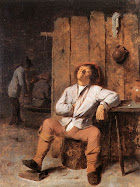
Mrs. Z (that's Mrs. Zed, for you Americans)
"She's a bit demanding. You have to know when to say no," she warned me.
She was speaking of Mrs. Z, her former neighbour. Having been entirely to slow in coming up with a reasonably believable excuse, I had just agreed to shovel snow for Mrs. Z.
After the first snowfall, I dutifully knocked on Mrs. Z's door. After several moments, the door creaked open and a short, solid, old woman with striking light-blue eyes could be seen through the crack.
"Oh, my dear, are you John?" Her voice was slightly shrill and she had an accent that I could not quite place.
I confirmed that I was, in fact, John.
"Come in, Come in, I must explain to you how to remove the snow," her hair was grey and white with tinges of light brown.
I leaned my shovel against the wall, not quite sure how complicated snow removal could be.
Mrs. Z first explained that she had been a widow for twenty years, her light-blue eyes looking slightly sad. She was Latvian, her husband had liked to shoot at targets for sport, did I? She was worried about young people breaking into her home, her son lived in Toronto. She explained that the neighbours, who were renting from the woman who had first recommended me for the job, were "nice, but liked to play boom-boom music."
"Please, my dear," she said, "take off your hat."
I took off my touque.
I must explain, that at this point in my young life I had allowed my curly hair to form into dreads. I thought they were rather cool.
"Oh, my dear," she exclaimed, touching a hand to her cheek, "you are wearing the hair, I see the black people wearing this hair. Why are you wearing your hair like this?"
"I like it," I explained.
She did not seem satisfied with my answer, her wrinkles crinkling as her light blue eyes searched my face. When no further explanation came, she moved on to describe her husband's snow shovel.
"I have a snow shovel," I stated.
"Oh yes! I know, my dear, but for scraping the ice you will need this shovel," she nodded gravely, "I am worried about ice, my dear, because I cannot fall down."
"My shovel will scrape the ice, and I don't think there is any today," I reassured her.
"Oh no, my dear, your shovel is plastic. My husband used a metal shovel and he attached some metal to the end so it scrapes very well," she gestured behind her, "I will get you this shovel, don't worry, my dear."
I felt I could not dishonour the hard work her husband had put into making the perfect shovel.
I waited, her house smelled of fish, the air was warm and slightly moist. She emerged several minutes later bearing a red shovel with a grey piece of aluminum welded to the end.
"That's a nice shovel," I commented, not really liking it all that much.
"Thank you, my dear, my husband made it."
I started reaching for the shovel.
"Oh, my dear!" she laughed, "You are rushing so. I have yet to explain how the snow is to be shovelled."
I nodded, "Oh, okay."
She beckoned towards the window, pointing to her porch, "After you shovel, you must sweep . . ."
"Sweep?"
"Oh, my dear, I will give you a broom," she patted my arm, "You must sweep the porch all along the edges so there is no snow. If the snow melts and freezes it will make ice and I cannot fall."
"So, my dear," she continued, "You must, you must clear the snow all along my pathway. I need a clear path to the sidewalk. Sweep this path after you shovel. Do you understand?"
I nodded.
"You see behind my porch," she arched her hand to indicated the area hidden from our view, "You must remove the snow from this area and put it," she pushed her hands forwards like a bulldozer, "put it to the other side."
"But," she raised her eyebrows seriously, "this pile on the other side of my walk cannot be too tall. I must be able to see the sidewalk."
I began putting my touque back on, as a signal that I was ready to begin shovelling the snow.
"Are you listening, my dear?" she tapped the glass, peering at me seriously with those light blue eyes, "make sure the catchbasin is clear."
"Make sure what?"
"My dear, the catchbasin, on the side of the sidewalk, needs to be clear so that when the snow melts it can travel into the catchbasin."
"The getchbayysun?"
"Yes, my dear, the catchbasin."
"I will remove the snow from the getchbayysun." I was still completely unsure as to what a getchbayysun might be.
"Good," she smiled in satisfaction, "now, on the other side of my driveway, you must not throw the snow onto the lawn of the neighbour, you understand?"
"I can't throw the snow on the neighbour's lawn?" I queried incredulously.
"Yes, my dear, there is a hydro line there. My neighbour, he is not a nice man, he becomes angry when the snow is put there. The city will make him pay the money to remove the snow if something goes wrong with the hydro," she shook her head.
I immediately thought he was, perhaps, a liar. "No snow on that side," I repeated, wondering how this would work logistically.
"Also, remove the snow from in front of the gate so that I can open it to go to my patio."
"Your patio?"
"Oh, yes my dear, the patio must be cleared of snow and ice because I must go to my compass and laundry line."
"Your compass?" I must have been hearing wrong.
She looked at me in surprise, "Your mother, she doesn't have a compass?"
"In the back yard?" I asked, frowning.
"I put my veg-e-tab-les in the compass," she said, "it is good for the soil."
"Oh, yes, we have a compost," I smiled.
She smiled back, but she didn't seem to believe me, her eyes peering at me with careful calculation, "Yes, a compass is very good, I put fish in there as well."
"Now, I will need a pass from the patio to the compass and the laundry line. Also, the window wells must be cleared from the snow so that the damp does not come through the wall," she held my arm as she spoke, the shovel still in her other hand.
I began rubbing my forehead vigorously, a habit I engage in when I am overwhelmed, annoyed, or frustrated.
"But don't worry, my dear," she seemed to perceive my state of mind, "I will explain this to you again after you finish the front."
I noticed a crumb on her chin.
When I finally stepped outside, I used the metal shovel for all of two minutes before it's inability to actually scoop the snow made me thrust it aside. Then, using my plastic shovel, I heaped snow on her neighbour's lawn, vainly searched for the getchbayysun, and piled the snow onto her lawn to a prohibitive height.
"My dear, my dear," she called from the door, "You must flatten this snow in the pile on my lawn. Have you shovelled the sidewalk my dear? What about the catchbasin?"
I carried out her instructions, until she felt the need to take a tour of the work site in order to offer more helpful hints to improve the snow removal.
"My dear, my dear, the snow on my lawn is still too high, you must shovel it to the centre."
I offered a weak objection but tired of her explanation. Eventually I just shovelled the pile into a more even distribution onto her lawn in order to avoid further lectures on the dangers of melting snow.
"My dear, you did not sweep this path to the sidewalk."
I bit my lip, scratching my forehead vigorously.
"I can sweep it tomorrow, my dear," she offered suddenly.
"My dear, you did not open the catchbasin!" - Apparently, a getchbayysun is a storm drain.
After the final inspection she finally called out, "Okay, my dear, you must walk through the house to go to the patio now."
I had arrived at her house at 4:30. When I had finally finished her patio, it was 7:30, I was hungry, cold, and annoyed.
"Thank you very much, my dear," she said as I stood in the kitchen.
"When did you start?" she asked, "how long did you work?"
I frowned, I guess I hadn't started until 5:30 but that was because I listened to an hour of instructions. "Uuh, two hours?"
"How much do I owe you?"
I glanced at my watch, at her clock, at the rows of vitamin capsules on her table. I looked at her light blue eyes, what can you charge an old widow for two hours of work? "ten dollars."
"I will give you eleven," she said, her voice swelling with pride at her generosity.
"Thank you," I mumbled as I fingered the change. She had given me five two dollar bills, bills which had already been out of circulation for about three years at this point.
"You will come next time it snows?" she asked.
"Yes," I said, "I'll be here."
Thursday, July 16, 2009
I do not know what to write.
I feel like writing something smart.
Problem: I don't feel particularly smart at the moment.
Of course, this has never stopped me before. Why should it stop me now? One merely needs to examine this blog in order to ascertain that the author is not exactly a gen . . .
"Hold up, hold up."
What?
"Listen, John, we at Boerishbwoy have spent a lot of time trying to establish you as a genius, or have you forgotten due to your complete and total lack of attention to us over the past year?"
Oh come on, complete and total lack of attention is a bit strong, don't you think?
"So is the intense and overwhelming feeling of neglect."
Wait a minute, so you're telling me that my blog has not only developed its own personality, but also a strong grudge towards me?
"You never updated us."
I'm updating you now, aren't I? I've updated you quite a bit over the last while, haven't I?
"It's just a little toooo late."
Are you singing a JoJo song? Honestly, how can anyone take you seriously?
"Italics are for wimpy writers."
You used them.
"We're the resentfully poignant disembodied voice of your blog. We could speak entirely in capital letters and people would weep from the depth of feeling that we communicate."
What does that even mean? And how is that an excuse for using italics? I don't even see anything wrong with italics.
"Maybe we should just get someone else to update us."
This is crazy, I'm arguing with my blog, and my blog thinks it's more than one person. Maybe you should just update yourself.
"Maybe we will. We're much more articulate than you are."
I CREATED YOU!
"You're not going to get them with the capital letters, John."
Whatever.
I feel like writing something smart.
Problem: I don't feel particularly smart at the moment.
Of course, this has never stopped me before. Why should it stop me now? One merely needs to examine this blog in order to ascertain that the author is not exactly a gen . . .
"Hold up, hold up."
What?
"Listen, John, we at Boerishbwoy have spent a lot of time trying to establish you as a genius, or have you forgotten due to your complete and total lack of attention to us over the past year?"
Oh come on, complete and total lack of attention is a bit strong, don't you think?
"So is the intense and overwhelming feeling of neglect."
Wait a minute, so you're telling me that my blog has not only developed its own personality, but also a strong grudge towards me?
"You never updated us."
I'm updating you now, aren't I? I've updated you quite a bit over the last while, haven't I?
"It's just a little toooo late."
Are you singing a JoJo song? Honestly, how can anyone take you seriously?
"Italics are for wimpy writers."
You used them.
"We're the resentfully poignant disembodied voice of your blog. We could speak entirely in capital letters and people would weep from the depth of feeling that we communicate."
What does that even mean? And how is that an excuse for using italics? I don't even see anything wrong with italics.
"Maybe we should just get someone else to update us."
This is crazy, I'm arguing with my blog, and my blog thinks it's more than one person. Maybe you should just update yourself.
"Maybe we will. We're much more articulate than you are."
I CREATED YOU!
"You're not going to get them with the capital letters, John."
Whatever.
Tuesday, July 14, 2009
Update
~ My mother, father, youngest sister, and her friend came up to Ottawa on a camping trip over my birthday weekend. We went camping with them for my birthday. It used to be a den Boer tradition to be camping during my birthday, it was nice to revisit that tradition.
~ We went to see Ben Harper and Relentless7 at the Bluesfest here in Ottawa. They are relentless, but there aren't seven of them. There are three.
~ If you count Ben Harper as part of Relentless7 then there are more.
~ Our enjoyment was briefly interrupted by a gentleman for whom it might have appeared there were seven people on stage.
~ Bluesfest is great, although there seem to be more late night drunks bellowing from the street below on the weekends. One in particular was looking for Kristen (I heard Gretchen, Laurianne heard Kristen - we'll have to go with Kristen) to open the door for her. Kristen did not open the door for at least forty minutes.
~ I can hear Ice Cube right now. I think he might be angry.
~ I think he might not appreciate the unseasonably cold weather. But I got to say, Ice, at least it's sunny.
~ Thank you for the prayers.
~ I don't know if you've heard, but Michael Jackson has died.
~ I would like at least three scorchingly hot summer days this July. At least three.
~ Remember slap-on bracelets? Those were sweet.
~ My mother, father, youngest sister, and her friend came up to Ottawa on a camping trip over my birthday weekend. We went camping with them for my birthday. It used to be a den Boer tradition to be camping during my birthday, it was nice to revisit that tradition.
~ We went to see Ben Harper and Relentless7 at the Bluesfest here in Ottawa. They are relentless, but there aren't seven of them. There are three.
~ If you count Ben Harper as part of Relentless7 then there are more.
~ Our enjoyment was briefly interrupted by a gentleman for whom it might have appeared there were seven people on stage.
~ Bluesfest is great, although there seem to be more late night drunks bellowing from the street below on the weekends. One in particular was looking for Kristen (I heard Gretchen, Laurianne heard Kristen - we'll have to go with Kristen) to open the door for her. Kristen did not open the door for at least forty minutes.
~ I can hear Ice Cube right now. I think he might be angry.
~ I think he might not appreciate the unseasonably cold weather. But I got to say, Ice, at least it's sunny.
~ Thank you for the prayers.
~ I don't know if you've heard, but Michael Jackson has died.
~ I would like at least three scorchingly hot summer days this July. At least three.
~ Remember slap-on bracelets? Those were sweet.
Monday, July 13, 2009
I saw your Jesus
I saw your Jesus on a shirt
beneath a logo that said 'no more hurt'
I wondered aloud what he was worth
'$13.99, plus tax,' replied the clerk
I saw your Jesus the other day
he said the revolution was on its way
as he thrust his fist into the air
and combed a hand through his long blonde hair
I saw your Jesus as he told
his audience of his chains of gold
and how it could be theirs if they just showed
their faith through the seed they sowed
I saw your Jesus on the news
and he said that our nation would lose
unless ungodliness were cut down at the root
and crushed beneath our mighty boot
I saw your Jesus in some books
I thought I'd take a good hard look
chapter 2 was a new revelation on how he could
have been written down and misunderstood
I saw your Jesus, I saw him shine
I say he's yours because he's not mine
I saw your Jesus on a shirt
beneath a logo that said 'no more hurt'
I wondered aloud what he was worth
'$13.99, plus tax,' replied the clerk
I saw your Jesus the other day
he said the revolution was on its way
as he thrust his fist into the air
and combed a hand through his long blonde hair
I saw your Jesus as he told
his audience of his chains of gold
and how it could be theirs if they just showed
their faith through the seed they sowed
I saw your Jesus on the news
and he said that our nation would lose
unless ungodliness were cut down at the root
and crushed beneath our mighty boot
I saw your Jesus in some books
I thought I'd take a good hard look
chapter 2 was a new revelation on how he could
have been written down and misunderstood
I saw your Jesus, I saw him shine
I say he's yours because he's not mine
Monday, July 06, 2009
When the knife entered his chest, nestling uncomfortably between his third and fourth rib next to what he imagined was a rather important area of his heart, he frowned in consternation. It seemed to him that it was slightly unfair for his life to end so abruptly over what now seemed such a ridiculous issue. He appealed to the higher power whose existence he had previously been sceptical of, but received no response. As he lay in the asphalt, gurgling and clutching his chest in wide-eyed agony he thought of several other responses he could have given those punks. Responses that, most likely, would not have resulted in him having his chest cavity introduced to the long stainless steel blade with the serrated edge. Was it a steak knife? His inner voice laughed sardonically at the idea of gangsters wielding their mother’s steak knives in lieu of more martial blades. The response he had chosen had been pretty clever and he usually did not think of such witty comebacks until at least fifteen minutes after the fact. Of course, his reply was not the sort of wit that was worth risking a mortal wound for the brief joy of its utterance. There were probably few one-liners that were worth that risk, even if one suffered from a poverty of such ingenuity.
He had not thought about death too often in his life. To him, it had seemed a distant destination on a journey with far more interesting things to consider. The girl at the far wall of the club, for instance. He was sure that she had been eying him. He wished he had possessed the courage to approach her and rattle off a clever line so that she would twirl her dark brown hair around her finger, tilt her head, lower her eyes, and smile sweetly. Then she would dance with him and perhaps they could have spent the next day walking her dog in the park — assuming, of course, that she had a dog. He assumed she did. Probably a Pekinese.
What happened now? He wondered how long he had been a stabbing victim. He reckoned that it was anywhere from two minutes to an hour. When he looked up, though, he could still see the retreating backs of his assailants. They had been very generic looking, he observed retroactively. Average height, average build, averagely dressed plain-faced white youths with steak knives slipped into the elastics of their plain grey boxers. One, of course, no longer had his steak knife, which lay precariously in all of the glory of its Chinese manufacturing on the lip of the eaves-trough somewhere above his head. One youth turned his average-looking profile to glance back at him, a look hovering between braggadocio and regret. He felt a sudden rush of anger at having his life stolen by such generic looking white-bread gangsters. If he had been stabbed by some harder looking criminals he would have had a small piece of comfort. These suburban gangsters, who would have had all of their pockets emptied within five minutes of arriving at a real ghetto, were an almost unbearable death. Unbearable death? He decided that any death would have been unbearable at this point. He was too young.
Wow, he had never felt pain like this. He had broken a finger before, but that pain seemed the peep of a small bird compared to this constant roar of pain. He found it immensely difficult to breathe and he was amazed at the amount of blood his wound was able to generate. His head was growing light, a sign of his incoming death, he decided. Perhaps there was an afterlife. His mind was fuzzy, his vision blurry, and he seemed unable to recall the basic lessons of his catechism. TULIP. Total depravity, unconditional something, limited something, irresistible something, and Puh, puh, puh. “The devil with it . . .” he muttered through dry bloodied lips. He found it difficult to continue a sentence he had set out to begin somewhere in his mind. His shoulders were convulsing involuntarily and his legs twitched. A Gordon Lightfoot song was playing in his mind, but without words and just the twang of nonsense words to the sound of discordant guitar. The brain is an incredible organ, he observed numbly.
An incredible organ.
He had not thought about death too often in his life. To him, it had seemed a distant destination on a journey with far more interesting things to consider. The girl at the far wall of the club, for instance. He was sure that she had been eying him. He wished he had possessed the courage to approach her and rattle off a clever line so that she would twirl her dark brown hair around her finger, tilt her head, lower her eyes, and smile sweetly. Then she would dance with him and perhaps they could have spent the next day walking her dog in the park — assuming, of course, that she had a dog. He assumed she did. Probably a Pekinese.
What happened now? He wondered how long he had been a stabbing victim. He reckoned that it was anywhere from two minutes to an hour. When he looked up, though, he could still see the retreating backs of his assailants. They had been very generic looking, he observed retroactively. Average height, average build, averagely dressed plain-faced white youths with steak knives slipped into the elastics of their plain grey boxers. One, of course, no longer had his steak knife, which lay precariously in all of the glory of its Chinese manufacturing on the lip of the eaves-trough somewhere above his head. One youth turned his average-looking profile to glance back at him, a look hovering between braggadocio and regret. He felt a sudden rush of anger at having his life stolen by such generic looking white-bread gangsters. If he had been stabbed by some harder looking criminals he would have had a small piece of comfort. These suburban gangsters, who would have had all of their pockets emptied within five minutes of arriving at a real ghetto, were an almost unbearable death. Unbearable death? He decided that any death would have been unbearable at this point. He was too young.
Wow, he had never felt pain like this. He had broken a finger before, but that pain seemed the peep of a small bird compared to this constant roar of pain. He found it immensely difficult to breathe and he was amazed at the amount of blood his wound was able to generate. His head was growing light, a sign of his incoming death, he decided. Perhaps there was an afterlife. His mind was fuzzy, his vision blurry, and he seemed unable to recall the basic lessons of his catechism. TULIP. Total depravity, unconditional something, limited something, irresistible something, and Puh, puh, puh. “The devil with it . . .” he muttered through dry bloodied lips. He found it difficult to continue a sentence he had set out to begin somewhere in his mind. His shoulders were convulsing involuntarily and his legs twitched. A Gordon Lightfoot song was playing in his mind, but without words and just the twang of nonsense words to the sound of discordant guitar. The brain is an incredible organ, he observed numbly.
An incredible organ.
Wednesday, July 01, 2009
April 2nd, 2005.*
Paul Martin is Prime Minister of Canada.
Pope John Paul II has died.
G-mail celebrates its first Birthday.
And in a small unassuming unit of a townhouse complex on the West Mountain of Hamilton, university students prepare for a meal. Spaghetti boils on the stove, and several hungry men mill about. Their concentration is broken only by a loud squawk. From whence this squawk?
The source is quickly found.
Perched high on the refrigerator is Bill Bopper**, his stance that of a majestic vulture. As astonished as his friends were, the question remained: what had transformed this young man from a mild-mannered student into a fierce scavenger?
As intelligent as these university students were, they were asking the wrong question. A better question would have been the following: Who exactly is this Bill Bopper?
William Bopper was born September 19th, 1981 to Mr. and Mrs. Robert and Alicia Bopper. As a boy, his parents noticed a strange habit: Bill would circle his food several time before finally eating it. And even when he ate his food, he ate like a bird.***
The peculiar behaviour continued. Once, his mother noted with alarm, a four year old Bill squawking loudly at a brother who had stolen his donut. If only his mother had known the origins of his bizarre behaviour.
July 13, 1984: The Bopper family is camping in a rather idyllic provincial park snuggled next to Lake Ontario. Older brother Shawn has persuaded his sister that a poison ivy plant is, in fact, a salve. While both parents struggle to comfort their weeping daughter and punish their wayward son, young Bill has wandered off down a nearby trail.
Poor Bill is oblivious to the fact that his heavy footfalls have disturbed the peace of a creature that would forever change the direction of his life, a creature whose fate was so closely tied to his own.****
On that fateful July day, Bill disturbs a powerful creature. This creature is . . . *****
Bill Bopper has displayed strange behaviour for quite some time. On July 13th, 1984, Bill Bopper wanders off and disturbs a powerful creature. A gigantic vulture******
On any other day with any other vulture this would have been fine. This vulture, however, was a cantankerous brute who, exiled from his venue*******, had flown wildly off on his own. Once on its own, the bird had madly pursued the notion that there were vast amounts of carrion lodged in the Pickering nuclear facility. The bird, ravaged by hunger, had pecked its way through several feet of cement only to expose itself to deadly levels of radioactivity********. Rather than die of the various cancers that should have infected its body, the vulture became a super beast. Kind of like Spiderman, but a vulture.
Returning to that fateful July day, when Phil disturbs this radioactive vulture. Bill is pecked sharply, drawing blood and indelibly altering Bill's DNA.
When a screeching Bill returns to camp flapping his arms his parents assume it is because he has fallen and cut himself on a rock. If only his parents had known:
Their son was a vulture man.
*This story is meant to be read with a serious deep voice, like that of Peter Mansbridge. If it is read otherwise, its true strength will not be felt.
** Some names have been changed to protect the identities of those involved.
*** The word bird is meant to be read ominously. Hence, the italics.
**** Now would be a good time to take a break, like a commercial break. It's more dramatic that way. Go get a drink or something.
***** This is sort of like a teaser in between commercials. Take another break. Maybe get a cookie to go with that drink.
****** Remember what was said earlier about italics? It still applies.
******* A group of vultures is called a venue. Unless they're circling, then they're referred to as a kettle.
******** The reporter had trouble with this part of the story, and was forced to manufacture a gap in the story. The vulture pecking through cement made the most sense and was therefore inserted into an otherwise entirely accurate story.
Paul Martin is Prime Minister of Canada.
Pope John Paul II has died.
G-mail celebrates its first Birthday.
And in a small unassuming unit of a townhouse complex on the West Mountain of Hamilton, university students prepare for a meal. Spaghetti boils on the stove, and several hungry men mill about. Their concentration is broken only by a loud squawk. From whence this squawk?
The source is quickly found.
Perched high on the refrigerator is Bill Bopper**, his stance that of a majestic vulture. As astonished as his friends were, the question remained: what had transformed this young man from a mild-mannered student into a fierce scavenger?
As intelligent as these university students were, they were asking the wrong question. A better question would have been the following: Who exactly is this Bill Bopper?
William Bopper was born September 19th, 1981 to Mr. and Mrs. Robert and Alicia Bopper. As a boy, his parents noticed a strange habit: Bill would circle his food several time before finally eating it. And even when he ate his food, he ate like a bird.***
The peculiar behaviour continued. Once, his mother noted with alarm, a four year old Bill squawking loudly at a brother who had stolen his donut. If only his mother had known the origins of his bizarre behaviour.
July 13, 1984: The Bopper family is camping in a rather idyllic provincial park snuggled next to Lake Ontario. Older brother Shawn has persuaded his sister that a poison ivy plant is, in fact, a salve. While both parents struggle to comfort their weeping daughter and punish their wayward son, young Bill has wandered off down a nearby trail.
Poor Bill is oblivious to the fact that his heavy footfalls have disturbed the peace of a creature that would forever change the direction of his life, a creature whose fate was so closely tied to his own.****
On that fateful July day, Bill disturbs a powerful creature. This creature is . . . *****
Bill Bopper has displayed strange behaviour for quite some time. On July 13th, 1984, Bill Bopper wanders off and disturbs a powerful creature. A gigantic vulture******
On any other day with any other vulture this would have been fine. This vulture, however, was a cantankerous brute who, exiled from his venue*******, had flown wildly off on his own. Once on its own, the bird had madly pursued the notion that there were vast amounts of carrion lodged in the Pickering nuclear facility. The bird, ravaged by hunger, had pecked its way through several feet of cement only to expose itself to deadly levels of radioactivity********. Rather than die of the various cancers that should have infected its body, the vulture became a super beast. Kind of like Spiderman, but a vulture.
Returning to that fateful July day, when Phil disturbs this radioactive vulture. Bill is pecked sharply, drawing blood and indelibly altering Bill's DNA.
When a screeching Bill returns to camp flapping his arms his parents assume it is because he has fallen and cut himself on a rock. If only his parents had known:
Their son was a vulture man.
*This story is meant to be read with a serious deep voice, like that of Peter Mansbridge. If it is read otherwise, its true strength will not be felt.
** Some names have been changed to protect the identities of those involved.
*** The word bird is meant to be read ominously. Hence, the italics.
**** Now would be a good time to take a break, like a commercial break. It's more dramatic that way. Go get a drink or something.
***** This is sort of like a teaser in between commercials. Take another break. Maybe get a cookie to go with that drink.
****** Remember what was said earlier about italics? It still applies.
******* A group of vultures is called a venue. Unless they're circling, then they're referred to as a kettle.
******** The reporter had trouble with this part of the story, and was forced to manufacture a gap in the story. The vulture pecking through cement made the most sense and was therefore inserted into an otherwise entirely accurate story.
Wednesday, June 24, 2009
70 Uses for a Cinder Block
1) Set it on the ground, close your eyes, and wish for other blocks so that you can build a wall.
2) Use it as a paper weight when faced with strong winds.
3) See how far you can throw it.
4) Sit on it.
5) Grind it to dust and throw the dust in the air to test wind patterns.
6) Hold a door open.
7) Break a window.
8) Crush small rodents.
9) Crush big rodents.
10) Set it down vertically and balance on it on one foot like the Karate Kid.
11) Use it as a penitential pillow.
12) Anthropomorphize it, give it a name, and then talk to it after being stranded on a deserted island. If it falls off of your raft while you're trying to escape, that's it though. It's not floating away dramatically, that thing is going to sink.
13) Tie it to your wrist as a reminder of that thing you got to do when you get home.
14) Relieve your itch with its coarse texture.
15) Flatten a pop can.
16) Paint it a pretty colour and then put it on your lawn.
17) Mangle your lawnmower blades on it.
18) Use it as ballast.
19) Ford a creek that happens to be both shallow and narrow.
20) Use it to reach the top shelf.
21) Yes, it can hold up the endtable.
22) Affix it firmly to your copy of any season of a show involving Paris Hilton and throw it into the deepest darkest depths of the ocean.
23) Drop it like it's hot.
24) Use it as a creative muse.
25) Dent your car.
26) Dent someone else's car.
27) Light a match on it.
28) Imagine how it would sound if it were rubbed against a blackboard.
29) Use it to keep your place in a book.
30) Put soil in it and grow flowers out of it.
31) Lift it repeatedly to gain muscle strength.
32) Create an obstacle for would-be thieves.
33) Rest your drink on it.
34) Store your collection of shiny objects inside of it.
35) Pulverize anthills.
36) Use it as a soapbox. As in a stage for a speech, not a box for your soap.
37) You can also store your soap in it if your want to.
38) Throw it in a bog and then imagine an archaeologist getting excited about it in 2,000 years.
39) Use it as a goalpost for your pickup soccer game.
40) Crack open walnuts.
41) Use it as a bookend.
42) Dangle it from your rearview mirror.
43) Write your thesis on the influence it has had on postwar suburban American architectural angst.
44) Put in a cardboard box.
45) Put your car in drive and place it on your gas pedal.
46) Play catch with it.
47) Use it to break a hole in the ice so you can fish or swim or whatever.
48) Karate chop it in twane.
49) Submit it to the National Art Gallery of Canada.
50) Take blurry photographs of it and submit it to the National Art Gallery of Canada.
51) Launch it from a catapult to, uh, knock down a wall or something.
52) Knock down a wall with it.
53) Grow your MiracleGro grass on it like on the infomercial.
54) Wrap it up and give it to your unsuspecting cousins for Christmas.
55) Donate it to your neighbour.
56) See how far you can slide it across the ice.
57) Use it as a keychain.
58) Grind your coffee beans.
59) Use it as a writing surface.
60) Tenderize your steak.
61) Leave at least one corner of your wheel-less car on blocks.
62) Use it to mash your bananas. You can mash your potatoes with it as well.
63) Create a large splash.
64) Use it as a starting point for questioning reality.
65) Compare it to the brain of the person you are debating.
66) Use it as a highly ineffectual hiding place.
67) Use it lieu of a front step.
68) Use it as an object lesson.
69) Think of it as your life, heavy and burdensome but highly useful in certain situations.
70) Use it as an inspiration for meaningless metaphors.
1) Set it on the ground, close your eyes, and wish for other blocks so that you can build a wall.
2) Use it as a paper weight when faced with strong winds.
3) See how far you can throw it.
4) Sit on it.
5) Grind it to dust and throw the dust in the air to test wind patterns.
6) Hold a door open.
7) Break a window.
8) Crush small rodents.
9) Crush big rodents.
10) Set it down vertically and balance on it on one foot like the Karate Kid.
11) Use it as a penitential pillow.
12) Anthropomorphize it, give it a name, and then talk to it after being stranded on a deserted island. If it falls off of your raft while you're trying to escape, that's it though. It's not floating away dramatically, that thing is going to sink.
13) Tie it to your wrist as a reminder of that thing you got to do when you get home.
14) Relieve your itch with its coarse texture.
15) Flatten a pop can.
16) Paint it a pretty colour and then put it on your lawn.
17) Mangle your lawnmower blades on it.
18) Use it as ballast.
19) Ford a creek that happens to be both shallow and narrow.
20) Use it to reach the top shelf.
21) Yes, it can hold up the endtable.
22) Affix it firmly to your copy of any season of a show involving Paris Hilton and throw it into the deepest darkest depths of the ocean.
23) Drop it like it's hot.
24) Use it as a creative muse.
25) Dent your car.
26) Dent someone else's car.
27) Light a match on it.
28) Imagine how it would sound if it were rubbed against a blackboard.
29) Use it to keep your place in a book.
30) Put soil in it and grow flowers out of it.
31) Lift it repeatedly to gain muscle strength.
32) Create an obstacle for would-be thieves.
33) Rest your drink on it.
34) Store your collection of shiny objects inside of it.
35) Pulverize anthills.
36) Use it as a soapbox. As in a stage for a speech, not a box for your soap.
37) You can also store your soap in it if your want to.
38) Throw it in a bog and then imagine an archaeologist getting excited about it in 2,000 years.
39) Use it as a goalpost for your pickup soccer game.
40) Crack open walnuts.
41) Use it as a bookend.
42) Dangle it from your rearview mirror.
43) Write your thesis on the influence it has had on postwar suburban American architectural angst.
44) Put in a cardboard box.
45) Put your car in drive and place it on your gas pedal.
46) Play catch with it.
47) Use it to break a hole in the ice so you can fish or swim or whatever.
48) Karate chop it in twane.
49) Submit it to the National Art Gallery of Canada.
50) Take blurry photographs of it and submit it to the National Art Gallery of Canada.
51) Launch it from a catapult to, uh, knock down a wall or something.
52) Knock down a wall with it.
53) Grow your MiracleGro grass on it like on the infomercial.
54) Wrap it up and give it to your unsuspecting cousins for Christmas.
55) Donate it to your neighbour.
56) See how far you can slide it across the ice.
57) Use it as a keychain.
58) Grind your coffee beans.
59) Use it as a writing surface.
60) Tenderize your steak.
61) Leave at least one corner of your wheel-less car on blocks.
62) Use it to mash your bananas. You can mash your potatoes with it as well.
63) Create a large splash.
64) Use it as a starting point for questioning reality.
65) Compare it to the brain of the person you are debating.
66) Use it as a highly ineffectual hiding place.
67) Use it lieu of a front step.
68) Use it as an object lesson.
69) Think of it as your life, heavy and burdensome but highly useful in certain situations.
70) Use it as an inspiration for meaningless metaphors.
Wednesday, June 17, 2009
"How are you?"
"Oh, I'm fine. If fine means horrible."
"Your pleasure depends on one word's definition?"
"No, it depends on you being silent."
"So, if I talk you're fine?"
"No, vice versa."
"You're fine if I talk? I don't see the difference."
"No, I'm fine if you button it."
"Button what? My jacket?"
"No, zip it."
"My jacket doesn't have a zipper."
"Shut it."
"It is shut. It has buttons for that very purpose."
"I said don't talk."
"I don't remember you saying that."
"Can it."
". . . can it what?"
"Be quiet."
"Why, yes, a jacket with buttons can be a lot quieter than one with a zipper."
". . ."
"So, how are you?"
"Horrible."
"Oh really? Why?"
"I'm talking to you."
"I know, but why do you feel horrible?"
"Oh, I'm fine. If fine means horrible."
"Your pleasure depends on one word's definition?"
"No, it depends on you being silent."
"So, if I talk you're fine?"
"No, vice versa."
"You're fine if I talk? I don't see the difference."
"No, I'm fine if you button it."
"Button what? My jacket?"
"No, zip it."
"My jacket doesn't have a zipper."
"Shut it."
"It is shut. It has buttons for that very purpose."
"I said don't talk."
"I don't remember you saying that."
"Can it."
". . . can it what?"
"Be quiet."
"Why, yes, a jacket with buttons can be a lot quieter than one with a zipper."
". . ."
"So, how are you?"
"Horrible."
"Oh really? Why?"
"I'm talking to you."
"I know, but why do you feel horrible?"
Saturday, June 06, 2009
Fast Food: A True Story
As I was waiting in line at a local fast-food restaurant yesterday, a portly gentleman came and stood behind me. He eyed the line with a look of grave distaste and shook his head.
"Is this the line to order?" he gestured at the line of people waiting to order their food.
I looked at the line of six or seven people who were obviously waiting to order their food.
"No, this is the line for the washroom," is what I would have said if I had wanted to start a fight. Instead, I said, "Yes, it is."
His hands fluttered into the air in disgust, "Screw this," he huffed and then stormed out of the restaurant.
"If you lack the patience to wait in line for a hamburger for five minutes, then you have to ask yourself if you really are hungry after all!" I would have shouted after him if I had wanted to pass along some unsolicited advice. Instead, I kept my place in the queue while I counted the tiles on the floor.
As I was waiting in line at a local fast-food restaurant yesterday, a portly gentleman came and stood behind me. He eyed the line with a look of grave distaste and shook his head.
"Is this the line to order?" he gestured at the line of people waiting to order their food.
I looked at the line of six or seven people who were obviously waiting to order their food.
"No, this is the line for the washroom," is what I would have said if I had wanted to start a fight. Instead, I said, "Yes, it is."
His hands fluttered into the air in disgust, "Screw this," he huffed and then stormed out of the restaurant.
"If you lack the patience to wait in line for a hamburger for five minutes, then you have to ask yourself if you really are hungry after all!" I would have shouted after him if I had wanted to pass along some unsolicited advice. Instead, I kept my place in the queue while I counted the tiles on the floor.
Friday, May 29, 2009
Update
~ I'm back this time, I really am.
~ No, really, I'm back. For real.
~ Remember when I didn't post anything? Well, now I'm posting things again.
~ This is coming rather late in the game, but my mother has published a book and also has her own blog: here. The book is called Blooming and is about a Christian woman's spiritual journey. One of the main characters in her book is named Paul, a likable chap who seems both witty and highly employable. If I have one criticism for the book it is that this character has very few lines despite his obvious genius.
~ Don't you hate it when people use clichés like "late in the game"?
~ Don't you hate it when someone tries to get you to agree to a statement by prefacing it with the phrase "don't you hate it when?"
~ I just learned that the reason honey is so easy to digest is that it has already been digested by bees. Makes sense.
~ Laurianne says hi.
~ Actually, she doesn't. She's not here right now, but I would imagine that she would say hi if I asked her to.
~ If any of my readers remember, I used to refer to my horribly disfigured fingernails a lot. Good news, the doctor claims that they should be growing normally by July. Then you never have to hear about them anymore.
~ Unless you want me to. I could write a story about my horribly disfigured fingernails every week if you wanted me to. I really could.
~ Linda and Rachel visited us about four weeks ago. We had a wonderful visit and Linda seemed a lot more like her old self. We went to Don Cherry's for Breakfast and I was amazed at how much Linda could eat. Apparently her nickname around her house is the "garburator." This was given not because she eats garbage, but because she eats a lot of leftovers . . . I think.
~ I have another sister who is famous around my former home for eating some butter that had been discarded into the garbage can. If life were fair, she would be the one called the garburator.
~ Blogger is insisting that I have spelled garburator incorrectly, but after using an online dictionary I believe this is just another case of my vocabulary being more extensive than Blogger's.
~ Here's a quotation that made me think: "Government is an institution that prevents injustice other than such as it commits itself" - Ibn Khaldun.
~ I missed this.
~ This, as in posting things on my blog.
~ A special shout-out to all Peter Tosh fans out there.
~ Quoting from Ibn Khaldun almost made it sound like I was poring over his works and came across that quotation and simply had to write it down. If you want to think that, it's fine with me.
~ Am I the only one who thinks the fact that Beyoncé has an alter-ego named Sasha Fierce is pretty funny? I mean, she presumably sat down, thought up the name Sasha Fierce, and then proceeded to think it was an awesome name to give her alter-ego.
~ My alter-ego's name is Patrick Smith. He's just a regular guy.
~ I doubt many of this blog's readers are fans of Beyoncé. If you are, please comment and I will give a name along with a description of your alter-ego.
~ If you are not a fan of Beyoncé you can still comment, and you can have a cookie. Look in your cupboard, they're probably there.
~ Song of the Moment: Ron Sexsmith - All in Good Time
~ I'm back this time, I really am.
~ No, really, I'm back. For real.
~ Remember when I didn't post anything? Well, now I'm posting things again.
~ This is coming rather late in the game, but my mother has published a book and also has her own blog: here. The book is called Blooming and is about a Christian woman's spiritual journey. One of the main characters in her book is named Paul, a likable chap who seems both witty and highly employable. If I have one criticism for the book it is that this character has very few lines despite his obvious genius.
~ Don't you hate it when people use clichés like "late in the game"?
~ Don't you hate it when someone tries to get you to agree to a statement by prefacing it with the phrase "don't you hate it when?"
~ I just learned that the reason honey is so easy to digest is that it has already been digested by bees. Makes sense.
~ Laurianne says hi.
~ Actually, she doesn't. She's not here right now, but I would imagine that she would say hi if I asked her to.
~ If any of my readers remember, I used to refer to my horribly disfigured fingernails a lot. Good news, the doctor claims that they should be growing normally by July. Then you never have to hear about them anymore.
~ Unless you want me to. I could write a story about my horribly disfigured fingernails every week if you wanted me to. I really could.
~ Linda and Rachel visited us about four weeks ago. We had a wonderful visit and Linda seemed a lot more like her old self. We went to Don Cherry's for Breakfast and I was amazed at how much Linda could eat. Apparently her nickname around her house is the "garburator." This was given not because she eats garbage, but because she eats a lot of leftovers . . . I think.
~ I have another sister who is famous around my former home for eating some butter that had been discarded into the garbage can. If life were fair, she would be the one called the garburator.
~ Blogger is insisting that I have spelled garburator incorrectly, but after using an online dictionary I believe this is just another case of my vocabulary being more extensive than Blogger's.
~ Here's a quotation that made me think: "Government is an institution that prevents injustice other than such as it commits itself" - Ibn Khaldun.
~ I missed this.
~ This, as in posting things on my blog.
~ A special shout-out to all Peter Tosh fans out there.
~ Quoting from Ibn Khaldun almost made it sound like I was poring over his works and came across that quotation and simply had to write it down. If you want to think that, it's fine with me.
~ Am I the only one who thinks the fact that Beyoncé has an alter-ego named Sasha Fierce is pretty funny? I mean, she presumably sat down, thought up the name Sasha Fierce, and then proceeded to think it was an awesome name to give her alter-ego.
~ My alter-ego's name is Patrick Smith. He's just a regular guy.
~ I doubt many of this blog's readers are fans of Beyoncé. If you are, please comment and I will give a name along with a description of your alter-ego.
~ If you are not a fan of Beyoncé you can still comment, and you can have a cookie. Look in your cupboard, they're probably there.
~ Song of the Moment: Ron Sexsmith - All in Good Time
Monday, May 25, 2009
She walked with a slight shuffle, her long pleated dress swishing against the backs of her round calves. Her curly hair was black but had a purplish tinge when it caught the light a certain way, betraying the dye she used every month. She wore a pair of thick glasses affixed to a chain hanging limply around her shoulders.
"Look who I brought home!" her son announced in semi-triumph.
Her laughlines crinkled as she smiled at her grandson sitting on the couch, "Hi Michael!"
Michael sat stonily on the couch, fiddling obsessively with a small electronic gadget that remained completely alien to her.
"Say hello to grandma, Michael," her son admonished.
She lowered herself slightly, clutching her purse and the precious card she had picked for him that morning. She readied herself for the hug she had been anticipating all week.
Michael's eyes flickered in a moment lazy recognition. "Hello," he mumbled in disinterest.
"Happy Birthday!" she waved the card slightly. It had been too much to hope for a hug, but at least she could have a somewhat enthusiastic reaction. She recalled how her children would wait at the window for hours before the expected arrival of their grandparents.
Michael raised the electronic gadget higher, closer to his furrowed brow.
Her son chuckled, "he loves that thing."
She stood for several long seconds, unsure what to do, "Happy Birthday," she repeated, her voice shrill in her ears.
"Michael, grandma said something to you," her son laughed as if this were just another case of boyish mischief.
Michael nodded absently, "thanks gramma." He tilted the object in his hands and muttered something about one more.
"One more what, dear?" she set her purse on the coffee table and slowly lowered herself onto a chair opposite her grandson.
"One more figibblet before I power up," Michael mumbled, turning his body slightly away from her.
"A figibblet?" she queried, "is that some kind of alien?"
"Nooo," he snorted scornfully with a peel of high-pitched laughter.
She smoothed her dress and peered at her son, hoping for help. But he had become absorbed with his own electronic gadget, carefully fidgeting with the keypad, a look of vacant amusement on his face.
"Michael," she called, as she fingered the envelope with the card. She had arrived at the store at 8:30, unaware that it did not open until 9:00. She had waited patiently for half an hour before a mopey woman with entirely too many ear piercings had sleepily unlocked the sliding barrier and opened the store.
Michael was unresponsive, his thumbs moving with lightning speed as his eyes stared at the small screen in front of him.
"It's my grandson's birthday," she had proudly told the clerk.
The clerk had smiled superficially and had said with veiled apathy, "isn't that nice?"
She had caught the apathy, but had merely smiled as if she were oblivious to it.
"He's turning eleven," she had offered brightly.
"The birthday cards are in that aisle," the clerk had gestured lackadaisically in their direction.
"Thanks pumpkin," she had offered. Pumpkin, oh how she had relished the grimace of distaste from the mopey hipster at the sound of that word.
"Got it," grunted Michael in semi-triumph.
"You got the fuzzgublet?" she queried.
"What the heck is a fuzzgubblet?" snickered Michael. He glanced at her with a strange grin on his face. "You don't know anything, gramma!" he snickered, the word gramma laced with childish derision.
Whatever a fuzzgubblet was, she suddenly had a strong desire to strike him soundly on the bottom with one.
She had carefully perused the cards. Some were silly, illustrated with horribly garish cartoon characters. Others were too serious, as if the eleventh birthday of a child were a sobering milestone on the journey of life. She had quickly thrust a particularly obscure card with strange and silly text back onto the shelf. She had glanced at the clerk who was peering out the window in a fit of hip boredom. She had smiled to herself and immediately decided that the clerk's equally dull and mopey boyfriend had authored that card.
She adjusted the envelope in her hands, holding it up so that Michael could see if he just looked away from his screen, "I have a card for your birthday, Michael. Why don't you open it up?"
"Just a sec," Michael grunted in minor annoyance.
"Now, Michael," his father said, thrusting his own gadget into his pocket, "you need to put that away now."
"Five more miiinutes," whined Michael, "hold your horses."
Michael's father reddened slightly, and then laughed, looking at his mother as if this were a shared joke.
She smiled thinly and almost told her son what a horrible father he was. Instead, she tried to think of an interesting question to ask about his banal accounting job. Just as she opened her mouth, he stirred from where he had been standing in his fidgety way.
"Sorry mom, I have to make a phone call. I'll be right back," he walked away hurriedly, leaving her with Michael.
"Alright dear," she called to his retreating back.
She sat quietly, running her fingers over the envelope. She peered at her grandson.
"Did you get that thing for your birthday, Michael?" she asked gingerly.
"No, I had this for a long time. I got a new game," he said, "but I am beating this one first."
"That's nice," she offered, "what else did you get?"
Michael sighed in exasperation, finally putting down the gadget in resignation, "Gramma, I can't concentrate when you talk to me."
She had been happy when he was born, she told herself. She really had.
"What else did you get?" she asked.
"The new Zugamatchi movie, headphones, and a funky Freddy t-shirt," he tilted his head backwards, looking directly at the ceiling as he recited the list in a bored monotone.
She nodded, fairly certain that she did not care to know what a Zugamatchi was or who funky Freddy might be, "Would you like to see what Grandma got you?"
He stood up, stretching his lanky frame lethargically and then shuffling over to where she sat.
Pam, from Scrabble night, had a cute little grand-daughter in ballet. Theresa, her neighbour for thirty years, had five grandchildren who would probably all have doctorates in nuclear physics to hear her go on about it. She had Michael.
He snatched the envelope from her hands, ignoring the immaculate cursive writing, "to my favourite grandson." She had won awards for her penmanship in elementary school.
After nearly half an hour of carefully looking at the cards, she had finally settled on card decorated with a romanticized painting of a tallship. "Sailing on into the future . . ." was written on the outside. Inside were the simple words, "Happy Birthday, grandson."
"Are you sure?" the clerk had pronounced snidely before ringing her purchase in.
"I'm sure, sweetie-pie," she had grinned.
At home, she had written out her ideas three times on a scrap piece of paper before carefully penning a message of love, advice, and hope for her grandson.
He ripped the envelope open diagonally, pulling the card out carelessly. He opened it, ignoring the script, his eyes following the money that fluttered to the ground.
"Ten dollars?" he queried.
"Wow," he said, "I'm glad I stopped for that."
Suddenly, in her mind, her grandson's face was transfigured into the face of the mopey clerk.
She stood, smiling benevolently at her grandson, "You're welcome, pumpkin." She gathered her purse, and shuffled quickly out of the house, her pleated skirt swishing wildly against her round calves.
She would take the bus home.
"Look who I brought home!" her son announced in semi-triumph.
Her laughlines crinkled as she smiled at her grandson sitting on the couch, "Hi Michael!"
Michael sat stonily on the couch, fiddling obsessively with a small electronic gadget that remained completely alien to her.
"Say hello to grandma, Michael," her son admonished.
She lowered herself slightly, clutching her purse and the precious card she had picked for him that morning. She readied herself for the hug she had been anticipating all week.
Michael's eyes flickered in a moment lazy recognition. "Hello," he mumbled in disinterest.
"Happy Birthday!" she waved the card slightly. It had been too much to hope for a hug, but at least she could have a somewhat enthusiastic reaction. She recalled how her children would wait at the window for hours before the expected arrival of their grandparents.
Michael raised the electronic gadget higher, closer to his furrowed brow.
Her son chuckled, "he loves that thing."
She stood for several long seconds, unsure what to do, "Happy Birthday," she repeated, her voice shrill in her ears.
"Michael, grandma said something to you," her son laughed as if this were just another case of boyish mischief.
Michael nodded absently, "thanks gramma." He tilted the object in his hands and muttered something about one more.
"One more what, dear?" she set her purse on the coffee table and slowly lowered herself onto a chair opposite her grandson.
"One more figibblet before I power up," Michael mumbled, turning his body slightly away from her.
"A figibblet?" she queried, "is that some kind of alien?"
"Nooo," he snorted scornfully with a peel of high-pitched laughter.
She smoothed her dress and peered at her son, hoping for help. But he had become absorbed with his own electronic gadget, carefully fidgeting with the keypad, a look of vacant amusement on his face.
"Michael," she called, as she fingered the envelope with the card. She had arrived at the store at 8:30, unaware that it did not open until 9:00. She had waited patiently for half an hour before a mopey woman with entirely too many ear piercings had sleepily unlocked the sliding barrier and opened the store.
Michael was unresponsive, his thumbs moving with lightning speed as his eyes stared at the small screen in front of him.
"It's my grandson's birthday," she had proudly told the clerk.
The clerk had smiled superficially and had said with veiled apathy, "isn't that nice?"
She had caught the apathy, but had merely smiled as if she were oblivious to it.
"He's turning eleven," she had offered brightly.
"The birthday cards are in that aisle," the clerk had gestured lackadaisically in their direction.
"Thanks pumpkin," she had offered. Pumpkin, oh how she had relished the grimace of distaste from the mopey hipster at the sound of that word.
"Got it," grunted Michael in semi-triumph.
"You got the fuzzgublet?" she queried.
"What the heck is a fuzzgubblet?" snickered Michael. He glanced at her with a strange grin on his face. "You don't know anything, gramma!" he snickered, the word gramma laced with childish derision.
Whatever a fuzzgubblet was, she suddenly had a strong desire to strike him soundly on the bottom with one.
She had carefully perused the cards. Some were silly, illustrated with horribly garish cartoon characters. Others were too serious, as if the eleventh birthday of a child were a sobering milestone on the journey of life. She had quickly thrust a particularly obscure card with strange and silly text back onto the shelf. She had glanced at the clerk who was peering out the window in a fit of hip boredom. She had smiled to herself and immediately decided that the clerk's equally dull and mopey boyfriend had authored that card.
She adjusted the envelope in her hands, holding it up so that Michael could see if he just looked away from his screen, "I have a card for your birthday, Michael. Why don't you open it up?"
"Just a sec," Michael grunted in minor annoyance.
"Now, Michael," his father said, thrusting his own gadget into his pocket, "you need to put that away now."
"Five more miiinutes," whined Michael, "hold your horses."
Michael's father reddened slightly, and then laughed, looking at his mother as if this were a shared joke.
She smiled thinly and almost told her son what a horrible father he was. Instead, she tried to think of an interesting question to ask about his banal accounting job. Just as she opened her mouth, he stirred from where he had been standing in his fidgety way.
"Sorry mom, I have to make a phone call. I'll be right back," he walked away hurriedly, leaving her with Michael.
"Alright dear," she called to his retreating back.
She sat quietly, running her fingers over the envelope. She peered at her grandson.
"Did you get that thing for your birthday, Michael?" she asked gingerly.
"No, I had this for a long time. I got a new game," he said, "but I am beating this one first."
"That's nice," she offered, "what else did you get?"
Michael sighed in exasperation, finally putting down the gadget in resignation, "Gramma, I can't concentrate when you talk to me."
She had been happy when he was born, she told herself. She really had.
"What else did you get?" she asked.
"The new Zugamatchi movie, headphones, and a funky Freddy t-shirt," he tilted his head backwards, looking directly at the ceiling as he recited the list in a bored monotone.
She nodded, fairly certain that she did not care to know what a Zugamatchi was or who funky Freddy might be, "Would you like to see what Grandma got you?"
He stood up, stretching his lanky frame lethargically and then shuffling over to where she sat.
Pam, from Scrabble night, had a cute little grand-daughter in ballet. Theresa, her neighbour for thirty years, had five grandchildren who would probably all have doctorates in nuclear physics to hear her go on about it. She had Michael.
He snatched the envelope from her hands, ignoring the immaculate cursive writing, "to my favourite grandson." She had won awards for her penmanship in elementary school.
After nearly half an hour of carefully looking at the cards, she had finally settled on card decorated with a romanticized painting of a tallship. "Sailing on into the future . . ." was written on the outside. Inside were the simple words, "Happy Birthday, grandson."
"Are you sure?" the clerk had pronounced snidely before ringing her purchase in.
"I'm sure, sweetie-pie," she had grinned.
At home, she had written out her ideas three times on a scrap piece of paper before carefully penning a message of love, advice, and hope for her grandson.
He ripped the envelope open diagonally, pulling the card out carelessly. He opened it, ignoring the script, his eyes following the money that fluttered to the ground.
"Ten dollars?" he queried.
"Wow," he said, "I'm glad I stopped for that."
Suddenly, in her mind, her grandson's face was transfigured into the face of the mopey clerk.
She stood, smiling benevolently at her grandson, "You're welcome, pumpkin." She gathered her purse, and shuffled quickly out of the house, her pleated skirt swishing wildly against her round calves.
She would take the bus home.
Sunday, October 26, 2008
"My fellow citizens, if I can make one thing abundantly clear it is that I stand for change."
"Citizens of this great country, I would also like to clarify my position on the issue of change. Namely, I am for it."
"Patriotic citizens of this beautiful nation, my honourable opponent claims that he stands for change. I would argue that his change can actually be defined as sameness. The change that I stand for is a far more changing change."
"Do not be fooled by the clever rhetoric of my opponent, he claims that my change is not a changing change, but a change that is more of the same. In fact, the change I stand for involves many changes that are deep and abiding changes."
"People of the greatest country on earth, my opponent cannot seem to decide if he stands for change or changes. With all due respect, it is time for us to have a leader that knows the change that he stands for is a singular enveloping change. I am that leader."
"Citizens of this superlative geographic region skirted by invisible yet truly consequential boundaries, I implore you not to listen to the demagoguery of my opponent. I stand for change and changes, there is nothing contradictory about change being both singular and plural. If you want change and changes, I am the man for the job."
"I assure you, fellow humans of this particular political region, it is time for change. Do you want the same or do you want change? If you want change than do not vote for my opponent who detests change and loves sameness."
"My slanderous opponent claims that I hate change and he loves change. I must point out that my supposedly change-loving opponent has been wearing the same hat for over ten years. If he loves change, why does he insist on wearing that same hat?"
"Citizens of this ridiculously superior country, my opponent has sunk to new lows by bringing my hat into the political dialogue. Yes, I have had the same hat for ten years, but I will be changing that along with everything else once I am elected into office."
"If my opponent embraced change as much as he claims, he would not have had the same hat for so long."
"I should point out to the discerning public that I have changed the band on my hat seven times in ten years."
"My fellow citizenry, this is the sort of change that my opponent represents. A change of the band but not a change of the hat. I assure you that I will change everything that needs changing once you give me the chance to reverse the sameness of recent times."
"People of this country which I embrace with far more love than my opponent, my position has been grossly misrepresented by my opponent. In fact, I do stand for changes that mean real change from the sameness of today. Here is to a change that will bring adjustments for tomorrow."
"What my opponent claims is all well and good, but I should remind you that while my opponent has honourable intentions for change, only the change that I represent will take away the sameness and bring about effective change not only for our children but for our great-grandchildren."
"Do not let his sweet words fool your ears. Only a vote for me will bring lasting change for at least three generations beyond the children your great-grandchildren."
"I should point out that the change I stand for is a positive change while the change my opponent stands for is a change that is very similar to the sameness of recent times and is, therefore, negative. Also, my change is five more generations more effective than whatever my opponent claims."
"I am taken aback by the depths of political mudslinging my opponent will sink to. I must insist that I do in fact stand for positive changes. It is my defamatory opponent who stands for sameness not myself. I should have been clearer with the overall impact of the change I stand for, but it is over a thousand generations more changeful than the change of my pro-sameness opponent."
"Ludicrous! I can assure th----"
"Ahm, excuse me, just a question: what exactly will both of you change?"
. . . . . .
"Citizens of this great country, I would also like to clarify my position on the issue of change. Namely, I am for it."
"Patriotic citizens of this beautiful nation, my honourable opponent claims that he stands for change. I would argue that his change can actually be defined as sameness. The change that I stand for is a far more changing change."
"Do not be fooled by the clever rhetoric of my opponent, he claims that my change is not a changing change, but a change that is more of the same. In fact, the change I stand for involves many changes that are deep and abiding changes."
"People of the greatest country on earth, my opponent cannot seem to decide if he stands for change or changes. With all due respect, it is time for us to have a leader that knows the change that he stands for is a singular enveloping change. I am that leader."
"Citizens of this superlative geographic region skirted by invisible yet truly consequential boundaries, I implore you not to listen to the demagoguery of my opponent. I stand for change and changes, there is nothing contradictory about change being both singular and plural. If you want change and changes, I am the man for the job."
"I assure you, fellow humans of this particular political region, it is time for change. Do you want the same or do you want change? If you want change than do not vote for my opponent who detests change and loves sameness."
"My slanderous opponent claims that I hate change and he loves change. I must point out that my supposedly change-loving opponent has been wearing the same hat for over ten years. If he loves change, why does he insist on wearing that same hat?"
"Citizens of this ridiculously superior country, my opponent has sunk to new lows by bringing my hat into the political dialogue. Yes, I have had the same hat for ten years, but I will be changing that along with everything else once I am elected into office."
"If my opponent embraced change as much as he claims, he would not have had the same hat for so long."
"I should point out to the discerning public that I have changed the band on my hat seven times in ten years."
"My fellow citizenry, this is the sort of change that my opponent represents. A change of the band but not a change of the hat. I assure you that I will change everything that needs changing once you give me the chance to reverse the sameness of recent times."
"People of this country which I embrace with far more love than my opponent, my position has been grossly misrepresented by my opponent. In fact, I do stand for changes that mean real change from the sameness of today. Here is to a change that will bring adjustments for tomorrow."
"What my opponent claims is all well and good, but I should remind you that while my opponent has honourable intentions for change, only the change that I represent will take away the sameness and bring about effective change not only for our children but for our great-grandchildren."
"Do not let his sweet words fool your ears. Only a vote for me will bring lasting change for at least three generations beyond the children your great-grandchildren."
"I should point out that the change I stand for is a positive change while the change my opponent stands for is a change that is very similar to the sameness of recent times and is, therefore, negative. Also, my change is five more generations more effective than whatever my opponent claims."
"I am taken aback by the depths of political mudslinging my opponent will sink to. I must insist that I do in fact stand for positive changes. It is my defamatory opponent who stands for sameness not myself. I should have been clearer with the overall impact of the change I stand for, but it is over a thousand generations more changeful than the change of my pro-sameness opponent."
"Ludicrous! I can assure th----"
"Ahm, excuse me, just a question: what exactly will both of you change?"
. . . . . .
Thursday, October 09, 2008
In one of my education classes we were asked to write a poem comparing ourselves to our favourite food. This activity was not marked, as one could infer from my submission:
My palms are greasy like your face
When you fill my stomach’s empty space
And your sweet soft buns of wheat
Are like my own buns on this seat
Let us not forget your saucy side
Which isn’t me, although I’ve tried
To emulate your saucy ways
And the way you fill up fast-food trays
But I’m much too skinny to be you, friend
So I’ll just be me in the end
And eat you from the charcoal grill
Oh hamburger, I love you still.
. . . It's not Wordsworth, but I like it.
My palms are greasy like your face
When you fill my stomach’s empty space
And your sweet soft buns of wheat
Are like my own buns on this seat
Let us not forget your saucy side
Which isn’t me, although I’ve tried
To emulate your saucy ways
And the way you fill up fast-food trays
But I’m much too skinny to be you, friend
So I’ll just be me in the end
And eat you from the charcoal grill
Oh hamburger, I love you still.
. . . It's not Wordsworth, but I like it.
Sunday, September 07, 2008
Irony
At the beginning of the summer, I was listening to the news on the radio. True story.
Wait, the story gets better.
I was listening to the news on the radio, and the woman said something like this:
"The Ottawa fire department plans to hire x more firefighters. Ironically, this occurs just at the beginning of the summer when heat-waves are set to begin."
This leaves me with two questions. First, when are these heat-waves arriving? And secondly, and more importantly, how was it ironic that the fire department was hiring more firefighters at the beginning of the summer? It seems to me that there is no irony in hiring more firefighters at an opportune moment. In fact, it seems more fortuitous or, perhaps, far-sighted. It would be ironic if extra firefighters were hired because of imminent heat-waves and then no heatwaves arrived. Or it could be considered ironic if extra firefighters were hired, the entire fire department went on an illegal strike, and then there was a huge fire.
Whatever the case, the real irony here is that someone presumably went through the entire Canadian education system, got a university degree, and still does not understand what irony is.
Or perhaps it is merely a sign of our deteriorating language. Ironic, considering our daily saturation of words.
At the beginning of the summer, I was listening to the news on the radio. True story.
Wait, the story gets better.
I was listening to the news on the radio, and the woman said something like this:
"The Ottawa fire department plans to hire x more firefighters. Ironically, this occurs just at the beginning of the summer when heat-waves are set to begin."
This leaves me with two questions. First, when are these heat-waves arriving? And secondly, and more importantly, how was it ironic that the fire department was hiring more firefighters at the beginning of the summer? It seems to me that there is no irony in hiring more firefighters at an opportune moment. In fact, it seems more fortuitous or, perhaps, far-sighted. It would be ironic if extra firefighters were hired because of imminent heat-waves and then no heatwaves arrived. Or it could be considered ironic if extra firefighters were hired, the entire fire department went on an illegal strike, and then there was a huge fire.
Whatever the case, the real irony here is that someone presumably went through the entire Canadian education system, got a university degree, and still does not understand what irony is.
Or perhaps it is merely a sign of our deteriorating language. Ironic, considering our daily saturation of words.
Tuesday, August 19, 2008
An English Evangelical clergyman found himself alone in a French railway compartment with a large Frenchman busily engaged in getting outside the contents of a luncheon basket. Thinking that he should lose no opportunity of spreading the Gospel, especially among people as materialistic as the French, he leaned towards the Frenchman and asked in a low voice:
'Do you love Jesus?'
The Frenchman paused for a moment and then said:
'Yes, I love your English cheeses. But most of all I love our French Camembert.'
'Do you love Jesus?'
The Frenchman paused for a moment and then said:
'Yes, I love your English cheeses. But most of all I love our French Camembert.'
Sunday, August 17, 2008
Boerishbwoy's Brilliantly Original Movie Ideas
1) Two cops, one black, one white, get caught in an investigation that is way over their heads. There is a foot-chase resulting in an explosion. One cop, the hot-head, is forced to turn in his badge while the other, the comedian, is hot on the tail of the drug-lord. The hot-head saves the comedian despite their strained relationship. There are many explosions. There is a spectacular car chase that causes several explosions as well as the overturning of a fruit cart. The hot-head explodes with rage. A warehouse shoot-out causes several large explosions. One cop is shot in the shoulder but is still able to punch the drug-lord off of a rooftop so that he lands on the roof of a car. The previously mentioned scene occurs in slow motion.
2) Someone should really make a movie based on a comic book.
3) A team of little-league misfits gains a reluctant coach. They lose every game until the coach starts giving them self-confidence. One player is fat, another is very short, another has red hair, and another has a bad attitude. The team loses spectacularly to a team of bigger boys who have better equipment and a military approach to the game. After this horrible defeat, the team starts to win their games, and they get new uniforms and better equipment. There is a rift between the players and the coach, but they make up and eat pizza. The team makes it to the championship against the previously mentioned team. It is the bottom of the ninth, there are two outs, the bases are loaded, the score is 14-11 for the opponents, and the fat kid who always strikes out is up to bat. The coach gives him a pep talk which references Babe Ruth striking out many times. The fat kid hits a home run. The previously mentioned scene occurs in slow motion with a lot of close ups.
4) They need to start making remakes of popular movies from previous decades.
5) A group of teenagers decide to go camping in a mysterious forest. An old-timer warns them against venturing out into the forest but he is treated rudely. One teenager is fat, another is very short, another has red hair, and another has a bad attitude. A homicidal maniac is after them. The rules of elimination are very simple: the most promiscuous dies first, then any visible minorities are wiped out, then the nerds or slightly ugly individuals are killed.* One person survives and is air-lifted to safety.
6) I have this idea where animated animals are anthropomorphized and have an adventure. Nothing has been finalized beyond the need for one fat animal. Oh, and celebrity voices are essential.
7) A young, slightly naive white teacher goes to an inner city school to teach. Other staff members warn this teacher that the students she is teaching cannot be reached. There is hip hop music. The students are rowdy and talk back to the teacher. One student is fat, another is very short, another has red hair, and another has a bad attitude. The teacher is warned by other staff members that these students are no good. The teacher uses a novel approach to reach the students. Staff members get angry about the teacher's unorthodox methods. The students demonstrate for the teacher so that the teacher is not fired. A student is shot. The previously mentioned scene occurs in slow motion. There is a funeral. The students all get passing grades, even the fat one. The students start wearing polo shirts and reciting seventeenth century poetry.
*If a visible minority is slightly ugly, nerdy, and promiscuous they will die first.
1) Two cops, one black, one white, get caught in an investigation that is way over their heads. There is a foot-chase resulting in an explosion. One cop, the hot-head, is forced to turn in his badge while the other, the comedian, is hot on the tail of the drug-lord. The hot-head saves the comedian despite their strained relationship. There are many explosions. There is a spectacular car chase that causes several explosions as well as the overturning of a fruit cart. The hot-head explodes with rage. A warehouse shoot-out causes several large explosions. One cop is shot in the shoulder but is still able to punch the drug-lord off of a rooftop so that he lands on the roof of a car. The previously mentioned scene occurs in slow motion.
2) Someone should really make a movie based on a comic book.
3) A team of little-league misfits gains a reluctant coach. They lose every game until the coach starts giving them self-confidence. One player is fat, another is very short, another has red hair, and another has a bad attitude. The team loses spectacularly to a team of bigger boys who have better equipment and a military approach to the game. After this horrible defeat, the team starts to win their games, and they get new uniforms and better equipment. There is a rift between the players and the coach, but they make up and eat pizza. The team makes it to the championship against the previously mentioned team. It is the bottom of the ninth, there are two outs, the bases are loaded, the score is 14-11 for the opponents, and the fat kid who always strikes out is up to bat. The coach gives him a pep talk which references Babe Ruth striking out many times. The fat kid hits a home run. The previously mentioned scene occurs in slow motion with a lot of close ups.
4) They need to start making remakes of popular movies from previous decades.
5) A group of teenagers decide to go camping in a mysterious forest. An old-timer warns them against venturing out into the forest but he is treated rudely. One teenager is fat, another is very short, another has red hair, and another has a bad attitude. A homicidal maniac is after them. The rules of elimination are very simple: the most promiscuous dies first, then any visible minorities are wiped out, then the nerds or slightly ugly individuals are killed.* One person survives and is air-lifted to safety.
6) I have this idea where animated animals are anthropomorphized and have an adventure. Nothing has been finalized beyond the need for one fat animal. Oh, and celebrity voices are essential.
7) A young, slightly naive white teacher goes to an inner city school to teach. Other staff members warn this teacher that the students she is teaching cannot be reached. There is hip hop music. The students are rowdy and talk back to the teacher. One student is fat, another is very short, another has red hair, and another has a bad attitude. The teacher is warned by other staff members that these students are no good. The teacher uses a novel approach to reach the students. Staff members get angry about the teacher's unorthodox methods. The students demonstrate for the teacher so that the teacher is not fired. A student is shot. The previously mentioned scene occurs in slow motion. There is a funeral. The students all get passing grades, even the fat one. The students start wearing polo shirts and reciting seventeenth century poetry.
*If a visible minority is slightly ugly, nerdy, and promiscuous they will die first.
Thursday, August 14, 2008
Update:
- We are no longer residents of Québec but citizens of the great city of Ottawa.
- Typing that é was quite simple now that we have a French keyboard.
- Our new apartment has, on average, one more pool than all our previous apartments put together.
- Each morning I chase pigeons off our balcony with a stick.
- Sometimes I don't use stick, it really isn't necessary. Sometimes I just clench a fist and shake it at them in a menacing manner.
- Usually a simple lunge in their direction is sufficient.
- Laurianne argues that pigeons are actually quite intelligent because of their excellent sense of direction.
- I would argue that ninety per cent of a pigeon's brain consists of its impeccable sense of direction while the other ten per cent consists of the mechanism that allows it to leave droppings at completely random locations.
- I wonder how some Obama-ites will reacte if his election does not result in a cure for the common cold.
- The pharmacist informed me that there is no cure for my fingernail(s) except by an expensive route that may damage my liver. It's enough to drive me to heavy drinking.
- I begin teacher's college in September.
- My cousin Becky is due very soon. Karen is too, isn't she? Too many babies.
- My wife's grandfather assures her that he will pay money for a great-grandchild. No more subtle hints, I guess.
- I could not get the oven to function. I went to the superintendent who informed me that I should first decide whether I want to broil or bake whatever I was cooking. She then proceeded to delineate the differences between broiling and baking.
- A fuse on the oven was broken.
- My sister, Rachel, is beginning university at McGill in September. She will be studying neuro-science. That sounds impressive.
- I bought a watch which advertised itself as having a "chrono look." From my basic knowledge of Greek it seemed to be claiming that it had the appearance of time.
- I was much relieved when I found that the watch does keep time. Actually, "chrono look" just means it has three useless hands that do absolutely nothing but make it look like a more complicated watch than it actually is.
- Apologies again for a lack of updates. I will attempt to be more regular in my updating.
- My clustrmap is looking rather forlorn and unimpressive.
- Song of the Moment - Asa - Fire on the Mountain.
- We are no longer residents of Québec but citizens of the great city of Ottawa.
- Typing that é was quite simple now that we have a French keyboard.
- Our new apartment has, on average, one more pool than all our previous apartments put together.
- Each morning I chase pigeons off our balcony with a stick.
- Sometimes I don't use stick, it really isn't necessary. Sometimes I just clench a fist and shake it at them in a menacing manner.
- Usually a simple lunge in their direction is sufficient.
- Laurianne argues that pigeons are actually quite intelligent because of their excellent sense of direction.
- I would argue that ninety per cent of a pigeon's brain consists of its impeccable sense of direction while the other ten per cent consists of the mechanism that allows it to leave droppings at completely random locations.
- I wonder how some Obama-ites will reacte if his election does not result in a cure for the common cold.
- The pharmacist informed me that there is no cure for my fingernail(s) except by an expensive route that may damage my liver. It's enough to drive me to heavy drinking.
- I begin teacher's college in September.
- My cousin Becky is due very soon. Karen is too, isn't she? Too many babies.
- My wife's grandfather assures her that he will pay money for a great-grandchild. No more subtle hints, I guess.
- I could not get the oven to function. I went to the superintendent who informed me that I should first decide whether I want to broil or bake whatever I was cooking. She then proceeded to delineate the differences between broiling and baking.
- A fuse on the oven was broken.
- My sister, Rachel, is beginning university at McGill in September. She will be studying neuro-science. That sounds impressive.
- I bought a watch which advertised itself as having a "chrono look." From my basic knowledge of Greek it seemed to be claiming that it had the appearance of time.
- I was much relieved when I found that the watch does keep time. Actually, "chrono look" just means it has three useless hands that do absolutely nothing but make it look like a more complicated watch than it actually is.
- Apologies again for a lack of updates. I will attempt to be more regular in my updating.
- My clustrmap is looking rather forlorn and unimpressive.
- Song of the Moment - Asa - Fire on the Mountain.
Wednesday, June 11, 2008
A blog update:
I have decided to update my blog links for dead blogs and new blogs and the like. If you have a blog that you would like me to link to let me know and I'll be happy to oblige. It seems that some people have moved and I have lost track of them.
This decision has been inspired by the suggestion of Phil Proper and my recent discovery of Brian Dijkema's (a fellow resident of the Outaouais region!) blog.
I'm very tired, otherwise I'd insert a humorous comment where this sentence is currently located. Those in search of humour will, unfortunately, have to settle for humorous intent which, while nice, is nowhere near as exhilarating.
I have decided to update my blog links for dead blogs and new blogs and the like. If you have a blog that you would like me to link to let me know and I'll be happy to oblige. It seems that some people have moved and I have lost track of them.
This decision has been inspired by the suggestion of Phil Proper and my recent discovery of Brian Dijkema's (a fellow resident of the Outaouais region!) blog.
I'm very tired, otherwise I'd insert a humorous comment where this sentence is currently located. Those in search of humour will, unfortunately, have to settle for humorous intent which, while nice, is nowhere near as exhilarating.
Friday, May 30, 2008
Conversations with Al
At the warehouse job I'm temping at, there's a fellow by the name of Al. My Newfoundlander boss turned to me soon after meeting him and said, "I wonders if he take them droogs or somethin'." I don't think he takes drugs but I'm beginning to think he's a functional autistic. He's a tall reedy fellow with a bit of a hunch and an almost constant look of bemusement. His eyes look out intently at you when he speaks to you and his brows furrow as soon as you utter a statement which he doesn't understand or agree with. Here's a sample of some of our conversations:
* * *
"Do you know what happened to the rubber ball in my truck?" Al asked me, staring at me carefully.
"Oh, yeah." I answered, "I must have accidentally kicked it out of the truck when you dropped me off. Don't worry, I put it in my bag."
"You put it in your bag?" he asked suspiciously.
"Yeah, I saw it rolling down the street so I picked it up and put in my bag."
"Why didn't you give it to me?" he queried.
"You were already gone."
"Oh, because I thought you stole it," he said, still gazing at me suspiciously.
A little while later he returned to me, "I remember that I stopped at a red light. Why didn't you catch up and return the ball to me?"
"I didn't see you."
"I don't know. I think maybe you just took it," Al seemed fairly sure of himself.
"No, I don't steal," I replied.
"Everyone says that. No one says, 'yes, I steal things,'" he laughed.
He had a point, but I was a little taken aback at being accused of the theft of a stupid little rubber ball. I just shook my head and walked away. At break time, I took the ball from my bag and gave it to him.
After bouncing his ball around for a while and then returning to work, Al walked over to me.
"Have you seen my ball?" he asked fervently.
"No."
"It's cool how it lights up, don't you think?" he asked.
"Yes."
"I put it somewhere where I would know where it was but no one would see it and take it."
He looked around for a bit more, "I think someone stole it." He spent the better part of ten minutes looking for his bouncy rubber ball until, at last, he held it aloft triumphantly, "here it is."
Later, while he was dropping me off he said, "Try not to take anything this time."
I laughed, looking down at the floor where he had strategically placed the ball, "I'll try not to."
His eyes lit up as if he had caught me, "You mean, you'll try not to steal it again?"
I frowned, "No, I'll try not to kick it out of the door again."
He didn't say anything, but the look he gave me almost made me feel guilty for a crime I didn't commit.
* * *
The manager of the plant came to check on us one day and asked why we weren't working. As soon as I told him we were on lunch he apologized and, in a friendly manner, told us to enjoy ourselves.
After the manager left, Al turned to me and said, "He's not very strict, is he?"
"No," I agreed, "he's a nice guy."
"How do you know he's a nice guy? You've only known him for a week," Al frowned at me as he scratched his long aquiline nose.
"From what I know, he's a nice guy," I replied.
"You're quick to judge people, aren't you?" he commented.
"I give them the benefit of the doubt."
"You judge people fast."
Being accused of being a swift judge of people, I thought back to a previous conversation.
"What do you think of the Chinese?" Al had queried as he had taken another of his many sudden breaks from his labours.
"I like Chinese people," I had answered.
"Really? Don't you find that they're all thieves?" Al had asked earnestly.
"No, they've never stolen from me."
"Do you know that in China they take pills and mark them as Viagra pills and sell them for cheaper than the real Viagra pills and they make a big profit off of that?" Al had pointed out.
"So you're willing to generalize about 1.5 billion people based on the actions of a few?" I had not been sure if there were 1.5 billion Chinese people but it had sounded right.
"Yes. Don't you find that generalizing about people is good? Then you know what to expect when you meet them," Al had frowned intently at me.
"No, I don't."
* * *
On finding out that someone had vacationed in Malaysia:
"Why would you want to go there?" Al asked.
"It's a beautiful place and the people are really nice," the person answered.
"Yeah, but what is there to do?" Al queried, biting his nail and furrowing his brow.
"There's great scenery, resorts, and wonderful friendly people to meet," came the answer.
Al's frown grew, he opened his mouth and then just shook his head, frowning in absolute befuddlement.
* * *
On seeing me drink from a bottle of Coca-Cola that I had requested from the daily drink run:
"Why didn't you order a Dr. Pepper?" he asked, as if Dr. Pepper were clearly a far superior drink.
"I like Coke," I replied.
"You don't like Dr. Pepper?" he frowned.
"Yeah, I like it."
"So why didn't you get one?" he asked.
"Because I like Coke more."
"Oh," he still seem perplexed by my answer.
* * *
When I made the mistake of saying that I thought the plant had air conditioning (I meant a ventilation fan keeping the air circulating in the plant).
"Why would you say something like that? Why would you say that?" He seemed genuinely alarmed that I could possibly say that.
"I meant a fan, you know, circulating the air."
"But why would you say that? That makes no sense. Why would you say that?" he seemed very agitated that I had misspoken.
* * *
After relating the story of how he had been pulled over and given a ticket for having an open container of alcohol in the vehicle:
"So why are you contesting the ticket if you're guilty?" I asked.
"Because the police officer violated my civil rights," he answered, as if it was obvious.
"How did he violate your civil rights?"
"He searched my vehicle without my permission."
"Yeah, but you had locked the door and that probably made him suspicious."
"No, because he didn't see me do that. I was very sneaky."
"But he tried the door and it was locked, so that probably made him very suspicious, it gave him probable cause."
"He had no right to search my vehicle. He called a tow truck and the tow truck driver took everything out of my truck and the officer gave me a ticket for having an open container of alcohol in my truck. Don't you see how he violated my rights? Most people don't know their rights and that's why cops get away with searching their vehicles. I'm glad I contested the ticket."
"But you're guilty," I said.
"That doesn't matter, he violated my rights."
"You gots open liquor, yer up shit creek, buddy," my boss opined over his shoulder.
Al continued to defend his line of reasoning for the better part of ten minutes.
* * *
"I can't believe the lady at Harvey's yelled at me."
"Why did she yell at you?" I asked.
"I was filling up my drink and she said 'why don't you wait for paying customers to get their drink before you steal it?'" he seemed positively put out at the injustice of it all.
"You stole your drink?"
"I just filled my bottle up at the refill station."
"You didn't pay for it?"
"No, I never pay for soft drinks. It's a waste of money."
"But you can't understand why she might be a little upset at you for that?"
"It's just carbonated water and sugar, it only costs them maybe 7 cents to produce but they charge $1.50 for it."
"So you don't buy it because they profit off of it so much?"
"I would never buy it, it's not really stealing."
It's my turn to frown and look at him in perplexion.
At the warehouse job I'm temping at, there's a fellow by the name of Al. My Newfoundlander boss turned to me soon after meeting him and said, "I wonders if he take them droogs or somethin'." I don't think he takes drugs but I'm beginning to think he's a functional autistic. He's a tall reedy fellow with a bit of a hunch and an almost constant look of bemusement. His eyes look out intently at you when he speaks to you and his brows furrow as soon as you utter a statement which he doesn't understand or agree with. Here's a sample of some of our conversations:
* * *
"Do you know what happened to the rubber ball in my truck?" Al asked me, staring at me carefully.
"Oh, yeah." I answered, "I must have accidentally kicked it out of the truck when you dropped me off. Don't worry, I put it in my bag."
"You put it in your bag?" he asked suspiciously.
"Yeah, I saw it rolling down the street so I picked it up and put in my bag."
"Why didn't you give it to me?" he queried.
"You were already gone."
"Oh, because I thought you stole it," he said, still gazing at me suspiciously.
A little while later he returned to me, "I remember that I stopped at a red light. Why didn't you catch up and return the ball to me?"
"I didn't see you."
"I don't know. I think maybe you just took it," Al seemed fairly sure of himself.
"No, I don't steal," I replied.
"Everyone says that. No one says, 'yes, I steal things,'" he laughed.
He had a point, but I was a little taken aback at being accused of the theft of a stupid little rubber ball. I just shook my head and walked away. At break time, I took the ball from my bag and gave it to him.
After bouncing his ball around for a while and then returning to work, Al walked over to me.
"Have you seen my ball?" he asked fervently.
"No."
"It's cool how it lights up, don't you think?" he asked.
"Yes."
"I put it somewhere where I would know where it was but no one would see it and take it."
He looked around for a bit more, "I think someone stole it." He spent the better part of ten minutes looking for his bouncy rubber ball until, at last, he held it aloft triumphantly, "here it is."
Later, while he was dropping me off he said, "Try not to take anything this time."
I laughed, looking down at the floor where he had strategically placed the ball, "I'll try not to."
His eyes lit up as if he had caught me, "You mean, you'll try not to steal it again?"
I frowned, "No, I'll try not to kick it out of the door again."
He didn't say anything, but the look he gave me almost made me feel guilty for a crime I didn't commit.
* * *
The manager of the plant came to check on us one day and asked why we weren't working. As soon as I told him we were on lunch he apologized and, in a friendly manner, told us to enjoy ourselves.
After the manager left, Al turned to me and said, "He's not very strict, is he?"
"No," I agreed, "he's a nice guy."
"How do you know he's a nice guy? You've only known him for a week," Al frowned at me as he scratched his long aquiline nose.
"From what I know, he's a nice guy," I replied.
"You're quick to judge people, aren't you?" he commented.
"I give them the benefit of the doubt."
"You judge people fast."
Being accused of being a swift judge of people, I thought back to a previous conversation.
"What do you think of the Chinese?" Al had queried as he had taken another of his many sudden breaks from his labours.
"I like Chinese people," I had answered.
"Really? Don't you find that they're all thieves?" Al had asked earnestly.
"No, they've never stolen from me."
"Do you know that in China they take pills and mark them as Viagra pills and sell them for cheaper than the real Viagra pills and they make a big profit off of that?" Al had pointed out.
"So you're willing to generalize about 1.5 billion people based on the actions of a few?" I had not been sure if there were 1.5 billion Chinese people but it had sounded right.
"Yes. Don't you find that generalizing about people is good? Then you know what to expect when you meet them," Al had frowned intently at me.
"No, I don't."
* * *
On finding out that someone had vacationed in Malaysia:
"Why would you want to go there?" Al asked.
"It's a beautiful place and the people are really nice," the person answered.
"Yeah, but what is there to do?" Al queried, biting his nail and furrowing his brow.
"There's great scenery, resorts, and wonderful friendly people to meet," came the answer.
Al's frown grew, he opened his mouth and then just shook his head, frowning in absolute befuddlement.
* * *
On seeing me drink from a bottle of Coca-Cola that I had requested from the daily drink run:
"Why didn't you order a Dr. Pepper?" he asked, as if Dr. Pepper were clearly a far superior drink.
"I like Coke," I replied.
"You don't like Dr. Pepper?" he frowned.
"Yeah, I like it."
"So why didn't you get one?" he asked.
"Because I like Coke more."
"Oh," he still seem perplexed by my answer.
* * *
When I made the mistake of saying that I thought the plant had air conditioning (I meant a ventilation fan keeping the air circulating in the plant).
"Why would you say something like that? Why would you say that?" He seemed genuinely alarmed that I could possibly say that.
"I meant a fan, you know, circulating the air."
"But why would you say that? That makes no sense. Why would you say that?" he seemed very agitated that I had misspoken.
* * *
After relating the story of how he had been pulled over and given a ticket for having an open container of alcohol in the vehicle:
"So why are you contesting the ticket if you're guilty?" I asked.
"Because the police officer violated my civil rights," he answered, as if it was obvious.
"How did he violate your civil rights?"
"He searched my vehicle without my permission."
"Yeah, but you had locked the door and that probably made him suspicious."
"No, because he didn't see me do that. I was very sneaky."
"But he tried the door and it was locked, so that probably made him very suspicious, it gave him probable cause."
"He had no right to search my vehicle. He called a tow truck and the tow truck driver took everything out of my truck and the officer gave me a ticket for having an open container of alcohol in my truck. Don't you see how he violated my rights? Most people don't know their rights and that's why cops get away with searching their vehicles. I'm glad I contested the ticket."
"But you're guilty," I said.
"That doesn't matter, he violated my rights."
"You gots open liquor, yer up shit creek, buddy," my boss opined over his shoulder.
Al continued to defend his line of reasoning for the better part of ten minutes.
* * *
"I can't believe the lady at Harvey's yelled at me."
"Why did she yell at you?" I asked.
"I was filling up my drink and she said 'why don't you wait for paying customers to get their drink before you steal it?'" he seemed positively put out at the injustice of it all.
"You stole your drink?"
"I just filled my bottle up at the refill station."
"You didn't pay for it?"
"No, I never pay for soft drinks. It's a waste of money."
"But you can't understand why she might be a little upset at you for that?"
"It's just carbonated water and sugar, it only costs them maybe 7 cents to produce but they charge $1.50 for it."
"So you don't buy it because they profit off of it so much?"
"I would never buy it, it's not really stealing."
It's my turn to frown and look at him in perplexion.
Sunday, May 18, 2008
Romeo Dallaire and Jason Kenney Probably Won't Be Meeting Afterwards for Drinks
The Khadr clan is infamous in Canada for its ties to Al Queda. The patriarch, Ahmad Said Al-Khadr became an associate of Osama bin Laden in 1985 and founded 'Human Concern International,' a charity ostensibly for the relief of human suffering. In reality, many of the funds the charity garnered (including over $300,000 from the Canadian government) went towards militant Islamic extremism. In 1995, Ahmad was arrested in Pakistan for funding Al Queda, but the Canadian government interceded, freeing Ahmad to begin another so-called charity in 1996. That same year the Taliban took control of Afghanistan and Ahmad moved there with his wife and six children. Ahmad's oldest daughter, Zaynab, had the dubious honour of having Osama bin Laden himself attend her wedding to a member of Al Queda. She has stated that the September 11th attacks were justified and that she hopes her young daughter will die a martyr. After the American invasion in October 2001, Ahmad went into hiding. Ahmad's oldest son, Abdullah, is still a member of Al Queda and is eluding capture. His second-oldest son, Abdurahman, was captured in November 2001 and not only agreed to cooperate with coalition forces, but renounced his ties to Muslim extremism. Unfortunately, he is the only ray of hope amid his dark-minded family. Ahmad's wife, Maha Elsamnah, took her fourteen-year-old son Omar and enrolled him in an Al-Queda training camp in Pakistan. He was captured in Afghanistan in late July 2002 after allegedly slaying an American soldier. At the time of this crime Khadr was only 15 and he became the youngest soldier to be held in extrajudicial detention in Guantanomo Bay. In October of 2003, there was a firefight between American and Al Queda forces which resulted in the death of Ahmad and the paralysis of his thirteen-year-old son, Abdul Karim.
There are questions as to Omar Khadr's guilt in the slaying of an American soldier. Guilty or not, many Canadians believe that Khadr should be extradited from his legal limbo in Guantonomo to face a fair trial in Canada. They reason that, due to his legal status as a child soldier at the time of the alleged crimes, he should be removed from Guantonomo to face the protection of the law.
When the Khadr fiasco boiled up last year a lot of people compared his treatment to the treatment of Ishmael Beah. Beah wrote A Long Way Gone recounting his horrific experience as a child soldier. In the court of public opinion, there seemed to be a lot more sympathy for Beah than for Khadr. Could it be that the faceless villagers whom Beah slaughtered were more palatable to our imaginations than the young American soldier allegedly killed by Omar Khadr? I would like to think that people don't place value on life that way. I think both young men were victims of the same sort of brainwashing and hateful indoctrination. Nevertheless, Ishmael Beah has been redeemed while Khadr remains damned. If Khadr returns to Canada, he should not be exposed to the hate that his family espouses. However, his time in Guantonomo has, in all likelihood, only hardened his hatred and his commitment to his disgusting ideology.
The Conservatives seem to have no interest in extraditing Omar Khadr from Guantonomo Bay despite the urgings of the Canadian Bar Association, Khadr's military lawyer, UNICEF, and various human rights groups. Recently, at the foreign affairs committee on international human rights Conservative Secretary of State for Multiculturalism, Jason Kenney, clashed with Senator Romeo Dallaire. Attempting to besmirch Dallaire's seemingly unassailable reputation, Kenney somewhat smugly asked the following question:
"Senator Dallaire - I believe you - correct me if I'm wrong - you said in your testimony that, quotes 'what the United States is doing is exactly what the terrorists are doing' you also said, I believe, that, quotes 'the United States is no better than the other guy.' I assume when you said the other guy you were referring to inter alia terrorists or Al Queda. Is that actually your position?"
Dallaire, unmoved by Kenney's attempt to put words in his mouth, responded calmly:
"My position is is that the minute you start playing with human rights, with conventions, and with civil liberties in order to say that you're doing it to protect yourself and you are going against the fundamentals of those rights and conventions you are no better than the guy who doesn't believe in them at all. We are slipping down the slope of going down that same route and using the argument that these conventions and these methods are, in fact, preventinig us from protecting ourselves. I would argue that, in the contrary, they are, in fact, a guarantee that we can protect ourselves. It's a matter of us knowing how to use them and to be innovative in trying to provide our protection in this complex era."
Kenney, visibly excited with the thought of having cornered Dallaire, responds:
"So when you said the terrorists, I, you know there are different terrorists from different movements, I presume in the context here you are principly talking about Al Queda style terrorists, Jihadi extremists, those are the terrorists you're referring to?"
Dallaire responds:
"In this case there that's what we're working with, yes."
Kenney now presumes to lecture Dallaire, who has seen humanity in its worst state of depravity, on morality:
"So, would you contest the fact that that category of people are responsible for things such as capturing and beheading innocent civilians, recently for, in one instance, capturing teenage girls with down's syndrome, strapping them with suicide belts, and sending them into a child's pet market in Baghdad, calling for the destruction of all the Jewish people. Would you contest that these are some of the tactics and aspirations of the terrorists to whom you referred?"
Jason Kenney's referral to the case of the women with Down's syndrome who were remotely detonated in a pet market shows a lack of research on his part. The women, in fact, were treated for psychiatric disorders and did not have Down's syndrome. The American military has since backed down from this claim and Kenney's hasty assistant should have been more careful. This does not change the monstrosity of Muslim extremists, but it does show Kenney's willingness to engage in overblown rhetoric. Dallaire responds by attempting to point out that Al Queda's methods of using child soldiers are the same as those used in wars all around the world.
"And I notice that you like to just throw in that last one there to make yourself a whole context. First of all, it is the same as those adults who use child soldiers in Rwanda, Sierra Leone, Burundi, Uganda, Sudan, Darfur, Sri Lanka . . ."
Kenney, impatient with the long list of countries he doesn't really care about, interrupts:
"Is it your testimony that Al Queda- Al Queda - Al Queda -sending a . . ."
Dallaire continues to speak:
"And in so doing that it is a child soldier is being used and we are using illegal means to try . . .
Kenney has no time for Dallaire's entire explanation and eagerly interrupts so he can attempt his next question:
"Okay."
Dallaire continues:
. . . to try them."
Kenney, morally indignant, pounces:
"So, is it your testimony that Al Queda strapping up a 14 year old girl with Down's Syndrome and sending her into a pet market to be remotely detonated is the moral equivalent to Canada's not making extraordinary political efforts for a transfer of Omar Khadr to this country, is that your position?"
Dallaire, his temper flaring, made the mistake of falling into Kenney's trap. The first sentence of his response is the sound-byte most news programs went with. The rest of his statement makes sense but betrays Dallaire's flustered state.
"If you want it black and white then I am only too prepared to give it to you, Ab-so-lutely. You're either with the law or you're not with the law. If you wish to fiddle with the law and say, 'well we're going to go a bit this way and we're going to go a bit this way,' then fine. But in the processes of what we're looking for you're either guilty or you're not, you're either a child soldier or you're not. And if you'd like to use sort of the extreme scenarios under which I'm articulating my position which is that you're not allowed to go against those conventions and if you going down the same road as those who absolutely don't believe them at all."
Kenney left the committee in a huff, blustering about how he can't believe that the Liberal Senator would compare Canadian and American authorities to Al Queda. After the fallout, Dallaire gave the following response to the criticism:
"Suffice to say that I in no way intended to equate Canadian or U.S. authorities with the terrorist organization al-Queda. We cannot avoid the point that if we violate international law in our pursuit of the war on terror, we risk reducing ourselves, collectively, to the same level of those we oppose. I stand by my views about the descent into uncertainty and the risk that our nation faces when we fiddle with basic tenants of human rights, international law and conventions and do so in the name of protecting our security."
Dallaire's opinion, from what I understand, is that Canada and the US are great nations but they cannot be in a position of moral superiority if they do not abide by the rule of law. You either obey the law or you don't. If you don't then you're not in the ideal position to bring justice to the world.
There are questions as to Omar Khadr's guilt in the slaying of an American soldier. Guilty or not, many Canadians believe that Khadr should be extradited from his legal limbo in Guantonomo to face a fair trial in Canada. They reason that, due to his legal status as a child soldier at the time of the alleged crimes, he should be removed from Guantonomo to face the protection of the law.
When the Khadr fiasco boiled up last year a lot of people compared his treatment to the treatment of Ishmael Beah. Beah wrote A Long Way Gone recounting his horrific experience as a child soldier. In the court of public opinion, there seemed to be a lot more sympathy for Beah than for Khadr. Could it be that the faceless villagers whom Beah slaughtered were more palatable to our imaginations than the young American soldier allegedly killed by Omar Khadr? I would like to think that people don't place value on life that way. I think both young men were victims of the same sort of brainwashing and hateful indoctrination. Nevertheless, Ishmael Beah has been redeemed while Khadr remains damned. If Khadr returns to Canada, he should not be exposed to the hate that his family espouses. However, his time in Guantonomo has, in all likelihood, only hardened his hatred and his commitment to his disgusting ideology.
The Conservatives seem to have no interest in extraditing Omar Khadr from Guantonomo Bay despite the urgings of the Canadian Bar Association, Khadr's military lawyer, UNICEF, and various human rights groups. Recently, at the foreign affairs committee on international human rights Conservative Secretary of State for Multiculturalism, Jason Kenney, clashed with Senator Romeo Dallaire. Attempting to besmirch Dallaire's seemingly unassailable reputation, Kenney somewhat smugly asked the following question:
"Senator Dallaire - I believe you - correct me if I'm wrong - you said in your testimony that, quotes 'what the United States is doing is exactly what the terrorists are doing' you also said, I believe, that, quotes 'the United States is no better than the other guy.' I assume when you said the other guy you were referring to inter alia terrorists or Al Queda. Is that actually your position?"
Dallaire, unmoved by Kenney's attempt to put words in his mouth, responded calmly:
"My position is is that the minute you start playing with human rights, with conventions, and with civil liberties in order to say that you're doing it to protect yourself and you are going against the fundamentals of those rights and conventions you are no better than the guy who doesn't believe in them at all. We are slipping down the slope of going down that same route and using the argument that these conventions and these methods are, in fact, preventinig us from protecting ourselves. I would argue that, in the contrary, they are, in fact, a guarantee that we can protect ourselves. It's a matter of us knowing how to use them and to be innovative in trying to provide our protection in this complex era."
Kenney, visibly excited with the thought of having cornered Dallaire, responds:
"So when you said the terrorists, I, you know there are different terrorists from different movements, I presume in the context here you are principly talking about Al Queda style terrorists, Jihadi extremists, those are the terrorists you're referring to?"
Dallaire responds:
"In this case there that's what we're working with, yes."
Kenney now presumes to lecture Dallaire, who has seen humanity in its worst state of depravity, on morality:
"So, would you contest the fact that that category of people are responsible for things such as capturing and beheading innocent civilians, recently for, in one instance, capturing teenage girls with down's syndrome, strapping them with suicide belts, and sending them into a child's pet market in Baghdad, calling for the destruction of all the Jewish people. Would you contest that these are some of the tactics and aspirations of the terrorists to whom you referred?"
Jason Kenney's referral to the case of the women with Down's syndrome who were remotely detonated in a pet market shows a lack of research on his part. The women, in fact, were treated for psychiatric disorders and did not have Down's syndrome. The American military has since backed down from this claim and Kenney's hasty assistant should have been more careful. This does not change the monstrosity of Muslim extremists, but it does show Kenney's willingness to engage in overblown rhetoric. Dallaire responds by attempting to point out that Al Queda's methods of using child soldiers are the same as those used in wars all around the world.
"And I notice that you like to just throw in that last one there to make yourself a whole context. First of all, it is the same as those adults who use child soldiers in Rwanda, Sierra Leone, Burundi, Uganda, Sudan, Darfur, Sri Lanka . . ."
Kenney, impatient with the long list of countries he doesn't really care about, interrupts:
"Is it your testimony that Al Queda- Al Queda - Al Queda -sending a . . ."
Dallaire continues to speak:
"And in so doing that it is a child soldier is being used and we are using illegal means to try . . .
Kenney has no time for Dallaire's entire explanation and eagerly interrupts so he can attempt his next question:
"Okay."
Dallaire continues:
. . . to try them."
Kenney, morally indignant, pounces:
"So, is it your testimony that Al Queda strapping up a 14 year old girl with Down's Syndrome and sending her into a pet market to be remotely detonated is the moral equivalent to Canada's not making extraordinary political efforts for a transfer of Omar Khadr to this country, is that your position?"
Dallaire, his temper flaring, made the mistake of falling into Kenney's trap. The first sentence of his response is the sound-byte most news programs went with. The rest of his statement makes sense but betrays Dallaire's flustered state.
"If you want it black and white then I am only too prepared to give it to you, Ab-so-lutely. You're either with the law or you're not with the law. If you wish to fiddle with the law and say, 'well we're going to go a bit this way and we're going to go a bit this way,' then fine. But in the processes of what we're looking for you're either guilty or you're not, you're either a child soldier or you're not. And if you'd like to use sort of the extreme scenarios under which I'm articulating my position which is that you're not allowed to go against those conventions and if you going down the same road as those who absolutely don't believe them at all."
Kenney left the committee in a huff, blustering about how he can't believe that the Liberal Senator would compare Canadian and American authorities to Al Queda. After the fallout, Dallaire gave the following response to the criticism:
"Suffice to say that I in no way intended to equate Canadian or U.S. authorities with the terrorist organization al-Queda. We cannot avoid the point that if we violate international law in our pursuit of the war on terror, we risk reducing ourselves, collectively, to the same level of those we oppose. I stand by my views about the descent into uncertainty and the risk that our nation faces when we fiddle with basic tenants of human rights, international law and conventions and do so in the name of protecting our security."
Dallaire's opinion, from what I understand, is that Canada and the US are great nations but they cannot be in a position of moral superiority if they do not abide by the rule of law. You either obey the law or you don't. If you don't then you're not in the ideal position to bring justice to the world.

Monday, March 31, 2008
The other day I was sitting in a van waiting for some clients to finish their business lunch when a truck pulled out in front of me and the driver began unload groceries. Not long after, a man wearing work gloves rapped on my window and motioned for me to roll it down. I rolled the automatic window down and, assuming he was helping unload the truck, asked him, "Do you want me to move back?" He said no, inclined his head and said "Salaam Aleikum."
Having taught Arabic students, I knew the correct response is "Aleikum Salaam." Instead, my mouth merely hung open until my bewildered look registered with the speaker. "You don't speak Arabic?"
I shook my head, "sorry."
"Oh sorry man, you look Arabic."
About a year ago I went to a Subway Restaurant here in Gatineau and proceeded to order my submarine sandwich in flawless French. I immediately swallowed my pride in my linguistic accomplishment when the server threw a French sentence at me that I couldn't comprehend, "I'm sorry, could you repeat that in English?"
"I said, aren't you from Pakistan? There's pork on this sub."
To be fair, I had a beard at the time, but I still feel that I don't look particularly Pakistani. Now that Islam has overtaken Catholicism as the world's largest religion, I can be assured that I will fit right in - at least superficially.
Meanwhile, prospective Muslim Immigrants to Quebec can be assured that there is at least one server in a Subway Restaurant in Gatineau who has their dietary laws at the forefront of his mind.
Having taught Arabic students, I knew the correct response is "Aleikum Salaam." Instead, my mouth merely hung open until my bewildered look registered with the speaker. "You don't speak Arabic?"
I shook my head, "sorry."
"Oh sorry man, you look Arabic."
About a year ago I went to a Subway Restaurant here in Gatineau and proceeded to order my submarine sandwich in flawless French. I immediately swallowed my pride in my linguistic accomplishment when the server threw a French sentence at me that I couldn't comprehend, "I'm sorry, could you repeat that in English?"
"I said, aren't you from Pakistan? There's pork on this sub."
To be fair, I had a beard at the time, but I still feel that I don't look particularly Pakistani. Now that Islam has overtaken Catholicism as the world's largest religion, I can be assured that I will fit right in - at least superficially.
Meanwhile, prospective Muslim Immigrants to Quebec can be assured that there is at least one server in a Subway Restaurant in Gatineau who has their dietary laws at the forefront of his mind.
Monday, March 10, 2008
A Fable
The animal kingdom had a well-known pecking order. At the top, of course, was the lion who claimed that his authority stemmed from his magnificent mane. The lion, who was fond of puns, would often say, "I'd be lyin' if I were to say that it isn't the main reason for my position." Most of the animals would feign laughter at this point, except for the long-horned cow who would stoically chew his cud. The lion took this indifference for stupidity when, in fact, the cow - along with most bovines - had a highly developed sense of humour. Cud-chewing was the only way the steer could keep himself from uttering any one of the several caustic rejoinders on the tip of his fat pink tongue. "Puns," he once sneered to the wildebeast, "are the last refuge of the drowning comedian." Of course, at the time, this was a fairly witty turn of phrase. Most animals could remember how the clownish sphinx had drowned in the great flood while uttering one last ridiculous riddle. No one missed the sphinx, a very tiresome individual.
When the horse started campaigning for greater authority by flaunting his luxurious mane, the lion was quick to correct any notions about equine royalty by making a meal of the horse's cousins, the unicorns. The horse was never quite the same after that, and began to alienate the other animals by joining the dog in its disturbing fascination with mankind. "They're going the way of the chimera," the cow observed dryly. The chimera, contrary to myth, did not have three heads. Its only head was similar to a lion's, but with long curved horns. This might explain human confusion about the goat-head in the middle. As for the third head, a supposed snake-head, it is unclear where this human embroidery came from, except from the propensity mankind has for blatant exaggeration. Still, it should be noted that the chimera did have a really ugly tail, but it resembled a corpulent salamander more than a snake. As for the cow's remark, there is some history behind the remark which bears explaining: the chimera had become so obsessed with mankind that it had attempted to walk on its hindlegs, tripped on its ugly tail, and impaled itself on its own long twisted horns. The cow's saying entered the animal lexicon as a proverbial warning against attempting to be something which one is not.
The donkey, too stolid to learn from the horse's example, also began to flaunt his mane. Very few animals beyond the flamingo and the louse showed any real interest in the donkey's coarse mane. And as everyone knows, the flamingo's aesthetic tastes leave much to be desired. As for the louse, his interest was more selfish than complimentary as the donkey discovered several days later after a fitful sleep. The lion was never one to allow his authority to be put into question, no matter how small that question might be. He soon proved, once again, that his authority lay less in his mane than in his sharp claws and powerful jaws. Despite his stubborn claims that he was not in the least affected by the lion gnawing his long ears menacingly, the donkey's offspring remained stunted and had a dissonant bray which was slightly less than endearing.
There was also, of course, the grizzly who some animals argued had the ability to pummel the lion into a shell-shocked kitten. However, the grizzly was an anarcho-libertarian, a political label he had fashioned for himself. He claimed that it meant he believed in a Hobbesian state of nature where might made right. The phoenix helpfully pointed out that the bear's beliefs were more akin to Social Darwinism. If the phoenix had been given the chance, he would have been satisfied to indicate that the quick meal the bear had subsequently made of him was irrefutable proof of his argument. Unfortunately, the phoenix is not reborn in a blaze of fire as humans insist. No, once they've been eaten they're gone forever.
The wolf had been suitably cowed by various displays of leonine power. He took his frustration out on three pigs who had just moved away from home.
The tiger had been convinced by the lion that the divine right of kings stemmed from the mane and had begun praying fervently for God's favour. The lion was actually an atheist, but had no problem using the idea of God to argue for his position. The leopard, a sensitive soul, had slunk off in the forest after the lion began mocking his spots as "repetitive pattern displaying the worst tendencies of unimaginative and ladybug-derivative textile design." The cow would have laughed, but the lion quickly added, "I'd be lyin' if I said I didn't spot that a long time ago." The cow groaned while the rest of the animal kingdom feigned laughter. This caused the tiger, the leapard's close friend, some consternation as he wondered how a God who had just been indirectly scoffed at by his chosen leader could remain unmoved towards an old-fashioned smiting. Shamed by his lack of faith, the tiger began a regimen of flagellation which left his hide with distinctive stripes.
In actual practice, the lion did very little ruling beyond random acts of intimidation and occasional unreasonable commands for animals to perform various difficult acrobatic moves. The dragon and his entire family had perished tragically when they were unable to execute an aerial maneouvre in which the smallest dragon somersaulted through a ring of fire created by his parents. It may sound unbelievable that the lion was able to overpower and consume an entire family of dragons, but dragons were actually much smaller than is traditionally believed. Over time, the mythical dragon grew far beyond his actual historic size. St. George's horse had actually trampled a sleeping dragon, a story which humanity had twisted into an unbelievable duel. In fact, the lion was responsible for the extinction of the dragons. Thus, humanity had no need to create such an unbelievable tale to counter their guilt over the thoughtless trampling of St. George's horse.
The actual administration of the animal kingdom fell to the lion's assistant, the raven, who owed his longevity to convincing the lion that ravens tasted like broccoli. The lion, a fastidious carnivore, was therefore disinclined to even contemplate eating such an unsavory meat. Beyond his survival skills, the raven was an effective administrator who was able to juggle the repeated appeals of the zebras and gazelles for royal mercy while, with bureaucratic prowess, ignoring dogged requests of the beaver to be reclassified as a fish.
Incidentally, the beaver was somehow able to eventually get through to the Roman Catholic Church. The beaver managed, through an intermediary, to convince Thomas Aquinas that animals should be classified not just by their anatomy but by their behaviour. Later, the church classified the beaver as a fish so that the residents of New France could consume beavers on Fridays during Lent. The beaver was pleased with this victory but spent the entire season of Lent cowering in his dam.
Near the bottom of the pyramid of authority was the rat who was slightly less powerful than the badger but slightly more powerful than most weasels. Nevertheless, the rat hungered for more authority, imagining himself ruling the animal kingdom with iron claws. The rat plotted for what seemed an interminable time until he came up what he thought was the perfect plan.
On that fateful day the rat chewed off the lion's entire mane while he was sleeping. Then, carefully arranging the lion hair on his own pate using a sticky clay, the rat assumed the lion's kingly position on top of a tall ridge.
The lion awoke, completely unaware of his missing mane, and was startled to see the rat hunched proudly in his kingly place. Actually, it almost looked as if his mane had assumed his royal position without him. Enraged, the lion swallowed the rat, mane and all and resumed his rule of the animal kingdom. Afterwards he growled, "I'd be lyin' if I said that my mane is the only main reason for my position."
The cow rolled his eyes and muttered under his breath, "A rat can assume a mane, but that does not a lion make him."
"I don't get it," replied the wildebeast.
The animal kingdom had a well-known pecking order. At the top, of course, was the lion who claimed that his authority stemmed from his magnificent mane. The lion, who was fond of puns, would often say, "I'd be lyin' if I were to say that it isn't the main reason for my position." Most of the animals would feign laughter at this point, except for the long-horned cow who would stoically chew his cud. The lion took this indifference for stupidity when, in fact, the cow - along with most bovines - had a highly developed sense of humour. Cud-chewing was the only way the steer could keep himself from uttering any one of the several caustic rejoinders on the tip of his fat pink tongue. "Puns," he once sneered to the wildebeast, "are the last refuge of the drowning comedian." Of course, at the time, this was a fairly witty turn of phrase. Most animals could remember how the clownish sphinx had drowned in the great flood while uttering one last ridiculous riddle. No one missed the sphinx, a very tiresome individual.
When the horse started campaigning for greater authority by flaunting his luxurious mane, the lion was quick to correct any notions about equine royalty by making a meal of the horse's cousins, the unicorns. The horse was never quite the same after that, and began to alienate the other animals by joining the dog in its disturbing fascination with mankind. "They're going the way of the chimera," the cow observed dryly. The chimera, contrary to myth, did not have three heads. Its only head was similar to a lion's, but with long curved horns. This might explain human confusion about the goat-head in the middle. As for the third head, a supposed snake-head, it is unclear where this human embroidery came from, except from the propensity mankind has for blatant exaggeration. Still, it should be noted that the chimera did have a really ugly tail, but it resembled a corpulent salamander more than a snake. As for the cow's remark, there is some history behind the remark which bears explaining: the chimera had become so obsessed with mankind that it had attempted to walk on its hindlegs, tripped on its ugly tail, and impaled itself on its own long twisted horns. The cow's saying entered the animal lexicon as a proverbial warning against attempting to be something which one is not.
The donkey, too stolid to learn from the horse's example, also began to flaunt his mane. Very few animals beyond the flamingo and the louse showed any real interest in the donkey's coarse mane. And as everyone knows, the flamingo's aesthetic tastes leave much to be desired. As for the louse, his interest was more selfish than complimentary as the donkey discovered several days later after a fitful sleep. The lion was never one to allow his authority to be put into question, no matter how small that question might be. He soon proved, once again, that his authority lay less in his mane than in his sharp claws and powerful jaws. Despite his stubborn claims that he was not in the least affected by the lion gnawing his long ears menacingly, the donkey's offspring remained stunted and had a dissonant bray which was slightly less than endearing.
There was also, of course, the grizzly who some animals argued had the ability to pummel the lion into a shell-shocked kitten. However, the grizzly was an anarcho-libertarian, a political label he had fashioned for himself. He claimed that it meant he believed in a Hobbesian state of nature where might made right. The phoenix helpfully pointed out that the bear's beliefs were more akin to Social Darwinism. If the phoenix had been given the chance, he would have been satisfied to indicate that the quick meal the bear had subsequently made of him was irrefutable proof of his argument. Unfortunately, the phoenix is not reborn in a blaze of fire as humans insist. No, once they've been eaten they're gone forever.
The wolf had been suitably cowed by various displays of leonine power. He took his frustration out on three pigs who had just moved away from home.
The tiger had been convinced by the lion that the divine right of kings stemmed from the mane and had begun praying fervently for God's favour. The lion was actually an atheist, but had no problem using the idea of God to argue for his position. The leopard, a sensitive soul, had slunk off in the forest after the lion began mocking his spots as "repetitive pattern displaying the worst tendencies of unimaginative and ladybug-derivative textile design." The cow would have laughed, but the lion quickly added, "I'd be lyin' if I said I didn't spot that a long time ago." The cow groaned while the rest of the animal kingdom feigned laughter. This caused the tiger, the leapard's close friend, some consternation as he wondered how a God who had just been indirectly scoffed at by his chosen leader could remain unmoved towards an old-fashioned smiting. Shamed by his lack of faith, the tiger began a regimen of flagellation which left his hide with distinctive stripes.
In actual practice, the lion did very little ruling beyond random acts of intimidation and occasional unreasonable commands for animals to perform various difficult acrobatic moves. The dragon and his entire family had perished tragically when they were unable to execute an aerial maneouvre in which the smallest dragon somersaulted through a ring of fire created by his parents. It may sound unbelievable that the lion was able to overpower and consume an entire family of dragons, but dragons were actually much smaller than is traditionally believed. Over time, the mythical dragon grew far beyond his actual historic size. St. George's horse had actually trampled a sleeping dragon, a story which humanity had twisted into an unbelievable duel. In fact, the lion was responsible for the extinction of the dragons. Thus, humanity had no need to create such an unbelievable tale to counter their guilt over the thoughtless trampling of St. George's horse.
The actual administration of the animal kingdom fell to the lion's assistant, the raven, who owed his longevity to convincing the lion that ravens tasted like broccoli. The lion, a fastidious carnivore, was therefore disinclined to even contemplate eating such an unsavory meat. Beyond his survival skills, the raven was an effective administrator who was able to juggle the repeated appeals of the zebras and gazelles for royal mercy while, with bureaucratic prowess, ignoring dogged requests of the beaver to be reclassified as a fish.
Incidentally, the beaver was somehow able to eventually get through to the Roman Catholic Church. The beaver managed, through an intermediary, to convince Thomas Aquinas that animals should be classified not just by their anatomy but by their behaviour. Later, the church classified the beaver as a fish so that the residents of New France could consume beavers on Fridays during Lent. The beaver was pleased with this victory but spent the entire season of Lent cowering in his dam.
Near the bottom of the pyramid of authority was the rat who was slightly less powerful than the badger but slightly more powerful than most weasels. Nevertheless, the rat hungered for more authority, imagining himself ruling the animal kingdom with iron claws. The rat plotted for what seemed an interminable time until he came up what he thought was the perfect plan.
On that fateful day the rat chewed off the lion's entire mane while he was sleeping. Then, carefully arranging the lion hair on his own pate using a sticky clay, the rat assumed the lion's kingly position on top of a tall ridge.
The lion awoke, completely unaware of his missing mane, and was startled to see the rat hunched proudly in his kingly place. Actually, it almost looked as if his mane had assumed his royal position without him. Enraged, the lion swallowed the rat, mane and all and resumed his rule of the animal kingdom. Afterwards he growled, "I'd be lyin' if I said that my mane is the only main reason for my position."
The cow rolled his eyes and muttered under his breath, "A rat can assume a mane, but that does not a lion make him."
"I don't get it," replied the wildebeast.
Wednesday, February 13, 2008
Song of the Moment: Tukuleur - Afrika
I know very little about this group except what I can gather through careful supposition. They are African, probably West African - maybe Senegal? I don't think they're from Cameroon but if they are I offer my condolences on their loss to Egypt in the African Cup. Wherever they're from, they speak French. They have a positive feelings about the continent of Africa but are fond of spelling it with a "k" rather than a "c". Why? Maybe because it looks cool.
I know very little about this group except what I can gather through careful supposition. They are African, probably West African - maybe Senegal? I don't think they're from Cameroon but if they are I offer my condolences on their loss to Egypt in the African Cup. Wherever they're from, they speak French. They have a positive feelings about the continent of Africa but are fond of spelling it with a "k" rather than a "c". Why? Maybe because it looks cool.
Thursday, February 07, 2008
I have not updated in a goodly while or even given offerings in my continuing "Song of the Moment" series. As a result, the United States seems to be headed to recession, there has been snow in the American deep south, Britney Spears has been acting rather oddly, and John learned how to properly affix buttons to all types of clothing. Now, you may be wondering exactly how these things could have been linked to John's lack of blogging activity. I'm glad you asked. However, this is not a lecture on causality and I suppose you will just have to figure it out yourself. Nevertheless, I'm glad you asked.
You see, I have what psychologists refer to as temporary habitualization with repetitive tendencies. Now, this is not the exact title they use and they may not even refer to this problem in their learned textbooks; but there is probably a psychologist out there somewhere who agrees that self-diagnosis is a good thing. Temporary habitualization is a problem where the patient picks up habits, but only in temporary spurts. These spurts can last anywhere from a week to six months. My blogging often falls victim to this curious affliction of mine. Fortunately for my readers, my temporary habitualization has affixed to it the prepositional phrase "with repetitive tendencies." Thus, my blogging, although sporadic, should continue well into the future.
Should.
Anyways, I want to thank all of my readers for their continued perusal, and I hope to continue to be more regular in my posting habits. Really. Thanks everyone!
You see, I have what psychologists refer to as temporary habitualization with repetitive tendencies. Now, this is not the exact title they use and they may not even refer to this problem in their learned textbooks; but there is probably a psychologist out there somewhere who agrees that self-diagnosis is a good thing. Temporary habitualization is a problem where the patient picks up habits, but only in temporary spurts. These spurts can last anywhere from a week to six months. My blogging often falls victim to this curious affliction of mine. Fortunately for my readers, my temporary habitualization has affixed to it the prepositional phrase "with repetitive tendencies." Thus, my blogging, although sporadic, should continue well into the future.
Should.
Anyways, I want to thank all of my readers for their continued perusal, and I hope to continue to be more regular in my posting habits. Really. Thanks everyone!
Saturday, January 26, 2008
A Eulogy for Grandpa

Words can never capture the spirit or character of a person. Our memories are our richest connection to the man we all knew and loved. Even these memories, these treasured visions are difficult to convey. How can words capture the twinkle in grandpa’s eye when he was teasing grandma, that special smile when he was enjoying a conversation, or the quiet earnestness of his mealtime prayer?
I’m sure my sisters and cousins have their own dear memories of grandpa, but whenever I think of him I will always see him watering his beloved plants in the greenhouse in his customary uniform of a remarkably clean tan shirt, mesh hat, and green work pants. All of those mounds of dirt and somehow grandpa stayed relatively clean. Perhaps, if I think a while longer, I will remember the time in the van when grandma was blustering about something a lady had done which grandma seriously disagreed with. Grandpa merely smiled that mischievous smile of his and kept her blustering on with some well-timed quips like “you’re absolutely right, dear” and “the nerve of her.”
There was also an occasion where he gave me a box of redbird matches in order to burn a few items in a barrel behind the greenhouse. “Now there’s plenty of matches in here so take your time,” he advised. I was not the most pyrotechnically adept city-kid and after going through a flurry of matches that were systematically blown out by the wind, I humbly went back to him for some more matches. Grandpa seemed surprised and a little amused to see me back with an empty box. “You need to be patient and careful when you start a fire.” When I went back to the barrel I was astonished to find the fire blazing away - one of my matches had worked! When I returned to grandpa to proudly inform him that one of my matches had indeed worked, he didn’t seem as thrilled as I felt. Grandpa merely gave me a simple smile and said, “Sometimes you have to be patient.”
Grandpa was full of little bits of wisdom like that. Little things that seem so straightforward when you say them but are difficult to live. He really was a great man.
Some voices in the study of history are proponents of a theory known as the Great Man of History. Thomas Carlyle, one of these voices, once wrote “The history of the world is but the biography of great men.” According to this theory, history can be told entirely by the impact of the personal charisma and genius of well-placed historical figures. Because grandpa was not a politician, notable thinker, or revolutionary, Carlyle would not call him a “great man.” His story would never be told. Grandma would know exactly what to call Carlyle’s theory, and if you don’t know the word she’d use, you can find a layer of it on any barnyard floor.
The theory errs because it uses a superficial measurement of greatness. Grandpa may never have done anything worthy of Carlyle’s attention, but he lived his life with a genuine desire to do right and a strong love for his family, friends, church, and community. Grandpa was a great man because he was a good man. He was a great man because he loved us and lived his love. We miss him, but, perhaps if he were here, he’d smile that special smile and tell us that we just have to be patient and we’ll see him again, soon enough.

Words can never capture the spirit or character of a person. Our memories are our richest connection to the man we all knew and loved. Even these memories, these treasured visions are difficult to convey. How can words capture the twinkle in grandpa’s eye when he was teasing grandma, that special smile when he was enjoying a conversation, or the quiet earnestness of his mealtime prayer?
I’m sure my sisters and cousins have their own dear memories of grandpa, but whenever I think of him I will always see him watering his beloved plants in the greenhouse in his customary uniform of a remarkably clean tan shirt, mesh hat, and green work pants. All of those mounds of dirt and somehow grandpa stayed relatively clean. Perhaps, if I think a while longer, I will remember the time in the van when grandma was blustering about something a lady had done which grandma seriously disagreed with. Grandpa merely smiled that mischievous smile of his and kept her blustering on with some well-timed quips like “you’re absolutely right, dear” and “the nerve of her.”
There was also an occasion where he gave me a box of redbird matches in order to burn a few items in a barrel behind the greenhouse. “Now there’s plenty of matches in here so take your time,” he advised. I was not the most pyrotechnically adept city-kid and after going through a flurry of matches that were systematically blown out by the wind, I humbly went back to him for some more matches. Grandpa seemed surprised and a little amused to see me back with an empty box. “You need to be patient and careful when you start a fire.” When I went back to the barrel I was astonished to find the fire blazing away - one of my matches had worked! When I returned to grandpa to proudly inform him that one of my matches had indeed worked, he didn’t seem as thrilled as I felt. Grandpa merely gave me a simple smile and said, “Sometimes you have to be patient.”
Grandpa was full of little bits of wisdom like that. Little things that seem so straightforward when you say them but are difficult to live. He really was a great man.
Some voices in the study of history are proponents of a theory known as the Great Man of History. Thomas Carlyle, one of these voices, once wrote “The history of the world is but the biography of great men.” According to this theory, history can be told entirely by the impact of the personal charisma and genius of well-placed historical figures. Because grandpa was not a politician, notable thinker, or revolutionary, Carlyle would not call him a “great man.” His story would never be told. Grandma would know exactly what to call Carlyle’s theory, and if you don’t know the word she’d use, you can find a layer of it on any barnyard floor.
The theory errs because it uses a superficial measurement of greatness. Grandpa may never have done anything worthy of Carlyle’s attention, but he lived his life with a genuine desire to do right and a strong love for his family, friends, church, and community. Grandpa was a great man because he was a good man. He was a great man because he loved us and lived his love. We miss him, but, perhaps if he were here, he’d smile that special smile and tell us that we just have to be patient and we’ll see him again, soon enough.
Tuesday, December 18, 2007
My Grandmother
I went to a friend's Birthday celebration yesterday and missed the phone call my parents made to inform me that my grandmother, Jean Beekman, had passed away on Sunday night. In fact, I did not get the message until this morning. The message did not come as a shock, as her health had been steadily and painfully declining for some time. A sudden affliction of mouth cancer more than two years ago had left her with no choice but to be fed intravenously. This severely limited her mobility as she had to be fed three hours for every meal every day. My grandmother was a woman of great strength and courage, but she was only able to hold off the effects of such a prolonged battle for so long.
The entire ordeal was very difficult for my grandfather, especially in the last few months. My aunts and uncles and my mother also had quite a bit of pain and worry. Her death, which occurred peacefully while she was sleeping, relieves the pain of watching her suffer. Although we have comfort in knowing she has moved on to a place of incomparable joy and beauty, we still mourn the loss of the joy and beauty she brought to our lives. She survived the Depression and the Nazi-occupied Netherlands, she struggled alongside her husband to cobble a life together in a new land, she reached a level of assurance with the English language that few immigrants master, she raised five children, found great joy in spoiling all eight of her grandchildren, and she even had the opportunity to hold her first great-grandchild, Owen Langelaar. My grandmother was a Scrabble champion, a great chef, a loving mother and grandmother, and a woman whose strength of spirit was only surpassed by her love for her family and friends.
Grandma, I miss you so much.

Wednesday, December 12, 2007
Sherpas
This is a poem that has no purpose
beyond promoting the use of Sherpas
for international climbing expeditions
to avoid search and rescue missions
Mount Everest is the highest point on earth
in height, this mountain has no dearth
it is 29,035 feet into the air
that's 8,850 metres for those who care
Mr. Edmund Hillary climbed its face
back in '53, and found his historic place
in history as the first man to the summit
without freezing or dying in a plummet
This brings to mind our friend, George
whose frozen body was found in a gorge*
What lesson can we learn from Mr. Mallory
Who remains a footnote in a museum gallery?
Hillary was successful for one good reason
and it was not his choice of climbing season
it was the Sherpa he brought, Mr. Norgay
Yes, Tenzing got Edmund up all the way
Whereas Mr. Mallory died tragically,
Mr. Hillary made it almost magically
with that Sherpa pushing him to the sky
and making sure that he didn't die
This poem really did not have a purpose
beyond promoting the use of Sherpas
for international climbing expeditions
to avoid search and rescue missions
*not really, but call it poetic license
This is a poem that has no purpose
beyond promoting the use of Sherpas
for international climbing expeditions
to avoid search and rescue missions
Mount Everest is the highest point on earth
in height, this mountain has no dearth
it is 29,035 feet into the air
that's 8,850 metres for those who care
Mr. Edmund Hillary climbed its face
back in '53, and found his historic place
in history as the first man to the summit
without freezing or dying in a plummet
This brings to mind our friend, George
whose frozen body was found in a gorge*
What lesson can we learn from Mr. Mallory
Who remains a footnote in a museum gallery?
Hillary was successful for one good reason
and it was not his choice of climbing season
it was the Sherpa he brought, Mr. Norgay
Yes, Tenzing got Edmund up all the way
Whereas Mr. Mallory died tragically,
Mr. Hillary made it almost magically
with that Sherpa pushing him to the sky
and making sure that he didn't die
This poem really did not have a purpose
beyond promoting the use of Sherpas
for international climbing expeditions
to avoid search and rescue missions
*not really, but call it poetic license
Thursday, December 06, 2007
Song of the Moment: Daniel Lanois - Jolie Louise
Yesterday I went to see Matthew De Zoete in concert again. If you haven't heard his music you can take a gander here: Matthew De Zoete
De Zoete has a song called Mathilde in which he sings in both French and English. Of course, the song is mostly in English, but it reminds me of Daniel Lanois' song "Jolie Louise." Lanois has produced music for such greats as Ron Sexsmith, Bob Dylan, and U2. This often overshadows his own solo work which is also quite good. Daniel Lanois was born in Hull (now Gatineau) but moved to Hamilton, and so he has been influenced by two cities close to my heart. Enjoy the Franglais.
Jolie Louise
Ma jolie, how do you do?
Mon nom est Jean-Guy Thibault-Leroux
I come from east of Gatineau
My name is Jean-Guy, ma jolie
J'ai une maison a Lafontaine
where we can live, if you marry me
Une belle maison a Lafontaine
where we will live, you and me
Oh Louise, ma jolie Louise
Tous les matins au soleil
I will work 'til work is done
Tous les matins au soleil
I did work 'til work was done
And one day, the foreman said
"Jean-Guy, we must let you go"
Et pis mon nom, y est pas bon
at the mill anymore...
Oh Louise, I'm losing my head,
I'm losing my head
My kids are small, 4 and 3
et la bouteille, she's mon ami
I drink the rum 'til I I can't see
It hides the shame Louise does not see
Carousel turns in my head,
and I can't hide, oh no, no, no, no
And the rage turned in my head
and Louise, I struck her down,
down on the ground
I'm losing my mind, I'm losing my mind
En Septembre '63
kids are gone, and so is Louise.
Ontario, they did go
near la ville de Toronto
Now my tears, they roll down,
tous les jours
And I remember the days,
and the promises that we made
Oh Louise, ma jolie Louise, ma jolie Louise
Yesterday I went to see Matthew De Zoete in concert again. If you haven't heard his music you can take a gander here: Matthew De Zoete
De Zoete has a song called Mathilde in which he sings in both French and English. Of course, the song is mostly in English, but it reminds me of Daniel Lanois' song "Jolie Louise." Lanois has produced music for such greats as Ron Sexsmith, Bob Dylan, and U2. This often overshadows his own solo work which is also quite good. Daniel Lanois was born in Hull (now Gatineau) but moved to Hamilton, and so he has been influenced by two cities close to my heart. Enjoy the Franglais.
Jolie Louise
Ma jolie, how do you do?
Mon nom est Jean-Guy Thibault-Leroux
I come from east of Gatineau
My name is Jean-Guy, ma jolie
J'ai une maison a Lafontaine
where we can live, if you marry me
Une belle maison a Lafontaine
where we will live, you and me
Oh Louise, ma jolie Louise
Tous les matins au soleil
I will work 'til work is done
Tous les matins au soleil
I did work 'til work was done
And one day, the foreman said
"Jean-Guy, we must let you go"
Et pis mon nom, y est pas bon
at the mill anymore...
Oh Louise, I'm losing my head,
I'm losing my head
My kids are small, 4 and 3
et la bouteille, she's mon ami
I drink the rum 'til I I can't see
It hides the shame Louise does not see
Carousel turns in my head,
and I can't hide, oh no, no, no, no
And the rage turned in my head
and Louise, I struck her down,
down on the ground
I'm losing my mind, I'm losing my mind
En Septembre '63
kids are gone, and so is Louise.
Ontario, they did go
near la ville de Toronto
Now my tears, they roll down,
tous les jours
And I remember the days,
and the promises that we made
Oh Louise, ma jolie Louise, ma jolie Louise
Tuesday, December 04, 2007
A Ridiculous Story
. . . I warned you, it's ridiculous.
. . . If you go beyond this point you will expose yourself to a new level of ludicrity beyond made-up words like "ludicrity"
. . . ok, then, I accept no responsibility
"I would like a book," the woman started, "A book with a blue cover."
The round-headed man at the desk stared at her blankly as a photocopier hummed somewhere behind him.
"Um, Sorry, I guess that's pretty generic," she admitted as she fiddled with her purse strings uncomfortably.
The man continued to stare ahead blankly.
"Well, there's a mystery in the book and there's two brothers who are trying to solve it," she added helpfully.
The man blinked, but otherwise remained impassive.
"They're twins named Joe and something," she continued.
The man's head moved imperceptibly, his leafy hair rustling in the breeze of a humming fan. His hair sprouted from the top of his head in a strange greenish colour which the woman attributed to a bad hair dye.
"The author's name is Dixon, something W. Dixon," she mused as she nervously chewed a long fingernail.
The man's face was a stone wall.
"Franklin! That's it, Franklin!" she laughed, "Franklin W. Dixon . . ."
Her voice trailed off as her sudden inspiration had not inspired anything in the brooding bulk in front of her.
"So maybe you can type the name in your computer and tell me where to find it," she pointed at the computer beside him helpfully.
His stony gaze didn't even flinch.
"They have a friend named Chet and he drives a Jalopey," she offered, an edge in her voice.
Silence.
"Franklin W. Dixon! Type it into your computer, you moron!" she yelled.
"Excuse me, ma'am, but I resent your tone," the man muttered almost inaudibly.
"Well, I resent you sitting here like some kind of brain-dead tuber while you collect money from the municipal government," the woman jabbed a red fingernail two inches from the man's impassive face.
"I don't work here," the man breathed.
"Then why, might I ask, are you sitting at the librarian's desk?"
"I dunno," the man mumbled.
"You don't know?" the woman queried sharply.
"No."
"Are you a, a, ehrm, uh," the woman was speaking gently now, "addicted to drugs?"
"No."
" . . . so . . . why are you here?"
"I dunno."
"What's your name?" the woman asked slowly, carefully pronouncing each syllable.
"People call me Brassica Rap L," the man intoned.
"That's an odd name," the woman said in an over-friendly way, the tone many adults reserve for the mentally handicapped or extremely young.
"Not really," the man said, "I share it with millions of others."
"I find that hard to believe. This is the first time I've heard it," the woman shook her head, looking at the expressionless man with a mixture of pity and outright confusion.
Suddenly the man's round forehead became a deep shade of purple, "Maybe you should remember that name the next time you so casually feed my brethren to an overgrown cow!"
The woman jumped back, startled by the sudden animation of the man, "what?"
"Say the name! Say the name Brassica Rap L . . . savour the name of the vegetable you so calmly allow your livestock to consume," the man snarled, his bulbous nose red and his large nostrils flaring like tap roots.
"You're crazy!" the woman gasped.
"Am I?" the man growled, "or is your mind having conniptions at the very idea of a tasty bit of creamed turnips with gravy covered steak or stewed turnips a la francais or some mashed turnips with a side of stuffed turnips smothered in goat cheese? The only crazy person is the one who would think it harmless fun to consume a helpless vegetable."
"You think you're a turnip?" the woman asked incredulously.
"You did not think it so ridiculous to call me a tuber a minute ago," the man argued.
"I-I . . ." the woman stuttered and then trailed off.
"By the way, your book can be found in the adolescent literature section," the man offered.
"Thank you."

. . . I warned you, it's ridiculous.
. . . If you go beyond this point you will expose yourself to a new level of ludicrity beyond made-up words like "ludicrity"
. . . ok, then, I accept no responsibility
"I would like a book," the woman started, "A book with a blue cover."
The round-headed man at the desk stared at her blankly as a photocopier hummed somewhere behind him.
"Um, Sorry, I guess that's pretty generic," she admitted as she fiddled with her purse strings uncomfortably.
The man continued to stare ahead blankly.
"Well, there's a mystery in the book and there's two brothers who are trying to solve it," she added helpfully.
The man blinked, but otherwise remained impassive.
"They're twins named Joe and something," she continued.
The man's head moved imperceptibly, his leafy hair rustling in the breeze of a humming fan. His hair sprouted from the top of his head in a strange greenish colour which the woman attributed to a bad hair dye.
"The author's name is Dixon, something W. Dixon," she mused as she nervously chewed a long fingernail.
The man's face was a stone wall.
"Franklin! That's it, Franklin!" she laughed, "Franklin W. Dixon . . ."
Her voice trailed off as her sudden inspiration had not inspired anything in the brooding bulk in front of her.
"So maybe you can type the name in your computer and tell me where to find it," she pointed at the computer beside him helpfully.
His stony gaze didn't even flinch.
"They have a friend named Chet and he drives a Jalopey," she offered, an edge in her voice.
Silence.
"Franklin W. Dixon! Type it into your computer, you moron!" she yelled.
"Excuse me, ma'am, but I resent your tone," the man muttered almost inaudibly.
"Well, I resent you sitting here like some kind of brain-dead tuber while you collect money from the municipal government," the woman jabbed a red fingernail two inches from the man's impassive face.
"I don't work here," the man breathed.
"Then why, might I ask, are you sitting at the librarian's desk?"
"I dunno," the man mumbled.
"You don't know?" the woman queried sharply.
"No."
"Are you a, a, ehrm, uh," the woman was speaking gently now, "addicted to drugs?"
"No."
" . . . so . . . why are you here?"
"I dunno."
"What's your name?" the woman asked slowly, carefully pronouncing each syllable.
"People call me Brassica Rap L," the man intoned.
"That's an odd name," the woman said in an over-friendly way, the tone many adults reserve for the mentally handicapped or extremely young.
"Not really," the man said, "I share it with millions of others."
"I find that hard to believe. This is the first time I've heard it," the woman shook her head, looking at the expressionless man with a mixture of pity and outright confusion.
Suddenly the man's round forehead became a deep shade of purple, "Maybe you should remember that name the next time you so casually feed my brethren to an overgrown cow!"
The woman jumped back, startled by the sudden animation of the man, "what?"
"Say the name! Say the name Brassica Rap L . . . savour the name of the vegetable you so calmly allow your livestock to consume," the man snarled, his bulbous nose red and his large nostrils flaring like tap roots.
"You're crazy!" the woman gasped.
"Am I?" the man growled, "or is your mind having conniptions at the very idea of a tasty bit of creamed turnips with gravy covered steak or stewed turnips a la francais or some mashed turnips with a side of stuffed turnips smothered in goat cheese? The only crazy person is the one who would think it harmless fun to consume a helpless vegetable."
"You think you're a turnip?" the woman asked incredulously.
"You did not think it so ridiculous to call me a tuber a minute ago," the man argued.
"I-I . . ." the woman stuttered and then trailed off.
"By the way, your book can be found in the adolescent literature section," the man offered.
"Thank you."

Subscribe to:
Posts (Atom)