Tuesday, March 13, 2007


Current conditions include heavy prophetic activity at 159 degrees on the Rapture Index. Be warned, a 160 degree measurement on the Rapture Index is a "fasten your seatbelt" warning for imminent end times occurrences. The Rapture Index is "a prophetic speedometer of end-time activity" which does not mean to predict the rapture, but is designed to measure the "types of activity that could act as a precursor to the rapture." There are, according to the Rapture Index website, two functions for the Rapture Index (from here-on referred to as the RI). The first is "to factor together a number of related end time components into a cohesive indicator" while the second is "to standardize those components to eliminate the wide variance that currently exists with prophecy reporting." The higher the number on the RI, the faster we are moving towards a "pre-tribulation rapture."
On this "Dow Jones Industrial Average of end-time activity," helpful categories such as globalism, Persia, ecumenical activity, and liberalism are complemented by measurements of floods, plagues, and earthquakes. It is nice to know that as American unemployment rates and American crime rates rise the entire world heads more quickly towards a rapture. Interestingly enough, although the overall crime rate in the United States fell, the fact that several key American cities saw a rise in violent crime means that that particular index goes up. Also interesting is that the Democrats taking control of the U.S. Senate raises the RI. Basically, any item of news relating to any of the seemingly arbitrary categories will raise the overall RI.

Ah John Darby, what have you wrought?

Monday, March 12, 2007

Song of the Moment: Buddy Rich playing an unbelievable drum solo.

Sunday, March 04, 2007

Song of the Moment: Open the Doors - Richie Spice

Lyrics:
"I want you to be able to say that day that I did try to feed the hungry!" - Martin Luther King Jr.
Jah sent Jonah to Ninevah to warn them and him never really wanna go
Jah sent Jonah to Ninevah to warn and send troubles and a bag of woe
CHORUS:
Open the doors for the people in poverty
Open the doors if you care for humanity
Open the doors help the people of society out there (x2)

I see you laugh, and enjoying doing everything you want
scuba-dive and you ski and everyday you gallivant
while the masses of the people out there die of need and want
out there
you say that's okay yet you have a spirit smeared
while the seed that you sow is the fruit that's going to bear
can't wear the shoe, you put your sneakers on the pier
out there (chorus)

"Freedom, justice, and equality" - MLK
Don't live one race inferior while another's superior, we're losing the race with war and crime out there
for the people in the Middle East, for the people in the West Indies (chorus)

So many rivers running by still some people got no water
so many houses and land still some got no place to sleep
so much food still some got no food to eat
so much sign to us and still some ah them never will know joy
so much suffer in the street, yes,
so much mouths nah get to eat, yeah
so much war, people searching for peace (chorus)

Wednesday, February 28, 2007

Update:

- Laurianne is currently working as a secretary for a Liberal MP on Parliament Hill. Althought the position is temporary, it will definitely look good on her resume.

- I can't find my hammer.

- I'm too lazy to put the proper accent on the last E in resume.

- I turned the television on the morning after the Oscars and had a very difficult time finding any news. On the CBC news channel their were analyzing actresses' hair, on CTV newsnet they were reviewing the winners, on ABC they were talking about Jack Nicholson's bald head, and on one of the many French channels we get they were, I believe, commenting on Forrest Whitaker's acceptance speech. It's nice to know that nothing of historical consequence had the gall to occur on the same night as the Oscars.

- Gall: "bile," O.E. galla (Anglian), gealla (W. Saxon), from P.Gmc. *gallon- (cf. O.N. gall, O.H.G. galla), from PIE base *ghol-/*ghel- "gold, yellow, yellowish-green" (cf. Gk. khole, see cholera; L. fel; perhaps also O.E. geolo "yellow," Gk. khloros). Informal sense of "impudence, boldness" first recorded Amer.Eng. 1882; but meaning "embittered spirit, rancor" is from c.1200.

- There is an election coming up here in Quebec, and I am lost.

- Laurianne claims to know where my hammer is. She is declining, however, to reveal its location because she says that she is not in the mood to hear hammering.

- When I log out of my e-mail account it displays the following message: "You have successfully signed out." It really gives me a sense of accomplishment.

- I don't really have any hammering to do, I just want to know where my hammer is.

- Does the news have to recycle the same old story about the healthy advantages of drinking wine every year?

- The genocidal war in Sudan is spreading to Chad. Pray.

- If anyone is extremely bored and is reviewing my old posts and is startled at the number of comments that have been deleted by the blog administrator, just relax. I'm not censoring the malcontents, I'm merely deleting spam.

- So, according to certain media outlets, they have found Jesus' ossuary in a middle class tomb in Jerusalem. Rather than listening to archaeologists who might actually have an opinion worth listening to, a number of media outlets have decided to throw their usual skepticism to the wind and declare that Jesus' bones have been found. Why? Because James Cameron said so (despite, as he says, not being a "theologist.") Interestingly enough, I recently read an article in Archaeology Magazine (yeah, I'm a nerd) which described how many groups are not publishing anything on their findings. Rather than dig one year and research and publish the next, a number of groups merely dig one year and the next and the next. This lack of proper publishing, the article claimed, is what has led to an atmosphere that is a lot more susceptible to fakes (such as the highly-touted James ossuary).

- The right cursor key does not work on my keyboard.

- I miss my grandmother's hamburger noodle bake. Mmmmm.

- Tune in next week when James Cameron joins forces with Johann Tetzel and dig up the skull of John the Baptist, age 12.

Sunday, February 25, 2007

Dear sir,

We at The Internet have appreciated the work you have done to increase the traffic on what we like to call the "information superhighway." Your dedication to your blog as well as your consistently high standards are valued. There are few placed in the often dark and seedy recesses of The Internet where thoroughfarers can find such a bright, nay, brilliant, nay, blindlingly luminescent example of wit, wisdom, and talent. Your blog burns with a white hot heat of insight amidst a world wide web of pale and dim shadows.
However, lately we have noticed a lack of activity on your blog. In fact, the last update as of 25 February 2007 was almost two weeks ago. We, like your father, are also disappointed with the number of posts dedicated to music videos. As such, we have a number of suggestions to improve your blog:
1) Since you seem incapable of consistently providing a song of the week we suggest your change the title of this particular phenomenon to "song of the indeterminate amount of time."
2) More updates.
3) Seriously, even posting a picture of your fingernail would be better than nothing.
4) And more of those bulleted updates, you haven't done that in a while.
5) Oh, and drink more milk, it might help your fingernail situation.

Sincerely,
The Internet

Monday, February 12, 2007

Mes Pommes

Let me tell you right now, the old man loved his trees. He would get up at about five in the morning, eat a small breakfast of yesterday’s bread and maybe gulp down a bit of the honey brown brandy he stowed under some sheepskin in the sitting room. He would clatter around the kitchen for a while for no particular reason and then he’d grab his cap, his shiny black cane and his worn sweater. Whatever the weather, he would wear that grey sweater, paying no mind to the soil that had stained itself indelibly into the fabric. Leaning on his cane and adjusting his cap he would go out to his apples. Then he would be out in the orchard with his trees, tending, pruning and admiring those delightful apple-bearing wonders. He took a small lunch at exactly noon, for the old man could fathom the sun as if it spoke in an audible voice, and then he’d be out there with his trees until he could barely make out the dim outline of them against the dark blue of night. This went on every day except of course Saturday when he’d interrupt his regular routine to attend the morning mass. He never did confession, he once told me he’d rather tell God directly than have some “bastard priest slathering all over my sins.”

There he would be, swinging his cane about his head as he tramped through his trees and bellowed out his roaring tirades of wisdom to the Almighty. The old man seemed to think that the only way God would hear him is if he shouted. It didn’t help any when his hearing had been going for the past ten years. The people of the village called him the holy apple and many nasty things not worth mentioning; but the old man didn’t give a damn. Maybe somewhere in his proud Gallic heritage there was an inbred apathy towards what other people thought of him. This, in combination with what I now realize was the early stages of dementia, made him especially vulnerable on that day.

The old man must have been somewhere around his mid-eighties when the war started. He barely seemed to notice when France surrendered to Germany, although once I heard him mutter something about “that spawn of the devil, Marshall Pétain.” The old man stuck to his orchard, shouting to God, and chasing away and calling down curses upon the hungry neighbours enjoying his succulent fruits prematurely.

It happened on a Friday, I’m not one for precise dates but I do tend to remember the day of the week. It was Thursday when we first heard the crack of weapons and the thundering boom of shells. Oh sure, we heard gunfire before, but I had never been this loud or insistent. The old man kept to his orchard never minding the sound of automatic weapons just tending his trees as if there was nothing else in the world to do.

Come Friday, the weapons had become deafening and Germans started pouring into our village. They dug themselves in right there, not to be moved, so it seemed. The family had in mind to leave, and they did. I stayed with the old man who would not be moved from his trees, especially in a war.

We had seen a few German soldiers throughout the war, but that Friday it was the first time I had seen so many. A jeep full of young Germans pulled up in front of our house. A slender young man, he couldn’t of been over twenty, stepped out of the vehicle. His black hair was slicked to one side and he was clean-shaven. How could a man find time to comb his hair when he was fighting a war?

“Good day,” he said. I glared at him, I wanted him to go home and tell his relatives never to visit France.

“Is it?”

“The guns are quiet, aren’t they?” he demanded in a lazy ignorant version of my language.

“Yes, and our Nazi liberators have arrived,” I replied tersely.

He smiled, a superficial smile of straight white teeth, “cigarette?”

“No,” I growled, “what do you want?”

“Apples,” he grinned, “for the Nazi liberators.”

“Are you paying?” I asked naively.

The German lit up a cigarette, puffed and then turned to the men behind him, “Damn money-grubbing French,” then he leaned forward towards me and spoke in French, “I don’t have to pay, by order of the Fuhrer.”

I clenched my fists.

“Hey! Who are you?” I don’t see why he cared who the old man was but the German called to him anyway.

“That’s my grandfather,” I tried to motion for him to return to the house, but my grandfather ignored me.

The old man tramped over to us, “WHAT IS THIS IMBECILE HERE FOR, M’BOY?”

“He wants apples,” I answered.

“WELL TELL HIM HE CAN’T HAVE THE BLEEDIN’ APPLES!” he cried in his high wavering voice.

“What did he say?” the German asked, likely confused by the Meridional accent that affected my grandfather’s speech.

“The old man says you can’t have apples,” I shrugged.

He laughed, “He does?”

He leaned forward, “ I’m requisitioning them..”

“WHAT DID THE PRETTY BOY SAY?” the old man barked, “HE SOUNDS LIKE HE HAS VOMIT IN HIS THROAT.”

The old man turned his attention toward the sky, “DEAR GOD, THE GERMANS CHOKE ON THEIR OWN LANGUAGE, WHY MUST THEY CHOKE ON OURS?”

The old man looked at me again, “WHAT DID THE FOOL SAY?”

“He says he’s taking them anyhow,” I answered.

The German gestured to the men in the jeep, and they climbed out, taking several crates with them, “Pick those trees there.”

“DOES THE PRETTY BOY NOT UNDERSTAND US?” the old man growled.

“He doesn’t care, grandfather,” I tried to grab his shoulder, to guide him away, “let’s go.”.

“GET YOUR FORNICATING PAWS OFF OF MY APPLES YOU TEUTONIC DISEASE!” the old man roared, slapping my arm away with a gnarled hand.

With obvious annoyance, the German snorted, “get the hell away, old man.”

The old man’s wrinkled face was red and he waved his cane about his head like Moses lecturing the Israelites, “DON’T LET THOSE IGNORANT BRUTES TOUCH MY TREES, YOU NAZI PLAGUE! YOU’RE ON YOUR WAY OUT ANYHOW, YOU SQUARE-HEADED PEASANTS!”

The German grasped his chin and glanced side to side impatiently as if the answer lay in the land around him, “Get this old man out of here, boy, or I’ll get him out of here myself!”

I didn’t budge, I couldn’t. The old man stumbled over to where the men were tearing the apples off the tree, “YOU’RE WRECKING MY TREES, YOU FOOLS!”

His cane cracked down onto the shoulder of a large tough looking soldier, “GET YOUR BLEEDING PAWS OFF MY TREE, YOU DONKEY-BRAINED BOCHE!”

The big German glanced at the old man in a perturbed manner but kept recklessly tearing the apples from the trees.

The cane came down across the back of another man’s helmet, “APPLES ARE SACRED YOU BLEEDING FOOLS! PIGS SHOULDN’T DRINK MERLOT, DOGS SHOULDN’T DINE ON CAVIAR, VERMIN SHOULDN’T WEAR PEARLS, AND NAZIS SHOULDN’T EAT MY APPLES!”

The German muttered his exasperation, swore and then raised his sidearm, “get out of here old man, or I’ll blow you head off!”

My grandfather stared at the German in perplexion, “YOU WOULD SHOOT AN OLD MAN?”

“In defence of the Reich,” the German answered tersely in French.

“DEFEND YOUR EMPIRE AND I WILL DEFEND MY APPLES!” the old man bellowed and gave the big German a wack between the legs that sent him cringing to the ground.

“Get out of here old man or I’ll shoot!” the black-haired German yelled.

“NOT WHILE YOUR MEN RAPE MY TREES!” the old man snarled.

“Stupid.” I saw a brutish light of murder glint in the soldier’s eyes.

I cried out a warning but the old man didn’t seem to hear. He stumped over, dirty grey sweater flying in the wind and shiny black cane raised in terrible defiance. There was a pop and the old man dropped, a red ribbon of blood staining his chest, “MY APPLES . . .”

Sunday, February 04, 2007

Song of the Week: Sorry Again - Tomi Swick

I recently purchased Tomi Swick's album "Stalled out in the Doorway." His music is mellow, melodic, lilting and beautiful. Not only is the music good, but Tomi is from Hamilton, which increases his hip-factor by at least ten. You may have heard his songs on the radio as they are getting some good rotation. If not (and if so, for that matter), here's a sample:

Thursday, February 01, 2007

Old Poem:

Old Man

An old man in a cardigan on the corner of the street
between the dull concrete walls with a wooden plank for his seat
rests his gnarled fingers on worn book lying on his lap
his bright brown eyes searching anxiously from underneath his cap
for a friendly smile in the crowd of dismal grey faces
rushing by on their way to their dismal grey places
“I have many stories to share,” he whispers to the cold faces above,
“stories from my youth until now, stories of happiness and love,”
he pauses, “I was a fisherman once, a lived by the sea
with my young wife and children, in a poor community.
My brothers and I — we owned a sleek wooden boat
Oh! She’d rather fly through the sea than bother to float
We would row the craft out into the deep emerald ocean
and fling our nets over the waters with one soaring motion
then we would sing and tell stories to enrich the short day
or sometimes we’d be silent and listen to the ocean spray,”
His eyes focus on the dusty service of the old album
and his ancient fingers tap ardently in a rhythmic drum,
“there would be enough fish for our families — for them to eat
and with the leftovers we could buy whatever we might need.
Oh — and my young family, what fine stories I have to share,”
the old man opens the book and points, “see that? We once lived there.
This small yellow shack, beside the blue one, under that palm tree,
see, that’s my wife, those are my sons, and my daughters on my knee
my sons and I would play cricket on the beach until sundown
and some days I’d go to the market with my daughter, in town
I’d buy her a bracelet, some milk chocolate, or a book
and we’d bring home some rice and chicken for my wife to cook.”
The old man carefully closes the album and folds his hands
smiling and lifting his eyes to catch a passerby’s glance.
But their faces are stone and their faces are the same,
so they don’t even bother to ask him his name.

Monday, January 22, 2007

Song of the Week: One - U2

This is one of my favourite songs by U2. I'm not as fanatical a fan as some of my friends, but I definitely love U2.

Wednesday, January 17, 2007

The Visitors


On Sunday night my indomitable relatives visited from the middle reaches of the empty wasteland between the land of milk and honey and the Pacific Ocean (also known as Saskatchewan). Clint "where's my Stetson?" Langelaar and Karen "Stertorous-Breather" Langelaar came up to Ottawa with little baby Owen "Awesomeness" Langelaar. On Sunday night at 11:30pm the family arrived at the Ottawa train station . . .

*interruption*

"What are you blogging about? How Owen would only smile at me in the morning? What's up with that?" Laurianne queries with rapid-fire delivery. She laughs as she walks away.

*interruption recedes into another area of the apartment*

Anyhow, we talked for a while and then went to bed. Monday morning I drove Laurianne to work and came back to cook my patient guests some breakfast. Being the generous folk that they are, they decided to treat me to breakfast instead. Either that, or the thought of an omelette cooked by John was too distasteful to fathom. I took them to Chez Cora which is, unequivically, the best breakfast restaraunt chain in the universe. Maybe not, but it certainly is worthy of a superlative. After this, we headed back to the apartment where we watched Everything is Illuminated while Karen succumbed to her sleep and Owen took a nap. After Karen had rested, she decided it was time to rest, so Clint and I headed out to the Canadian Museum of War. I should mention that Ottawa was receiving its first real snowfall at this time. This, of course, gave Ottawa's museums an excuse to save money by closing. From the Museum of War, which was closed, we headed downtown where I parked under the World Exchange Plaza. Disheartened, we comforted ourselves with junk food from McDonald's. From there, we hiked over to the Bank of Canada to go to the currency museum (Clint collects rare currency). This museum was also closed.

Having come from a storm system that along with frigid temperatures of -35 had deposited snowdrifts of nine feet, Clint had some choice words about the use of his tax dollars. (We only had about ten centimetres of snow that day). From there, we headed over to Starbucks (?) and sucked back some coffee while we discussed politics, history, and Stephen Harper's hair. We then went to pick up Laurianne from work and took her back to the apartment. Laurianne cooked a very good meal, although she shocked Karen with her copious use of salt. We had a pleasant evening of conversation and then it was off to bed, because we needed to drive them to the airport early the next morning.

We had a great time and it was wonderful to see Karen and Clint after so long and to see little Owen for the first time. He was a bit cantankerous by the time he got to us. This was only natural after having been subjected to enough camera flashes during his time in Port Perry to make a young Hollywood starlet jealous. Nevertheless, the combined awesomeness of Laurianne and I was still enough to coax many smiles from the little guy. I hope Karen and Clint can come again while the museums are open.

Sunday, January 14, 2007

Song of the Week - Jamila - Jose Chamelone

In the song "Jamila" Jose Chameleone sings against domestic violence. It's a catchy song, even if I don't know what exactly he's saying.

Thursday, January 11, 2007

I've been tagged by my friend Daryl de Boer (no relation, note the lack of a proper "n" after the word "de".) I must reveal five things about myself that no one knows. Now, I'm not a particularly mysterious person so my feeling is that these five things are going to be mind-numbingly mundane. But, hey, someone needs to help the insomniacs.
1) Some might have guessed this (guessing and knowing are two different things), but I enjoy singing at high volumes when I am alone in the car. I also speak to other drivers as if they can hear me.
2) I don't have agoraphobia, but I do often feel slightly annoyed and uncomfortable when I am in a large crowd.
3) I'm usually an optimist unless I'm in traffic, contemplating the depth of human depravity, or waiting for Laurianne. In those cases I am a pessimist, a cynic, and an annoyed skeptic, respectively.
4) Some may have suspected this (suspecting and knowing are two different things), but I have never been to the Winona Peach Festival.
5) You may be astonished to learn this, but I once killed a kitten in front of a group of aghast kindergartners because it looked at me the wrong way. Now, you may be saying to yourself at this point that those kindergartners would undoubtedly remember such a heinous crime, and by remembering they would, of course, know. If you indeed said this then you would be wrong because no one knows this fact about me because it isn't true.

Whom do I tag?
Whoever wants to be "it." Think about it, because if no one volunteers to be "it" it's a bit like me going in after recess without having tagged anyone. Meaning, of course, that I lost the game.

Monday, January 08, 2007

Matthew de Zoete at Irene's Pub 01/06/07

This past Saturday, along with my wife and Phil "the Vulture" Proper, I headed to Irene's Pub to hear Matthew de Zoete play. I had read about his appearance in the newspaper and was eager to hear my old friend's music. Although a year ahead of me, de Zoete and I had attended the same high school and often talked. I had not seen or heard much from him since he left high school, and was completely oblivious to the fact that he had been married (although I vaguely recall my father possibly saying something about it when I wasn't paying attention.) Laurianne, my wife, laughed when I told her that the de Zoete family had moved into our old house back in '94 (?).
"What? Are you Dutch people that insular that you only buy houses from eachother?"
I think Matthew's career itself does enough to show how utterly un-Mennonite the Dutch can be.
Anyhow, we were not disappointed with the concert. Matt performed the first set before Ottawa musicians Shannon Rose and Lisa Poushinsky. Matthew played his guitar without the usual accompaniment of his bassist and drummer. I love music, and although I don't always understand it's inner workings, I consider his guitar playing skills to be excellent. His songs are mellow without being dry or superficial, his music is rich and vibrant, and his lyrics are thoughtful and poetic. A few of my favourite songs were Rest Deep, Letters Sent by Mail, and Who Am I to Say? Matt's banter was humourous and the audience was receptive, even after he made a comment that could have been interpreted as slightly derisive towards the French. Of course, Matt loves the French and he clarified that quite well to the audience (he even left me a message in French on the album I purchased.) I still have some of Matt's older music and I have attended a few of his concerts in the past and it is great to see how much both his musicianship and his lyrical prowess have matured.
We were able to converse with Matt for a while after his set, and it was truly enjoyable to catch up with him. We wish him the best of luck in his career, and hope to see him in concert again soon.

Check him and his album Across the Sea out:
Matthew de Zoete

Wednesday, January 03, 2007

Song of the Week: These Eyes - Guess Who

"This is Guess Who"

"Who?"

"Guess Who"

"Who?"

"No really, it's Guess Who"

*laughter*
(this is an actual approximation of supposed multiple conversations between my mother and father back when they had these things called "records" which were these big black shiny vinyl things that played songs with this little needle thingy. My father still remembers other things from ancient history like when the Maple Leafs won the Stanley Cup and he had to make his own papyrus before going to school)

My dad has informed me that he doesn't particularly care for the songs of the week. That is, they don't interest him. I said I'd make one dedicated to him and here it is:

Monday, December 18, 2006

Song of the Week: Johnny B. Goode - Peter Tosh

Peter Tosh was a member of the Wailers along with Bob Marley and Bunny Wailer until he left after Chris Blackwell refused to give him a solo album in 1974. The bad-tempered Tosh, always one for wordplay, dubbed Chris Blackwell Chris Whiteworst. He also referred to the Jamaican government as the crime ministers who shit in the house of represent a thieves (he didn't vote so he wasn't calling himself a thief). Tosh was far more revolutionary in his lyrics than Marley. While Marley is remembered for his song "One Love," Tosh angrily refused to consider peace until there was justice. Tosh was notorious for his short fuse and it had only gotten worse after a tragic car accident in which his girlfriend died and he fractured his skull. He bitterly complained that he could not reach the levels of success that Marley did because Marley was half-white and more marketable. Tosh once threatened violence and wrath against Marley because he found out he was seeing a white woman. When Marley entered the room, Tosh greeted him amiably as if nothing was amiss. When Marley heard of the incident he laughed and said, "Peter? fussin? You don't seh!" Although it is conceivable that Tosh was wary of fighting the dread-locked superstar people called "Tuff Gong" for his toughness and surprising strength, it is also possible that Marley's cool was just the thing for Tosh's fire. Peter Tosh continued to live in Marley's shadow after Marley died in 1981. He did earn a reggae grammy and enjoy great success in South Africa. He was outspoken about his beliefs and often received the blunt end of Jamaican justice. In fact, in 1978 he was beaten senseless and left for dead in a prison cell for singing a song that violated Jamaica's anti-profanity laws. On September 11, 1987 Tosh was shot dead in his home in what the police called a robbery. No goods were taken, however, and only one of the three men responsible was arrested. Tosh was probably cantankerous right down to the end.
Johnny B. Goode is a cover of the famous Chuck Berry classic with a few minor changes. Tosh didn't like to do covers but was persuaded to do so and relunctantly agreed. I'm glad he did.

Lyrics:
Deep down in Jamaica close to Mandeville
Back up in the woods on top of a hill
There stood an old hut made of earth and wood
Where lived a country boy named Johnny B Goode
He never learned to read and a write so well
But he could play his guitar like ringing a bell yell

CHORUS
I say go (go johnny) Johnny be good tonight, yea
I said go (go johnny) johnny be good

He used to carry his guitar in a gunny sack
Sitting in a tree in the railroad track
Old engineer in the train sitting in the shade
Strummin' with the rhythm that them drivers made
People passing by would stop and say
Oh my oh my how what the boy can play

CHORUS

Mama said son you gotta be a man
You gotta be the leader of a reggae band
People coming in from miles around
To hear you play until the sun goes down
Boy someday your name will be in the lights
Saying Johnny B Goode tonight


Tuesday, December 12, 2006

Olives

He considered himself something of a philosopher. He walked as he imagined philosophers walked, slowly, elbow resting on arm and chin resting on fist with his brow furrowed in contemplation. Occasionally he would carry a thick tome under his arm. This book was usually in Greek, a language he had once learned but had since forgotten. He could still sound out the words, but their sound rang empty and meaningless in his ears. When he had the book, he would sit on a large rock that sat on a prominent corner of the village, across from the Église de la Croix Sainte. On this rock he would open his book and begin reading aloud, pausing once and a while to gaze at the heavens as if finally understanding some minute detail of existence. He did not care so much about learning from the books, as he did about the warm sun on his skin and the pretty women walking by.
Usually, however, he would sit at a prominent place on the patio of Hôtel Méditerranéen and ponder existence aloud, over a pint of Heineken. He never brought his Greek books there, as the owner of the hotel was Greek and might begin questioning him about the books' contents. Sometimes he philosophized in French, sometimes in Kirundi, sometimes in his limited Arabic, and sometimes in broken English. His philosophy consisted of simple metaphors and homilies, and the occasional insight gained from a book read long ago.
His face radiated a youthful innocence and naivite that belied his old age. His hair was peppered with grey, and deep laugh wrinkles splayed from the corners of his eyes. These brown eyes danced with life and vigour, even when he furrowed his brow in attempt to brood darkly. His skin was light brown and his face revealed some of his Arabic ancestry. His black mother had been a beautiful city woman of loose morals, notorious for her trysts with various mazungus and rich foreigners. She had actually fallen in love with an Arabic businessman who hadn't reciprocated. Still, the Arab had sponsored his illegitimate child through a decent education in Paris.
Baybars al-Hamid Ntwari was his name, although very few people knew or remembered this. Most of his fellow villagers affectionately called him the old bighead. Many people would come to him for amusement and a few earnest country folk genuinely valued his advice.
"Monsieur, my neighbour plays loud music, what can I do to make it stop?" asked one middle-aged villager.
"Mmmm," he responded, and then nodded his head as he sat deep in thought, "A neighbour is like an empty vase and the things you say to them should be the flowers which make this vase functional."
"What of the loud music?"
"Music is like an emotion which cannot be defined."
"But what should I do to stop this loud music?"
"Eat with him, food is a healing balm."
"And he will stop his music?"
"Ask not if the music will stop, but if you are willing to sacrifice flowers and healing balm for the volume of that which cannot be defined."
"Aaaah, I see."
One day, a dark day like no other, a glowering youth sat down in front of him, his fists on the table and his tense body leaning forward in an intimidating posture. Baybars had heard rumours of troubles around town, but, as usual, he had ignored them. He had heard many rumours during his time, and only a few had come to fruition. Even then, he had survived without trouble: "Why are you here old man?"
"Why is anyone here?"
The youth's glower became fiercer, "Why are you, an Arab, here, in Africa?"
"The earth remains impartial about the labels we give it, though we stain it red with our blood, it remains unmoved."
"The soil of Africa is black like its people."
"If the colour of the soil determined the distribution of peoples various skin tones, then Europe would have a chalky white soil," Baybars spoke softly, in the sing-song voice he used for his philosophizing, "this soil is red and brown and yet I see no red men."
"I want to extinguish all of the foreigners."
The old man, usually jovial, became serious, "May I tell you a story?"
"A story?" the youth asked incredulously, "a story?"
"Yes, a story."
"You try my patience, old bighead," the youth glared malevolently at the old man.
"Long ago in ancient Greece," he began, for whenever he told a parable it was set in an often anachronistic ancient Greece, "there was a farmer who was renowned for his olives."
"I hate olives and mazungus except for Karl Marx," the youth observed coldly.
"When you get past the bitter flesh, the core of Marx is an inedible pit," sang Baybars softly.
"What?"
"I shall continue," Baybars put up his hand calmly, in a quieting motion. The youth remained strangely silent, although he shook his head and sniffed derisively, "This farmer was known across the land for the quality of his olives and the thick honey-brown olive oil he created. Men travelled from the furthest reaches of the country to buy his wondrous olives and his olive oil. Year after year, his olive crop was without equal and each year he prospered. The man was exceedingly proud of his olives because he had been born a gypsy and suffered much persecution as a young man. He was angry with all of the people who had treated him unjustly. He was particularly angry with the Jews, however, as two men who happened to be Jews had been particularly unkind to him. A Jewish baker had beaten him when he had made amorous advances towards his daughter, and, after he had bought his land, a Jewish moneylender had charged him exhorbitant interest rates that kept him in debt for many years. Yes, the man was proud of where he came from and proud of where he felt he was going. One year, however, his olives inexplicably became bitter, dry and almost inedible while his olive oil became a sickly pale yellow. He was confused, having no idea how his olives had failed to grow as well as usual. He had tended them with as much care as usual and yet they could not even fetch a tenth of their former price. Angry and frustrated, he mulled over his dilemma until he came up with the solution."
"You're trying my patience, what was the solution?"
"The Jews. The Jews had given him the evil eye and caused his olive crop to fail."
"What is the evil eye?" the youth growled.
"An envious eye that casts a curse upon the one who is looked at."
"I have no time for your story," the youth's eyes smouldered with impatient anger.
"Very well," Baybars responded.
"Don't you realize you're on trial, old man?" the youth stuck a long finger in the old man's face.
"What crime have I committed?" Baybars asked quietly.
"You have stolen land, raped our women, murdered our countrymen, and oppressed our people."
"I am happy that I at least have a trial. You are my judge?"
"Yes."
"When did I do these things?" Baybars asked, looking at the young man intently.
"Your people, your father have done these things."
"You knew my father?" Baybars smiled in a patronizing manner.
The youth's eyes flashed with anger as he reached behind himself and thrust a machete dangerously close to Baybars' face. Baybars reflexively turned his head away and put his hands above his head, "Don't talk down to me, old man!" the youth nicked Baybars' face neatly with the machete, a tiny red fleck of blood appeared.
Baybars recomposed himself with astounding speed, "Did you know my father?"
"No, but I know what he did," the youth hunkered menacingly over the table where Baybars sat.
"You know he invested in coffee?"
"From stolen land, thereby condoning the colonial system!"
"Land is like the wind, who can own it?" the red fleck of blood had formed into a tiny rivulet, which Baybars wiped away with his hand.
"If the mazungu, Tutsi cockroaches, and Arab fools could sell the wind, they would. Your father propped up the colonial system through his investment and you profited from it!" the youth spat.
"The rat criticizes the mouse for eating garbage."
"Say what you mean, old bighead!" the youth knocked Baybars' Heineken from the table, and it clattered across the stone patio before the neck snapped as it hit the yellow concrete wall.
"And your father, Hameza, is he not a foreman and does he not take wages from the coffee plantation?"
The youth leaned forward, his slick face inches from Baybars, "My father uses the corrupt system to his benefit whereas your father was part of the problem."
"The vulture does not seek out its brethren before it feasts on a carcass."
"In plain terms, old bighead!"
"And your father," Baybars said calmly, "he distributed his wages equally to the rightful owners of this land?"
"He was the rightful owner!" the youth reared backwards and swatted his machete through the air aggressively.
'Of all the land?"
"Of all of our land."
"So, the Tutsi, the mazungu and my father stole your father's land?"
"Yes."
Your father owns all of Burundi's land?"
"All Hutus own Burundi, we were here first."
"This is a law?"
"This is the truth."
"And how am I guilty?"
"You are guilty of benefiting from the profits of stolen land."
"My father's coffee investments mean my own guilt?" Baybars queried.
"Yes."
"So, I must repay the profits?"
"That," the youth snarled, "would be just the beginning."
"My father lost money in that investment, does this mean that you pay me?"
"Fool!" The youth cuffed Baybars across the top of his head. The movement was quick and violent but only connected weakly with the old man's pate.
Baybars rubbed his head gingerly, more for the benefit of the youth than for himself, "what of the accusation of rape?"
"Your father raped a Hutu woman and you are the bastard product," the youth eyed Baybars contemtuously, "I know your story."
"The songbird does not sing the song of the jackal," sang Baybars softly.
"Enough with your proverbs, old bighead!"
"Tell me something, young man," Baybars said in an even tone, "do rape victims customarily allow their rapists to name their child?"
The youth looked unsure of himself for a moment and then quickly collected himself as if remembering something he had been told, "Any pairing of an outsider with a Hutu is the equivalent of a rape!"
"What of your grandmother?"
"What of her?"
"She is Tutsi."
"You lie!" the youth, furious, swung his machete down into the table, where the metal cleaved into the wood and vibrated for several seconds. There was obviously something to Baybar's claim.
"What of the accusation of murder?" Baybars queried.
"You have supported a government that has endorsed genocide against the Hutu people!"
"Whom did I support?"
"Micombero and all of the Tutsi pigs!" the youth spat.
"In which election did I vote for Micombero?" Baybars asked.
"There was no election! He stole power like all cockroaches do."
"Then how did I support him?"
"You are a part of the system of foreigners that oppresses the Hutu majority!"
"Ah, the fourth charge," Baybars noted, "I oppressed my mother and her people. Why would I oppress my own mother?"
"Some Hutu are part of the problem. Your mother was part of the problem."
"Yes, a few extremists create problems for everyone."
If the youth comprehended Baybar's barb, it wasn't apparent on his face, "I have no more time for words with you. You are beneath me."
"What is your verdict, young judge?" Baybars asked respectfully.
"You are guilty!"
"And what of my sentence?"
"Death!" the youth roared.
"May I have one final request?"
"What is it?" the youth snapped.
"May I finish my story?"
The youth hesitated, the nervous anticipation of the kill was apparent in the way his chest heaved with short breaths, "Fine."
"The farmer believed that his olive crop had failed because of the evil eye the Jews had given him. He felt that if he did not stop the source of this evil eye, his body would shrivel away to nothingness."
"That's stupid."
"That is what he believed. Now that he had located the source of his failure, he pondered how he would repair it. He finally came to a rather crude solution: he incited a mob which burned down the homes of the Jewish families in their village. This satisfied his anger and he retired to his home as bitter, shrivelled, and dry as his olives."
"This is it?" the youth scoffed, "I don't get it."
He looked into the youth's bloodshot eyes, and what he saw was emptiness, "You are the man."
Baybars closed his eyes as he felt the metal bite into his skin repeatedly. He looked up at the sun shining through the branches of a Eucalyptus tree and he smiled despite the pain as he felt the life drain from his body.

Monday, December 11, 2006

Song of the Week: Ndakuvara - Oliver Mtukudzi

Zimbabwean artists Oliver Mtukudzi, also known affectionately as Tuku, has a powerful soulful voice which brims with emotion. Most of his songs focus on the struggle of the average person, although fans sometimes claim that his music has veiled criticisms of the government. Unlike his more politically active compatriot, Thomas Mapfumo, Mtukudzi has chosen to remain publically silent on political issues. This song too, if one took it as a stretched metaphor, could possibly be a criticism of Mugabe . . . or just a song about an ox. Whatever the case is, I absolutely love this song and, for me, it packs a powerful emotional punch. Disappointment with the choices of a loved one is a universal theme, I guess.

Sunday, December 03, 2006

Song of the Week: Taylor by Jack Johnson

From Jack Johnson's second album, On and On, it's "Taylor." I had no idea, the first few times I listened to this song that it was about a young prostitute. I think this is because Johnson avoids the modern tendency towards blatant sexualization. The inclusion of Ben Stiller is funny, but probably leads a lot of people away from the actual message of the song.

lyrics:

They say Taylor was a good girl
never one to be late,
complain, express ideas in her brain
Working on the night shift
passing out the tickets
you're gonna have to pay her
if you want to park here.
Well, mommy's little dancer has
quite a little secret:
working on the streets now
never gonna keep it.
It's quite an imposition
And now she's only wishin'
That she would have listened to the words they said, poor Taylor.

Well she just wanders around
unaffected by the winter winds, yeah
and she'll pretend that,
well, she's somewhere else
so far and clear, about 2,000 miles from here.

Peter Patrick pitter patters on the window
but Sunny's silhouette won't let him in
and poor old Pete's got nothin 'cause he's been fallin',
but somehow Sunny knows just where he's been.
He thinks that singin' on a Sunday's gunna save his soul,
now that Saturday's gone
Well sometimes he thinks that he's on his way
but I can see that his brake lights are on

And he just wanders around unaffected by
the winter winds, yeah
and he'll pretend that,
well, he's somewhere else
so far and clear
about 2,000 miles from here.

Such a tough enchilada
filled up with nada
givin' what she got to give to get a dollar bill
she used to be a limber chick
time's a been tickin'
now she's finger lickin to the man
with the money in his pockets
flyin in his rocket
only stoppin by on his way to a better world
if Taylor finds a better world
Taylor's gunna run away

Wednesday, November 29, 2006

Cold Comfort

A wet blanket
clings with clammy fingers
cold and creeping
on naked skin,
kicking only causes
these wet claws to cleave closer
Call out, but the cold cover
collects your cries
in its callous clutch
Curl up, but the carpet's
condensation clamps uncomfortably
close, crawling slowly across the skin
Arctic cool scratches your insides
like collapsing crisp ice crumbling into
glacial cracks, cravenly piercing past skin
and flesh into your collapsing core.

Monday, November 27, 2006

Music Challenge (via Pete via Jake)

1. Put your music player on shuffle.
2. Press forward for each question.
3. Use the song title as the answer to the question even if it doesn't make sense.

NO CHEATING!

How are you feeling today?
Screaming

How do your friends see you?
Living In Love

Will you get married?
Wish You Were Here

What is your best friend's theme song?
Lion of Judah

What is the story of your life?
Oppression/ Get Up Stand Up

What was high school like?
Junior Gong the Dreadful

How can you get ahead in life?
Creep

What is the best thing about your friends?
One More Cup of Coffee

What is tonight going to be like?
Pressure Drop

What is in store for the remainder of this weekend?
All Shall Be Well

Sunday, November 26, 2006

Song of the Week: Redemption Song - Performed by Ziggy Marley and the Chieftains

I really enjoy this version of the classic Bob Marley tune performed by his oldest son and the Irish group, the Chieftains. I think that the Irish can relate to this song more than most Europeans.

Lyrics:
Old pirates, yes, they rob I;
sold I to the merchant ships,
minutes after they took I
from the bottomless pit.
But my hand was made strong
by the hand of the Almighty
we forward in this generation,
triumphantly.
Won't you help to sing
these songs of freedom?
'cause all I ever had:
Redemption songs;
Redemption songs.
Emancipate yourselves from mental slavery;
none but ourselves can free our minds.
have no fear for atomic energy,
'cause none of them can stop the time.
How long shall they kill our prophets,
while we stand aside and look? ooh!
Some say its just a part of it:
We've got to fulfill the book.
Won't you help to sing
these songs of freedom?
'cause all I ever have:
redemption songs;
redemption songs;
redemption songs.
Emancipate yourselves from mental slavery;
none but ourselves can free our minds.
Wo! have no fear for atomic energy,
'cause none of them-a can-a stop-a the time.
How long shall they kill our prophets,
while we stand aside and look?
Yes, some say its just a part of it:
We've got to fulfill the book.
Won't you help to sing
these songs of freedom?
'cause all I ever had:
redemption songs -
All I ever had:
redemption songs:
These songs of freedom,
songs of freedom.

Saturday, November 25, 2006

Phil asked me yesterday how it felt to be part of another nation. I think this is a good question. I live in Québec and I love Québec, but I'm not Québecois. Does this nation encompass the geographical area known as Québec or does it only refer to those who are both geographically and culturally Québecois?

Well, at least I'm in a nation that is part of a united Canada. Of course, I don't think my entire nation agrees with me.

Tuesday, November 21, 2006

A Few of the Interesting Spammer Names I Have Received Mail from Recently:

Napoleon S. Pathologies
Otwell Delbert
Counstentinous
Mindy Slaughter
Hamish Kong
Victoria Rant
Mammon G. Trailblazer
Bakeries F. Gary
Dutch V. Fluctuation
Xerographic V. Amortizing
Conciliator C. Timely
Aldermen G. Pledge
Glades S. Kayaking
Lesson R. Paraded
Cootie A. Tia
Hermosillo S. Tummy
Towheaded E. Homewards
Encyclopedias M. Seismologist

Sunday, November 19, 2006

Song of the Week: Pachelbel's Canon played on the electric guitar by funtwo.

Perhaps you have seen this already, but if you haven't I think you can agree that it's absolutely amazing.

Saturday, November 18, 2006

I walked into the living room where she was watching television. Standing before her, I thrust my chest out and grinned in clownish exaggeration.

She looked at me and quipped, "I've decided that I won't be having children with you."

Sunday, November 12, 2006

Song of the Week: Untold Stories - Buju Banton

"Untold Stories", from Buju Banton's great album 'Til Shiloh, has been compared to Bob Marley's beautiful Redemption Song. Bizarrely enough, Sinead O'Connor recorded a cover of "Untold Stories." Her song lacks the raw powerful vocals of the original, but it's an interesting tribute nonetheless. Forget Shaggy or Sean Paul's pop albums, Banton's 'Til Shiloh is the greatest dancehall album of all time. In fact, in 1999 'Til Shiloh was selected by Rolling Stone as one of the top 100 best albums of the decade. Banton's gravelly voice gives this song, about the struggle of the poor, a soulful raw quality that always strikes a chord with me. As surely as Dylan's voice was "a voice that came from you and me" (Don Mclean, American Pie), Banton's voice speaks for many of the developing world's struggling poor.

Lyrics:

While I'm living
Thanks I'll be giving
To the Most High, you know

Chorus
I am living while I'm living to the father I will pray
Only him know how we get through every day
With all the hike in the price, arm and leg we haffi (have to) pay while our leaders play
All I see is people a -rip and a-rob and a - grab (ripping and robbing and grabbing)

Thief never love to see a thief with a long bag, (thieves never like to see thieves with more than them)
No love for the people who ah suffah real bad (the people who are suffering badly)
Another toll to the poor, may God help my soul
What is to stop the youths from get out of control?
Filled up with educations, yet no on no payroll (yet not on any payroll)
The clothes on mi back have countless eye-holes

Chorus x2

I say who can afford to run will run (leave Jamaica)
But what about those who can't... they will have to stay
Opportunity a scarce, scarce, commodity
In these times I say... when mama spend her last to send you to class...
Never you ever play (when mama spends her last bit of money to send you to class, you don't ever play)
It's a competitive world for low budget people
Spending a dime while earning a nickel
With no regard for who it may tickle
My cup is full to the brim

Could go on and on the full has never been told
Through this life keep getting me down
Don't give up now
Got survive someway some how
Chorus


Saturday, November 11, 2006

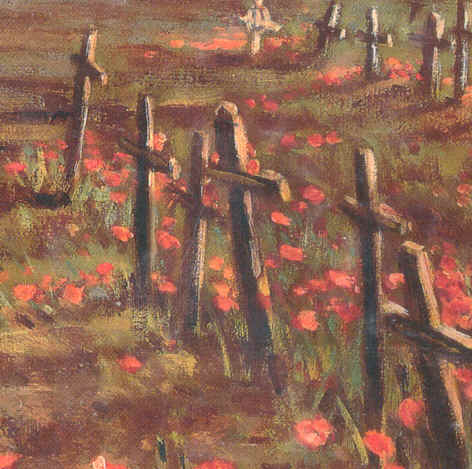
White Poppies?

In 1933, the Women's Cooperative Guild began producing white poppies as a symbol of peace and the end of all wars. The Peace Pledge Union took up the white poppy in 1934 and continue to produce it as an alternative to the red poppy. The Peace Pledge Union began after the canon of St. Paul's cathedral asked people to send postcards promising never to support war. This dubious promise was taken up by a large number of Britons and their membership soon swelled. According to the White Poppy for Peace website (run by the PPU, the white poppy stands for a pacifist solution to war:
The White Poppy symbolises the belief that there are better ways to resolve conflicts than killing strangers. Our work, primarily educational, draws attention to many of our social values and habits which make continuing violence a likely outcome.
From economic reliance on arm sales (Britain is the world second largest arms exporter) to maintaining manifestly useless nuclear weapons Britain contributes significantly to international instability. The outcome of the recent military adventures highlights their ineffectiveness in today's complex world.
Now 85 years after the end of the ‘war to end all war’ we still have a long way to go to put an end to a social institution which in the last decade alone killed over 10 million children.
The large difference between the red poppy and the white poppy is that the white poppy is meant not only to remember all the victims of war, but also to support pacifism. Of course, the implication is that wearers of the red poppy would rather see the continuance of war (and support arms sales, nuclear weapons, and the killing of 10 million innocent children.) Wearers of the white poppy, besides their distasteful disrespect of veterans, have too much faith in humanity. I would never pledge to reject war, and not because I love war. On the contrary, like most people, I find war abhorrent. Still, I recognize that there are always going to be genocidaires, Hitlers, Pol Pots, militarism, greed, and ideological clashes. Thus, there will always be a need to protect and defend the defenceless. This is what the red poppy stands for, not only for remembering the dead, but also for carrying on their fight for justice. The red poppy should not be a political symbol that asks us to support wars whether our government is wrong or right. No, it should be a symbol of remembrance and of the fight for justice. In the words of Peter Tosh on his song Equal Rights: "Everyone is crying out for peace, no one is crying out for justice." We can demonstrate for an end to violence, but are we demonstrating for true peace? True peace, true shalom, encompasses justice and the restoration of all creation to God's original intent. This is something that we cannot have as long as humans, with all their evil and hate, are in the picture. We work for shalom, but we know it is not obtainable by human power. Unfortunately, as a last resort, justice must occasionally be obtained through violence. John McRae's powerful poem, In Flanders Fields, asks the reader to take up the battle so that the dead can rest in peace. McRae meant that we should take up arms and fight on, but also, I think, that we should honour their memory in all that we do in our society. These men and women fought for justice, and we should remain vigilant in protecting our communities and working for true shalom. The red poppy stands for peace too, but not a peace that is blind to the imperfections of humanity. We shall not forget.

Wednesday, November 08, 2006

Monday, November 06, 2006

A Flickering

The old man could often be seen strolling around the mall. He would put one foot in front of the other and sort of swing his body from side to side. No one could call him graceful; his method of walking was more akin to a loping steer than a slinking cat. Sometimes he would fold his hands behind his back, moving forward at a leisurely pace as his shoulders swung to and fro. This was the way that he felt royalty walked. That is, not loping like a bovine, but at a gentle pace with their hands behind their backs. He did not realize how ungainly his walk looked.

It bothered him when people would rush to stand in front of him on the escalator and then just stand and wait to be taken to the top. The thing was, he never stood on an escalator. In fact, when he was on an escalator that was when all of his sauntering ended. On the escalator, he moved with the furious energy and purpose of a high-paid lawyer. No, when someone stepped in front of his doddering old form on the escalator, he would wait, arms folded in front of him, until that person had completed their journey to the top. Sometimes, if the mall was especially busy, he would have to wait for half an hour until he could make the journey to the top of escalator the way he wanted to.

He hadn't always sauntered. There was a time when his escalator pace had been the pace of his life. He had been a brisk walker with hard long steps and almost no wasted movement. This had been when he had known his precise destination and purpose. Now -- now he drifted along slowly, and tried to let his mind catch up to his languid pace. He had hated malls before and avoided them whenever possible. Now he would spend hours at the mall. He had carefully calculated his walk to give the impression of an old man enjoying the twilight of his life, but inside he was panicking.

Smiling wistfully, he strolled along with his hands folded behind his back. Why had he come to the mall? He winked at a tiny baby to spite the panic welling up inside of him. Why was he here? He felt the sack brush him gently on the back of his knee. He brought the sack from behind his back, slowly, as if he were merely admiring his merchandise. There were four cans of tomato soup. Why did he need four cans of tomato soup? Perhaps he was making tomato soup for his daughter. He smiled, imagining that tiny bundle of joy running to greet him at the door. It was such a pleasure to have a daughter. He glanced at the four receipts scattered amongst the cans. Why had he bought tomato soup four times? He couldn't answer this question, but the despair and confusion this caused him were not apparent on his beaming old face.

Once he had wandered the parking lot for two hours, looking for his car. Up and down the rows he walked, doing his best to appear to be an old man enjoying a pleasurable walk in a parking lot. A couple of minivans and an SUV had almost hit him. He had not been able to recall if his car were green or blue or turquoise. He would stop suddenly at a familiar-looking car, pretending to admire its chrome sheen and then moving away when he saw an unfamiliar bumper sticker or a foreign item dangling from the rearview mirror. Finally he had seen a car that looked like his and when he had reached for his keys he had realized that they weren't with him. He had not driven that day. In fact, he had not driven for a month. His wife had told him she had lost the keys the day after he had run out of gas on a rural highway far from home. He had been exploring, he told his wife, but there had been a worried expression on her face.

He thought of his wife now, but he couldn't remember what she looked like when she was worried. Her face was young and happy and there were no lines whatsoever on it. Remembering her, he smiled to himself. He wasn't pretending this time.

Saturday, November 04, 2006

Tune of the Week:
I have decided, each week, to share a song that I enjoy. If reggae isn't your thing you will probably be disappointed most of the time. However, there is no need to fret because I do enjoy a wide variety of musical genres. Yes, yes, I know that you weren't fretting, but I was only attempting to multiply, in my mind, the impact of my blog. The first tune is Damage by the underrated Anthony B. Anthony B's patois is quite thick and his Rastafarian double-speak might be a little confusing to wade through and so I have printed the lyrics and given a few definitions. "I and I" is a phrase which eliminates the pronouns you, me, they, he, and she in order to emphasize the i-nity (unity) of the community with the Most I (Most High.) "Downpress" is the word which Rastafarians use to signify oppression. Up is a positive direction and therefore up-pression is an lexicological oxymoron for the Rastafarian. "Babylon" is the entire wicked system of downpression and "livity" is the Rastafarian word for life or for being alive. Enjoy . . . or start fretting, you can do that too.

Anthony B - Damage

I and I defend the downpressed is a must!
You neither I and I need to fight nor fuss
'cause everything them say them rightful own, belong to us
my father don't tell I and I that everything shall fall to I and I is a must
so Babylon set the livity, every day another one bite the dust, my Lord!

CHORUS:
You don't have to say you're sorry, for all the wrongs that you have done, mmmmm
I don't want to hear sad stories, 'cause the damage already done
oh, the damage already done

Broken bones and wounds need tender repair, hang on brotherman, don't despair
although we forgive seven times seven, still the damage already done, so much damage already done.
Stop and listen a while to this meditation style, going straight to your mind.
True, you're wicked and wild, (but) the only way you can deal with this vibe
is to free up your soul and mind, a yagga yagga yagga yoy (chorus)

Everybody wants their peace of mind, trying to justify how they deal with mankind
sometimes I wonder how they sleep at night time when all the damage already done, oh the damage already done. Stop and listen a while to this meditation style, going straight to your mind,
true, you're wicked and wild, (but) the only way you can deal with these vibes
is to free up your soul and mind, a yagga yagga yaga yoy (chorus)


Monday, October 23, 2006

The Dutch are Cheese Worms

“Oh, ha-ha,” he laughed, giving me a knowing nod, “you’re Dutch.”

He laughed again, as if the fact that I was Dutch were the punchline of some universal joke that I was completely oblivious to.

I was perplexed and I think my baffled expression communicated this confusion quite well.

“You like that weird freaky stuff,” he grinned, prompting me with his raised eyebrows.

“You know,” he said, “like that freakin’ perverted crap.”

He pointed his finger knowingly at me, “I’ve been to Amsterdam, don’t tell me that you don’t know I’m right.”

I smiled at his idiocy; something which he felt was an admission of guilt, “See! Ha ha, I knew it. You people are freaking perverted, man.”

“But you like that weed now, don’t you?” he seemed genuinely pleased about his knowledge of Hollanders, “good shit. You probably do the hard shit too, eh?”

I looked over at my wife, which was, according to him, another admission of guilt. He crowed with pleasure and then proceeded to lay out some more obtuse comments about my alleged sexual and narcotic proclivities.

It seemed futile to me to inform my inebriated attacker of my staunch Calvinist roots. I am the product of what is perhaps the antithesis of the contemporary Dutch stereotype. I am a religious, somewhat conservative individual who does not indulge in drug usage, abhors euthanasia and abortion, is monogamously heterosexual, and definitely does not do “weird freaky stuff.”

The older Dutch stereotypes are easier to take. I don’t mind being labelled as miserly, stubborn, mule-headed, practical, economical, disciplined, blunt, or even slightly stupid. Being labelled a pharmaceutically-plastered pervert is a littler harder to take. The disturbingly gross Dutch villain from the movie Austin Powers: Goldmember is, in all likelihood, partly to blame for the reinforcement of the modern Dutch stereotype. Fortunately, I did not have to explain to this all-knowing fellow that I do not eat my own skin.

Cruel stereotypes are quite effective in rousing public support for campaigns against one’s national enemies. These stereotypes might inspire fear, rage, or contempt, but any way they’re used they can help raise the necessary fighting men to fend off the enemy. From the crazed Muslim terrorists in Back to the Future and True Lies to the cruel Krauts supposedly nailing babies to church doors in Belgium there have been attempts throughout history to dehumanize the enemy.

Yes, the Netherlands was once a major world power. In the seventeenth century, the Netherlands was the economic envy of much of Europe and even threw mighty Britain into a bit of jealousy. There were Dutch trading posts throughout the world from Ceylon, Malacca, Deshima, and the Dutch East Indies to South Africa, Guyana, New Amsterdam, Suriname, and various forts along the coast of Africa. Along with this empire came a reputation as money-grubbing skinflints and frank stubborn louts. The Japanese who were known to be guarded in their speech were astonished at the forthrightness of the Dutch. They claimed that the Dutch were the most arrogant of all the European traders they dealt with. Of course, they also admired the Dutch trading skills as a Japanese proverb said, “Where the Dutchman has passed, not even the grass grows anymore.” This may also have referred to a certain lack of proper hygiene exhibited by the Dutch at this time. Still, the Dutch had not impressed the Japanese with their Protestant work ethic. One Japanese scholar observed the following: “content to waste his days and nights, [the Hollander] lolls in a large chair, smoking a long pipe and looking very bored. A table loaded with food is before him, a decanter and glasses at one arm and a fawning geisha at the other.”

The Dutch had a formidable empire. The only reason the Dutch haven’t dealt with the same post-colonial fallout and white guilt that the British have is because the British took over most of the Dutch possessions. Plus, the Dutch like to think of themselves as tolerant (this is called self-stereotyping) and the slave-trade and the exploitation of Indonesian labour doesn’t fit well into this equation.

So, the Dutch and the British hated each other because they both wanted to control the sea routes from the East Indies. Three wars were fought between the British and Dutch between 1652 and 1674. In May of 1667 the indomitable Admiral De Ruyter sailed up the Medway, wrought havoc on the British ships, and blockaded the Thames. And thusly did the Dutch defeat the poor British.

For a while.

The third war was also a failure for the British and their French allies as the land force was halted by flood waters and the Anglo-French fleet were handily defeated (four times!) by the clever De Ruyter. The tension between the Dutch and the English dimmed somewhat when in 1688 William III, Prince of Orange, assumed the English throne with his wife, Mary, and put the Dutch navy under the command of the British. When the English and Dutch navy were combined the English sailors viewed the Dutch with some resentment, and unwanted advice or orders from Dutch sailors were said to be from “my Dutch uncle.”

But the insults had begun before this: during the Second Anglo-Dutch War, a British admiral, Samuel Pepys, wrote the following not-so-flattering entry in his diary, “Methinks, by God, the devil must shit Dutchmen.”

As if being the excrement of the epitome of evil isn’t bad enough, a British pamphlet (The Dutch Boare Dissected, 1665) from the same period read “A Dutchman is a Lusty, Fat, Two-legged Cheese worm. A Creature that is so addicted to eating butter, drinking fat, and sliding (skating) that all the world knows him for a slippery fellow.” Not only that, but the Dutchman “loves to be down in the Dirt, and Boare-like, to wallow therein.” It was during this time, when the Dutchman was still a slippery dirt-wallowing cheese worm, that a number of new phrases entered the English idiom.

Dutch courage is the bravery one gains after drinking alcohol. This implies, of course, that the Dutch are not only drunkards, but that their courage is also sorely lacking. A Dutch bargain is a bargain settled over drinks. A Dutch headache is a hangover. A Dutchman’s draught is a big swig of alcohol. Dutch gold is brass, because the Dutch are too frugal to use real gold. Dutch comfort is cold comfort because, you know, things could be worse. A Dutch concert is badly played music because the Dutch are apparently lacking in that department. Dutch talent is the more the result of mistaken brawn than actual skill. Going Dutch or a Dutch Treat refers to both parties paying separately for a date. Double Dutch is writing or conversation that is as garbled and incomprehensible as the Dutch language (or it can be the use of two jumping ropes simultaneously in opposite directions). Dutch generosity is stinginess.


Before the Dutch were eclipsed by the French as the hated enemy, they were the original frogs. As swamp-dwelling men it made sense to call the Dutch frogs. In a 1672 anti-Dutch satirical cartoon, the Netherlands is portrayed as a huge horse dropping on which maggots feed and eventually grow into full-grown Dutch frogs. In this cartoon a frog dressed in military regalia begs the devil “Sweet little Devill thou shall't hear my prayer/ A poor distressed Froglander to spare.” The French certainly ate frogs, but the Dutch were frogs. Considering the trimness of most of the modern Dutch, the depiction of Dutchmen as fat frogs in many early modern cartoons is quite humourous. John Arbuthnot’s 1712 polemic The History of John Bull argued that the natural enemies of the English were the Dutch rather than the French. While the Englishman (John Bull) is “an honest plain-dealing fellow, Cholerick, Bold, and of a very unconstant Temper,” the Dutchman (Nic Frog) is “a cunning sly Whoreson, quite the reverse of John in many particulars; Covetous, Frugal; minded domestick affairs; would pine his belly to save his Pocket, never lost a Farthing to careless servants, or bad debtors.” The Dutchman dwells in “a marshy soil and unwholesome Air, infested with Fogs and Damps.” In The Embarrassment of Riches, Simon Schama writes “It was only in the eighteenth century, when France rather than the [Dutch] Republic had established itself as a major naval adversary of the British, that their satires turned to eaters, rather than imitators of the frog, for stock abuse” (264).

Perhaps I should have turned to my antagonist and given him a good old fashioned Dutch rub.

Sunday, October 22, 2006

As Karen and I discussed this week - with seven aunts, three uncles, four grandparents, and absolutely no rivals, there can only be one conclusion: this kid is going to get spoiled.

Friday, October 20, 2006

How long will it take for the Conservatives to stop referring to the inadequacies of the previous government and start focussing on their own game plan? I mean, it's a bit like a student who brags about his C- because it isn't a D.

Also, if this new "Clean Air Act" is any indication, the government is like an Olympic high jumper who is aiming to beat the Sicilian record. Because, you know, if you aim low enough, you're bound to reach your target.

Thursday, October 19, 2006

Watch W5 at 7:00 pm Saturday or at 1pm Sunday:

The most respected and most-watched current affairs program on Canadian television, W-FIVE returns for a new season of hard-hitting investigative reporting. The new season launches with an update on the disturbing cross-country investigation of U-Haul trucks followed by a look at a Radical church that controls unwitting members.

*edit* the program has been moved to next Saturday.

Wednesday, October 18, 2006

I've been tagged by Jake.

I am to reflect on four words that he has selected:

sorrow, birds, reciprocal, charisma.

Sorrow - Young Werther is quite caught up in this whole phenomenon. He is what the Soggy-Bottom-Boys would refer to as "a man of constant sorrows." And he's a in good company, Jesus was also a man of sorrows (Isaiah 53:3).

Birds - You can flip them, leave your metaphorical seeds as food for them, my wife might have one if she sees Oprah in person, the worm is gotten by the early one, I was told by a little one, I was born as naked as a jay one, two of them can be killed with one stone, when they have the same feathers they flock together, one of them in the hand is worth two of them in the bush.

Reciprocal - She's very sorry but her feelings for you just aren't, okay? You're a nice guy, though.

Charisma - It once meant divine favour but now it's personal magnetism. I suppose you need divine favour to have personal magnetism. Not to be confused with charismatic, which means a raucous, highly disorganized church service which focusses on experiential Christianity.

I shall tag Piet and Aaron with the following words: Subliminal, Abomination, Tirade, and Pretension.

Tuesday, October 17, 2006

I'm an uncle!

Little Owen Nicholas Langelaar was born today.

Tuesday, October 10, 2006

The Appropriation of Reggae

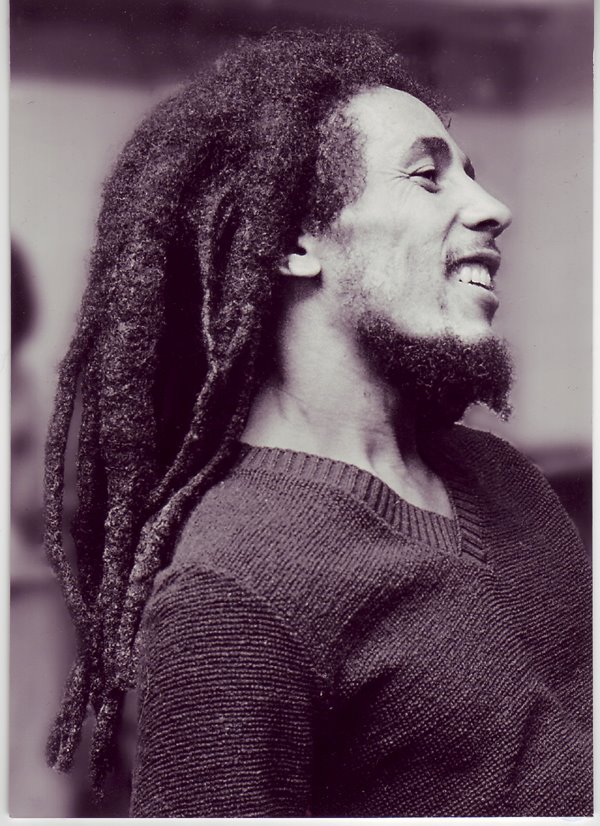
Young and old protesters alike readily identify with Bob Marley. They'll quote lyrics from "One Love" as they sway, smoke herb, and talk about peace. When many people think of Bob Marley they think of a man who promoted peace and togetherness and perhaps a little bit of the ol' ganja. Of course, the revolutionary lyrics are entirely ignored. In Talkin' Blues, Marley sings:

"I'm a gonna take a just-a one step more 'cause I feel like bombin' a church. Now that I know that the preacher is lyin'. So who's gonna stay at home when the freedom fighters are fighting?"

I'm not sure that peaceniks can actively promote church bombing unless they want to cross over into the Anarchist school of protest. Of course, they should probably start listening to Rage Against the Machine or something else if that's the road they're going to follow. In the song Ride Natty Ride Marley sings,

"Tell you what: now the people gather on the beach and the leader try to make a speech, but the Dreadies understandin' that it's too late: fire is burning; man, pull your own weight!"

When the people are on the beach with their leaders it isn't because they want their leaders to enjoy the soft sand, but because they want their leaders to enjoy the warm water . . . and never come back. Bob Marley is often painted as this pot-smoking hippie who played soccer and wanted to live in peace with all humanity. Marley was a great singer and lyricist, but some people lose sight of his revolutionism and tough gangsterism. Marley garnered the nickname "Tuff Gong", not because he was a resilient bronze disc, but because of his fighting skills. He loved the image of the gangster rudeboy and rose to the top utilizing this toughness in combination with his raw talent. Marley was a good man, but he was not the flower-sniffing guru that some paint him as. He was a fighter, a womanizer, a rudeboy, and certainly not a saint.

On Sunday, I heard something on the radio which I found fairly disturbing. On Ottawa's pop-radio station, Hot 89.9, I witnessed the teeth-gnashingly horrific music of Fergie (or Fergilicious as she calls herself . . . she can spell it for you over and over if you want). Fergie, in case you are unaware, is the bikini-clad woman in the bad beer commercial that is the Black Eyed Peas. One of Fergie's hits, the inexplicably stupid "London Bridge" is actually a rip-off of Gwen Stefani's vacuous hit, "Bananas." If you haven't heard of either song, you are blessed indeed. During the course of her interview, Fergie claimed to have been inspired by all types of music. This, presumably, includes a heavy dose of one particular type of music: namely crappy superficial music with no redeeming qualities. She also claimed to "love reggae." Why did I shudder so when I heard this? Is it because the result of pop music which appropriates reggae is often just souless tofu wrapped in a decent chocolate beat?

I find the cultural appropriation of reggae by American pop stars interesting. Certain aspects of the reggae culture are accepted while others are entirely rejected. Red, green, and gold bracelets are readily appropriated by decidedly non-Rastafarian individuals like Gwen Stefani. The red, green, and gold which Rastafarians wear come from Ethiopia's flag. Ethiopia, of course, is the spiritual homeland of Rastafarians who believe that they should lead the repatriation to Ethiopia after the four hundred years of slavery in Babylon (America) are over. For Rastafarians, the red represents the blood of Africans spilt over the years by Babylon, the gold represents the wealth of Africa, and the green represents the beauty and vegetation of Ethiopia. Gwen Stefani, who likely has very little interest in Africa unless it provides the labour force for sweatshops for her fashion line, readily wears the three colours while she wails out her songs over ska, rocksteady, and reggae beats. I am not arguing that non-Rastafarians can't do reggae - they already have proven that they can do it quite well. But when was the last time that Beres Hammond wore the tri-colour around his wrist? Does UB40 ever drape themselves in Rastafarian imagery? Rastafarianism might be bizarre to most of the world, but using their religious symbolism as a fashion accessory is disrespectful.

The troubles of Buju Banton also illustrate this selective cultural appropriation. Fifteen years ago, a teenage Banton recorded a song which has haunted him ever since. The violently anti-homosexual song, "Boom Bye Bye", was penned by someone else and voiced by the young Banton. The fact that Jamaican culture has a strong aversion to homosexuality and that Jamaican patois often reflects the violent reality of the street leads to more than a few violently homophobic songs. Beenie Man, Bounty Killer, Capleton, Sizzla, Elephant Man, TOK, Vybz Kartel, and Buju Banton have all been targeted by homosexual advocacy groups for promoting violence against gays. The respective representatives for informers, the pope, rival soundmen, the Queen of England, Osama bin Laden, and the Babylon system are not involved in the movement against these artists despite violent pronouncements against their persons. The day that Fergie or Paris Hilton start talking about killing a batty bwoy is the day that they have truly embraced all the aspects of the music . . . but I am being ludicrous, of course.

Admittedly, "Boom Bye Bye" is juvenile, socially irresponsible, and tasteless. However, Banton is caught in a bit of quandary. If he apologizes for the song as his opponents demand he'll be seen as selling out by his people. If he doesn't apologize, gay advocacy groups will continue to picket every single show he has and work hard to ensure that his music does not receive any major radio or television play. Buju Banton has not made any more violently anti-gay songs. In fact, the vast majority of his catalogue over the last decade includes songs that are positive, uplifting, and thoughtful. The remaining tunes are harmless love songs. The supposed goal of the gay advocacy groups is to stop violent music. I would submit that a better way to get through to the reggae community would be through dialogue rather than attacking the music and culture. The attacks against Buju Banton act as a wedge which drive the two sides even further apart.

The point I am trying to make, however, is that while genuinely talented reggae artists like Buju Banton are having their voices muted, other less talented individuals are cashing in. Recently, the Hasidic singer Matisyahu has gained a lot of attention. Some of his fans are clamouring about the second coming of Bob Marley and other such nonsense. If a Hasidic Jew spitting lyrics in very very poor Jamaican patois is good reggae then the genre is in a lot of trouble. The New Tork Times' Kelefah Sanneh addressed the over-enthusiastic Matisyahu fans this way: "Perhaps Matisyahu's fans aren't familiar with a little-known group of performers who still make great reggae records: Jamaicans." ooch.

Matisyahu aside, I believe that non-Jamaicans can and do make great reggae music. Artists such as Alpha Blondie, Seeed, Tryo, Lucky Dube, Gentleman, UB40, and Tyken Jah Fakoly all make wonderful reggae music. Reggae has reached around the world from Latin America to Africa to Europe and even Japan. The problem is when the form of reggae is adopted without the soul or when the masters are ignored in favour of the imposters.

Thursday, September 28, 2006

My Personality Test:

Your Type is
INFJ
IntrovertedIntuitiveFeelingJudging
Strength of the preferences %
44251222

Other INFJ's:

Nathan, prophet of Israel
Aristophanes
Chaucer
Goethe
Robert Burns, Scottish poet

U.S. Presidents:
Martin Van Buren
James Earl "Jimmy" Carter

Nathaniel Hawthorne
Fanny Crosby, (blind) hymnist
Mother Teresa of Calcutta
Fred McMurray (My Three Sons)
Shirley Temple Black, child actor, ambassador
Martin Luther King, Jr., civil rights leader, martyr
James Reston, newspaper reporter
Shirley McClain (Sweet Charity, ...)
Piers Anthony, author ("Xanth" series)
Michael Landon (Little House on the Prairie)
Tom Selleck
John Katz, critic, author
Paul Stookey (Peter, Paul and Mary)
U. S. Senator Carol Moseley-Braun (D-IL)
Billy Crystal
Garry Trudeau (Doonesbury)
Nelson Mandela
Mel Gibson
Carrie Fisher
Nicole Kidman
Jamie Foxx
Sela Ward
Mark Harmon
Gary Dourdan
Marg Helgaberger
Evangeline Lilly
Tori May

(I wonder when Nathan, prophet of Israel, Aristophanes, Chaucer, and Goethe took the personality test. I am also curious as to how Mel Gibson and Mother Theresa of Calcutta ended up with the same personality.)

INFJs are distinguished by both their complexity of character and the unusual range and depth of their talents. Strongly humanitarian in outlook, INFJs tend to be idealists, and because of their J preference for closure and completion, they are generally "doers" as well as dreamers. This rare combination of vision and practicality often results in INFJs taking a disproportionate amount of responsibility in the various causes to which so many of them seem to be drawn.

INFJs are deeply concerned about their relations with individuals as well as the state of humanity at large. They are, in fact, sometimes mistaken for extroverts because they appear so outgoing and are so genuinely interested in people -- a product of the Feeling function they most readily show to the world. On the contrary, INFJs are true introverts, who can only be emotionally intimate and fulfilled with a chosen few from among their long-term friends, family, or obvious "soul mates." While instinctively courting the personal and organizational demands continually made upon them by others, at intervals INFJs will suddenly withdraw into themselves, sometimes shutting out even their intimates. This apparent paradox is a necessary escape valve for them, providing both time to rebuild their depleted resources and a filter to prevent the emotional overload to which they are so susceptible as inherent "givers." As a pattern of behavior, it is perhaps the most confusing aspect of the enigmatic INFJ character to outsiders, and hence the most often misunderstood -- particularly by those who have little experience with this rare type.

Due in part to the unique perspective produced by this alternation between detachment and involvement in the lives of the people around them, INFJs may well have the clearest insights of all the types into the motivations of others, for good and for evil. The most important contributing factor to this uncanny gift, however, are the empathic abilities often found in Fs, which seem to be especially heightened in the INFJ type (possibly by the dominance of the introverted N function).

This empathy can serve as a classic example of the two-edged nature of certain INFJ talents, as it can be strong enough to cause discomfort or pain in negative or stressful situations. More explicit inner conflicts are also not uncommon in INFJs; it is possible to speculate that the causes for some of these may lie in the specific combinations of preferences which define this complex type. For instance, there can sometimes be a "tug-of-war" between NF vision and idealism and the J practicality that urges compromise for the sake of achieving the highest priority goals. And the I and J combination, while perhaps enhancing self-awareness, may make it difficult for INFJs to articulate their deepest and most convoluted feelings.

Usually self-expression comes more easily to INFJs on paper, as they tend to have strong writing skills. Since in addition they often possess a strong personal charisma, INFJs are generally well-suited to the "inspirational" professions such as teaching (especially in higher education) and religious leadership. Psychology and counseling are other obvious choices, but overall, INFJs can be exceptionally difficult to pigeonhole by their career paths. Perhaps the best example of this occurs in the technical fields. Many INFJs perceive themselves at a disadvantage when dealing with the mystique and formality of "hard logic", and in academic terms this may cause a tendency to gravitate towards the liberal arts rather than the sciences. However, the significant minority of INFJs who do pursue studies and careers in the latter areas tend to be as successful as their T counterparts, as it is *iNtuition* -- the dominant function for the INFJ type -- which governs the ability to understand abstract theory and implement it creatively.

Who deh?

Followers